Who will reform Russia? Rather a new Tsar Fyodor than the Decembrists. A bitter history lesson


December 26 marked 200 years since the Decembrist uprising in St. Petersburg. After Napoleon was defeated, liberal army officers, inspired by Western ideals, They tried to prevent him from taking the throne Tsar Nicholas I. They demanded a constitution and the abolition of serfdom. “Law and freedom!” they shouted.
In liberal historical memory, the Decembrists are often presented as proof that another Russia is possible. When the moment comes to take power from Vladimir Putin, liberals say, the regime will be most susceptible to change. However, if this future Russia actually arises, it will not look like today's liberals or the Decembrists themselves imagined it.
Some remember the Decembrists as honorable men, ready to make sacrifices; others see them as traitors. Many historians consider them naive dreamers who delayed reforms and they made the system they hated even more oppressive. That they also inspired Lenin, Trotsky, and later Soviet dissidents only intensifies the paradoxes of their legacy.
In reality, the Decembrists were a scattered group of liberal-minded nobles operating in various parts of the empire. They had conflicting priorities and had little in common with the general populationand their plan to take power from the old regime was barely scratched. They were happiest when reciting poetry and performing rituals in Masonic lodges.
The article continues below the video
In 1825, they tried to take advantage of the unclear succession to the throne – and failed. Nevertheless, the first step has been taken, as The Economist recently argued. At best, it will arise drew the state's attention to the need for reforms and accelerated discussions on it topic. The ideas of civic consciousness, defined by honor, dignity, division of power, freedom and justice, began to crystallize.
A tradition that liberals cannot understand
However, this was not the beginning of liberal reforms in Russia. These started 149 years earlier — which exposes a certain historical blindness of the Russian liberal imagination.
Most successful Russian liberal reforms in fact it came from an autocratic state trying to change on its own. Attempted coups and uprisings are common in Russia's history, but few have produced lasting results. The Decembrists are remembered mainly because their legacy endures – they stand out from the many failed Russian revolts.
The Democrats of the 1990s owe their emergence to Mikhail Gorbachev. Without him, there would be no Boris Yeltsin. This is just one of many examples where an autocrat initiated reforms – whether to liberalize, modernize or secularize the state.
In addition to Gorbachev and Yeltsin, Alexander II, Catherine the Great and Peter the Great stand out as reformers. Several others, such as Nikita Khrushchev, Nicholas II, Alexander I and Paul I, introduced smaller changes. None of them were democrats, and none of them initiated reforms from scratch
The forgotten Russian reformer
The first true Russian reformer is an almost forgotten figure today. He too was an autocrat. He reigned for only eight years and died at the age of 20. Chronically ill and seriously disabled since childhood, he was replaced by his brother, Peter the Great, who later introduced the forced Westernization of the empire. This reformer was Fyodor III.
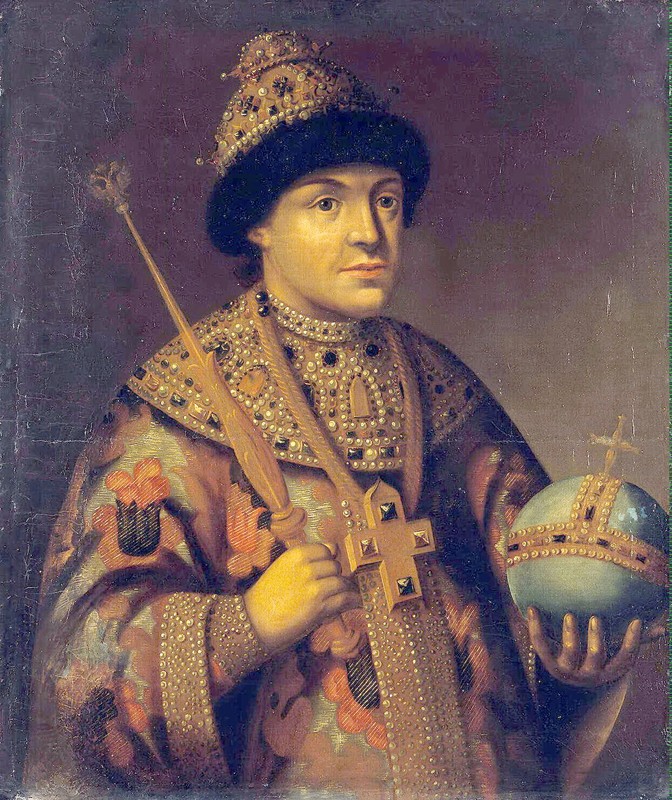
Tsar Fyodor III (1676-1682). Portrait from the collection of the St. Petersburg HermitagePublic domain
Fyodor, convinced that Russia should belong to Europe and join its great powers, introduced a number of liberal reforms without much resistance or attempts to undo them. He aroused neither controversy nor particular respect.
Today he is best known for his reforms in education and the civil and military services. He founded the Academy of Sciences and the Slavic-Greek-Latin Academy, bringing Russia closer to European educational standards. Access to education was expanded, and all subjects were prescribed by law – including those prohibited by the Orthodox Church, such as geometry, exact sciences or Polish language.
In 1682, Fyodor abolished the old system of assigning positions according to seniority, called mestnichestvo. Positions in the administration and army were henceforth to be awarded according to meritwith the final approval of the Tsar. They were no longer guaranteed by virtue of birth or social position. Noble family records were destroyed to prevent false claims to privileges.
Fyodor also relaxed penal laws, limiting the use of harsh penalties and extended sentences. State meetings took on a less oppressive atmosphere. Those who knew the Tsar remembered him as a gentle man — perhaps formed by his own physical fragility.
There were plans for further reforms, but time was running out and Fyodor knew it perfectly well. Like many reformers in history, he accelerated changes in the hope that they would stick. The effects of such haste vary.
Another Russia is possible. On one condition
The Decembrists had similar goals to Fyodor III. They wanted Russia to enter Europe and imitate it. They wanted education reform, a political system free from corruption and oppression, and accountability and economic freedom. So why did they fail?
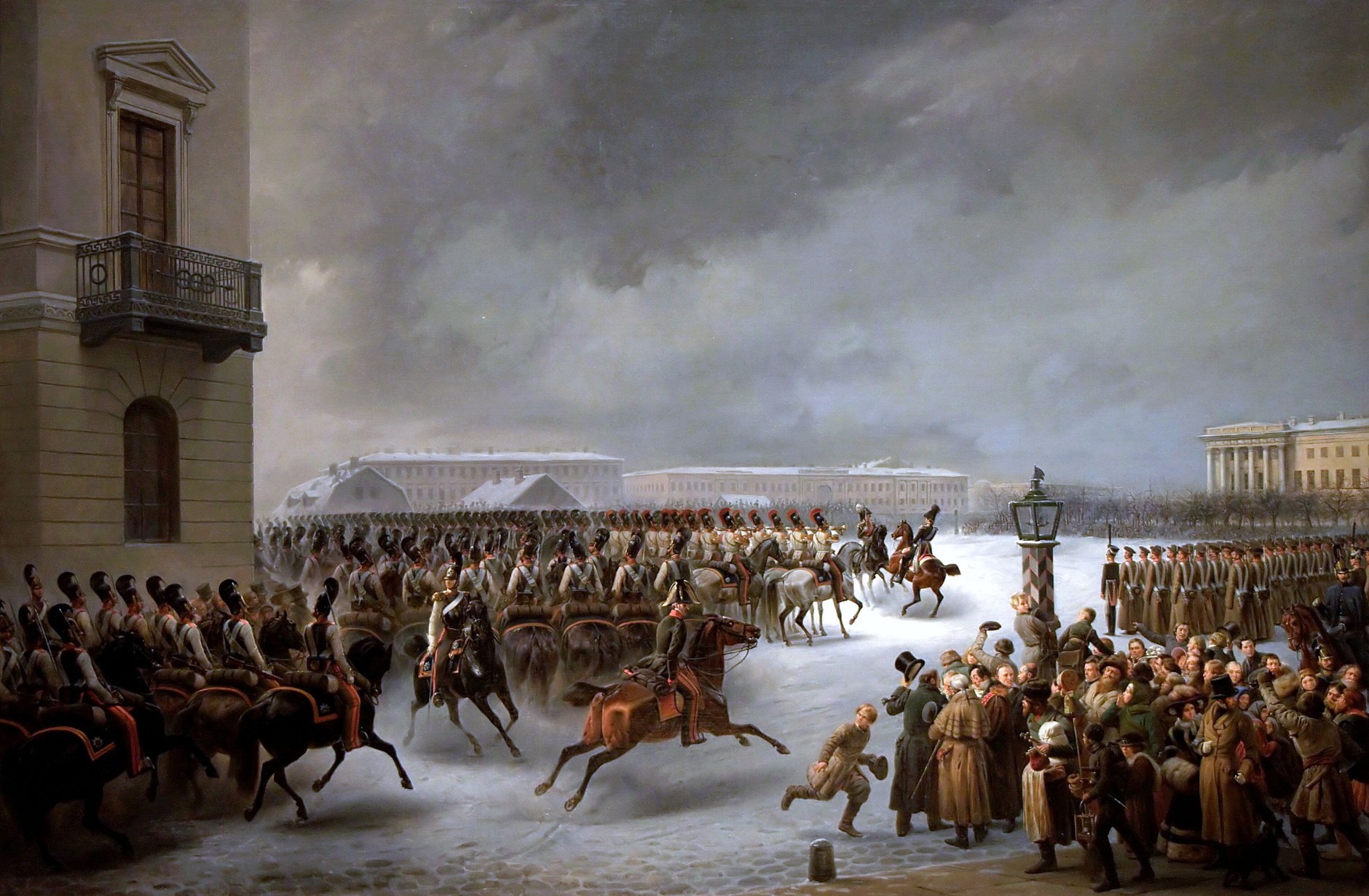
“Arrival of the Living Guard Cavalry Regiment at Senate Square on December 14, 1825.” A painting by Vasily Timm from 1853 from the collection of the St. Petersburg HermitagePublic domain
First, the Decembrists did not expect victory. Their designated leader, Sergei Trubetsky, did not show up at Senate Square at all to challenge Nicholas I. They were extremely disorganized — sound familiar, Russian democrats? — had conflicting end goals and little thought about what would come after the eventual success of their hastily put together plan. It is also possible that the new tsar would have been open to some of their demands if they had not tried to overthrow or even kill him.
Autocratic governments, on the other hand, have enormous resources and can push forward their own plans. Officials can be disciplined or replaced immediately. Society has also historically welcomed reforms. Revolts most often arose within the state system. As long as these groups have limited public support, they can be easily pacified.
The uncomfortable lesson for Russia's divided liberal opposition, 200 years later, is that a different Russia may only become possible when a suitable leader emerges from within the state system. Rather Fyodor the Forgotten than another failed revolution. Revolts tend to undo reforms and do not have broad support. Protests against Putin resulted in intensified repression – just like after the Decembrist uprising.
There is no reason why a reformer couldn't replace Vladimir Putin someday — even if not immediately. History shows that this is the best hope for a liberal Russia. Meanwhile, the opposition should seriously consider what such a future would look like — and ground its vision in reality, not dreams.
If a reformer emerges from the current regime, disregarding his actions would be a mistake that could backfire. The priority of Russians is the standard of living. Problems remain, but memories of better times mainly concern the period before the war – which had little to do with democracy.
A different future is possible, but it must be a gradual process. If future reforms do not bring real improvements in life, the old orders will prevail. Russians will remain disappointed and apathetic. Democrats in Russia seem completely unaware of this.