
Russia is ending some military agreements concluded with 11 NATO countries, including Romania

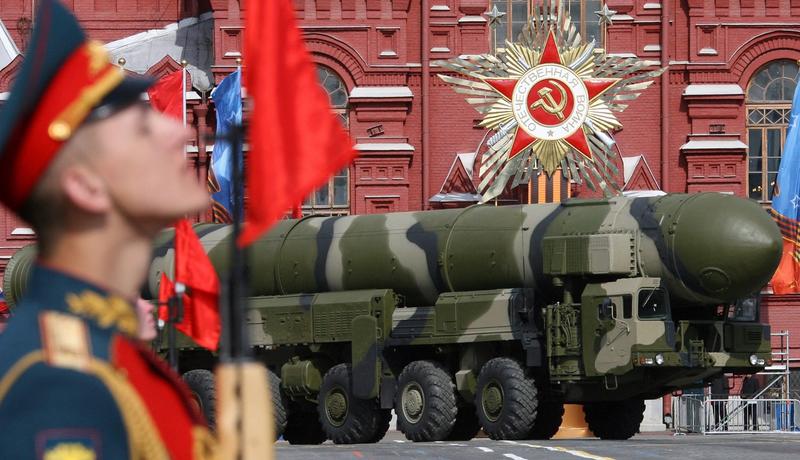
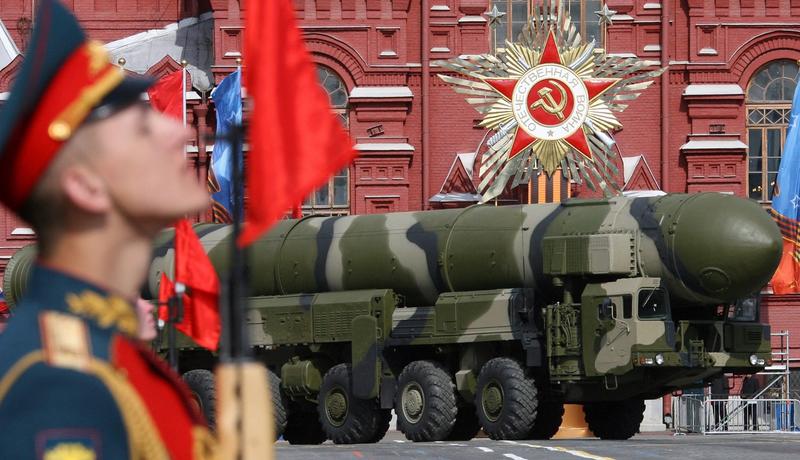
Intercontinental ballistic missile at a parade in Red Square, Moscow, Photo: Yuri Kadobnov / AFP / Profimedia Images
The Prime Minister of Russia, Mikhail Mishustin, signed a decree instructing the Russian Ministry of Defense to cancel a series of military agreements concluded with 11 Western states – including Germany, Great Britain, Poland or Romania – a decision that marks a significant change in Moscow's relations with NATO countries in the field of defense.
The issued order was made public on Friday on the Russian government's official regulatory acts portal, Bulgarian news publication Novinite.com reported on Saturday.
The decree provides for the termination of several bilateral defense agreements, such as the pact between the Ministry of Defense of Russia and the Ministry of Defense of Germany, originally signed in Moscow on April 13, 1993, as well as a similar agreement with the Ministry of National Defense of Poland, dated July 7, 1993.
Cooperation agreements with Norway, signed on 15 December 1995, are also affected.
Another cooperation agreement terminated by Russia is the one with Bulgaria, Novinite mentions, recalling that on August 4, 1992, Moscow and Sofia signed a Treaty of Friendly Relations and Cooperation, which laid the foundations for bilateral relations after the Cold War.
Other agreements denounced are those with Romania (concluded on March 28, 1994), Denmark (September 8, 1994), Great Britain (March 18, 1997), the Netherlands (June 18, 1997), Croatia (December 18, 1998), Belgium (December 19, 2001) and the Czech Republic (April 16, 2002), reflecting “a significant reduction in official defense cooperation between Russia and Western allies,” according to the official Russian news agency TASS.
“They are no longer strategically relevant”
Two weeks ago, Russia announced the termination of military cooperation agreements with three other Western countries – Portugal, France and Canada – that had been in place for decades.
The three agreements, signed between 1989 and 2000, are no longer strategically relevant, Russian authorities said at the time.
The agreements were signed during a period of improving relations between Russia and the West, after the collapse of the Soviet Union in 1991, notes Euronews and Rador Radio Romania.
The deal with Canada was signed just weeks after the fall of the Berlin Wall in 1989 – effectively ending the Cold War – as Soviet leader Mikhail Gorbachev sought to restore relations with Western countries.
The 1994 agreement with France followed Russian President Boris Yeltsin's broader efforts to integrate Russia into European security structures. Initially, Boris Yeltsin had hoped that Russia would be able to join NATO or develop a special partnership with the alliance, signing treaties with France in which both countries committed to consult in crisis situations and build “a network of peace and solidarity” in Europe.
The 2000 Portugal agreement was reached in what scholars describe as the most fruitful period for Russian-Portuguese relations in the 1990s and 2000s, when high-level visits were frequent despite Portugal's NATO membership.
Since then, the Kremlin and Russian President Vladimir Putin have taken an increasingly hostile stance toward NATO and the West, claiming they are intentionally cozying up to Russia, including accusing them of provoking the all-out war Moscow has unleashed in Ukraine, without providing evidence.
A similar decision was taken by Moscow in July, when Prime Minister Mishustin canceled a 1996 military-technical cooperation agreement with Germany. The Russian Foreign Ministry accused Berlin of pursuing an “openly hostile policy” and “increasingly aggressive militaristic aspirations”.


