Critical situation in agriculture: “80% of farmers can no longer pay their debts. Should I execute them or be executed?”

The manager of an input distribution company draws attention to the fact that the agricultural year 2025, presented in statistics as a good one, will bring bankruptcy to many farmers in the south of the country. These are small and medium-sized farmers, who buy every agricultural year on credit, with payment after harvest.
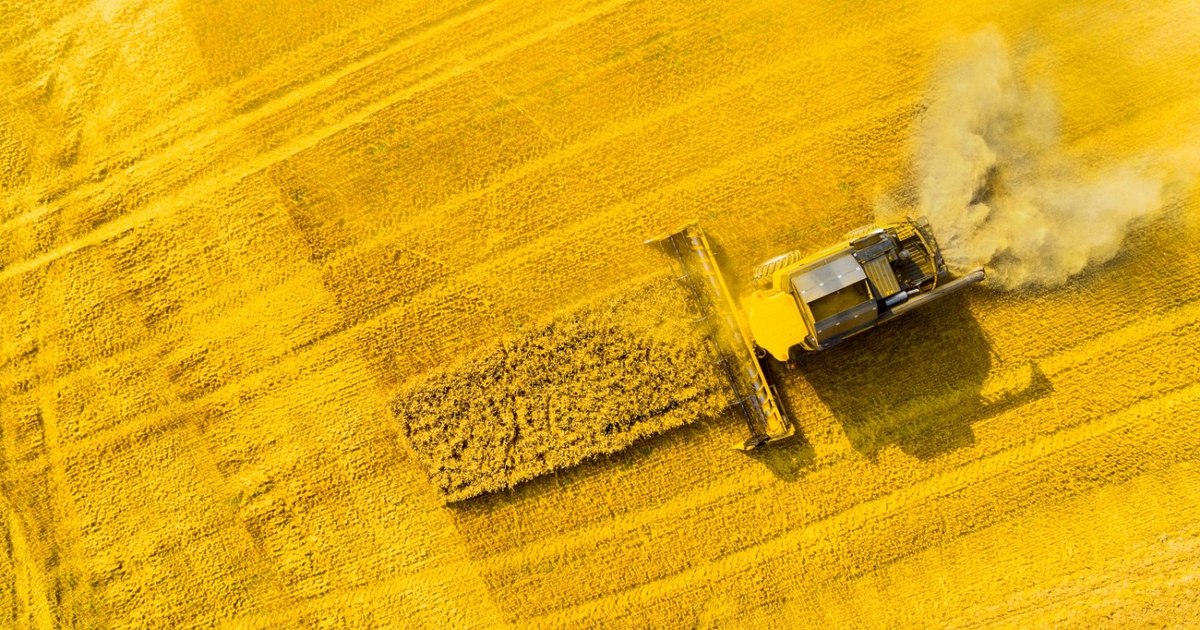
After a few tough years, droughts in 2024 and 2025 will bankrupt farmers PHOTO: Shutterstock
The drought of 2025, which came after an equally dry 2024, will affect the financial situation so badly that many of the producers will be forced into foreclosure. Cristian Dinu, the manager of an input distribution company (seeds, fertilizers, treatments) that has hundreds of small and medium customers, from five counties in the south of the country, draws attention to the fact that lawsuits are inevitable.
“Farmers are unable to pay, around 80%. Should I execute them, or should the suppliers execute me? I will also ask the Minister of Agriculture about this, I requested a meeting with him”, said Dinu, for “The Truth”.
In 2025, a year in which the total production of cereals and oilseeds was, according to statistics, one of the best in recent years in Romania, in the southern counties of the country there are hundreds, if not thousands of farmers who risk bankruptcy. There are counties where the drought has hit hard, affecting hundreds of thousands of cultivated hectares, especially corn and sunflowers grown on non-irrigated areas suffering.
The entrepreneur in the agricultural input distribution segment points out that, only in the case of clients on his list, several hundred risk bankruptcy.
“Farmers are unable to pay around 80%. He will not be able to complete the spring work on the crops established in the fall. They established their crops from their own sources, from wheat seed, barley, from their own production. No one will give them – the 80% – inputs, because they haven't paid their debts. We risk being executed by our suppliers, who are large companies, corporations. I am a distributor of these corporations. We no longer produce any kind of seed, we import it all. Corporations lend us to pay them, banks pressure us to pay them. We supported them for two, three years with drought from our own sources, we can no longer afford to support them. We will execute en masse”, draws the attention of Cristian Dinu, the manager of an input distribution company.
The farms that are now sitting with the sword over their heads are in danger of disappearing, Dinu believes. Investment funds will come to buy the land that the farmers could no longer work, and this can be the recipe for a real disaster, Cristian Dinu believes.
“Maybe this sabotage, boycott, whatever you want to call it, is done knowingly or not. But that's what's going to happen in agriculture,” states the manager of the distribution company.
According to the contracts, the inputs are delivered to the farmers in the fall, at the beginning of the new agricultural year, with the obligation that the money be paid in the spring. It would be a margin of 180 days. This period ended up doubling and even tripling instead, because 2024 and 2025 were dry years. What at one point seemed like a help, the state adopting a normative act that freed farmers from execution, extending payment terms, turns out to have put some of them in even greater debt, says Dinu.
The distributors have taken out loans to be able to supply themselves, and from now on they will do everything they can to recover their money from the farmers.
You often argue that in good agricultural years producers do not put money aside, farmers in turn have explanations. With that profit they bought machines or got the courage to contract leases.
From the outside, however, the movement does not look good at all. “They made investments in machinery, they developed unhealthy. They leased at very high prices, perhaps more than their working capacity. That is, they took machines for larger areas than they own. They can't pay the leases, they can't pay the land they took, just like that, on the basis of loans. They cannot pay the suppliers, meaning us, their distributors. And they can't even get loans anymore, the banks don't give them any more”, Cristian Dinu also showed.
“I don't know if the production will exceed 2 tons”
Because a fall in the grassroots will trigger a fall in the noose, including distributors are desperate.
“I don't know what we have to do. We will have some meetings with Minister Barbu and explain. That is, to tell us what solutions he has. Because it no longer depends only on us. We will be executed and we, in turn, will execute. It's going to be a whole chain, some links. If one breaks, the chain will break. And this will endanger, I told you, the integrity and food safety of Romania”, Dinu exposes a catastrophic scenario.
Production in 2026 will be lower, at least in the case of farmers who no longer had the resources to invest, regardless of the weather, says Dinu.
“The production which until now, during the drought, was on average 3-4-5 tons per hectare in the past years, I'm talking about the last 2 years, now maybe it will be 2 tons. Because they did not use complex fertilizers for sowing in autumn. In the spring, they have to administer the fertilizers in the vegetation, and the herbicides, fungicides, insecticides will no longer have anywhere to get them. And I don't know if the production will exceed 2 tons. And that's why I'm telling you that food security will more than likely be in danger, because they won't produce, they won't have money to pay. These executions come with some penalties that will be beyond their power. And automatically the bank will also take their lands, put them up for sale”, warns Cristian Dinu.
And the other creditors will turn to the farmers to recover their debts. They are already doing it, and even criminal things happen because of the fear of executions, says Dinu. Farmers begin to dispose of their machinery or other assets and even their businesses. Court proceedings take time, and to recover a debt can happen in three years or more, or during this time, including you, you can also fall.
The biggest debt that Cristian Dinu's company has to recover from a single farmer is 1.7 million. Although the amount seems high, when you talk about agriculture the costs are not negligible either.
“If he has 1,500 hectares and buys about three or four TIR trucks of complex fertilizers and another two or three of nitrogen, that's about 800,000 lei. 800,000 lei only for fertilizers, apart from treatments, for the others. And I tell you I tried to hold it. He had a debt of 600,000. And I said that next year I will give him one more time to be able to pay his debt, because after 3 years these debts expire. And then I tried for 2 years to support him, and in the other year I am on forced execution with this gentleman, for now, because he tried to sell the goods, he has criminal complaints”the company representative gave an example.
Farmers do not buy “with the money down” even if they have the necessary sums, Dinu explained, because the system is built in such a way that it suits them to pay after the harvest, either in money or in products. But when the products are missing…
In years when they either have nothing to sell or the prices are ruining them, and 2025 is one such year, the specter of bankruptcy looms ever closer.
There were also situations where the damage was returned to the distributor. Dinu says he has been through something like this. He built a silo with a capacity of 10,000 tons, took the grain from the farmers, but the traders suddenly lowered the price and ended up with a loss of 200 euros/ton.
“We took to equip ourselves, because that's how it's normal, to grow, to invest”
A large farmer, who works over 1,000 hectares of agricultural land, confirms the difficult time that farmers are going through. Instead, he gives an example of the opposite pole, of a distributor who tried to profit from the desperation of drought-stricken producers.
“We are between serious companies, which try to help the farmer, and non-serious companies, if I were to go to the other extreme“, says Teiu Păunescu. He says like a distributor “he sought to catch the farmers who delay payment by one, two, three days, or provoked them”.
He personally went through such a situation, and today he is suing the company from which he procured the inputs and which, Păunescu says, through an incorrect practice, made him postpone a cash payment by a few days, convincing him to take a sample of his grain, for a payment in kind. When, after three or four days, he saw that the company was no longer sending its representatives to pick up the grain, he made the payment. Instead, he was penalized by the distributor for the days of delay, canceling his discount (which amounted to several hundred thousand lei) established by the contract, which is why he chose to settle the conflict in court. However, the company blocked his accounts.
Each such incident adds to the already problematic situation, says Păunescu. Farmers, he admits, encouraged by the good agricultural years before the drought, ventured to invest in machinery, and rates are now catching up.
“We were encouraged because three or four years ago we had good years. We started equipping ourselves, because that's how it's normal, to grow, to invest. Now when to pay the drought came upon us, on top of the bank rates came the very high interest rates on loans, plus the very bad price of grain. Wheat has the price of 8-10 years ago, it's the same, only the inputs have almost doubled. In agriculture, at the present time, we are all watered. I have seen and am watching on the Internet, big farmers who sell their land, they sell to save their houses, so that they don't become homeless. Because when we signed the contracts, we signed contracts with a mortgage on the side, on the land, on the equipment, on the house we live in”the farmer also said.