The rockets of the Revolution, launched from the heart of the mountains. How the most isolated village ended up in the thick of the 1989 siege


Vadu Dobrii, a village hidden in the Poiana Ruscă Mountains, with less than ten inhabitants, went through a disturbing episode during the days of the December 1989 Revolution, after missiles from the secret military unit in its vicinity were activated.
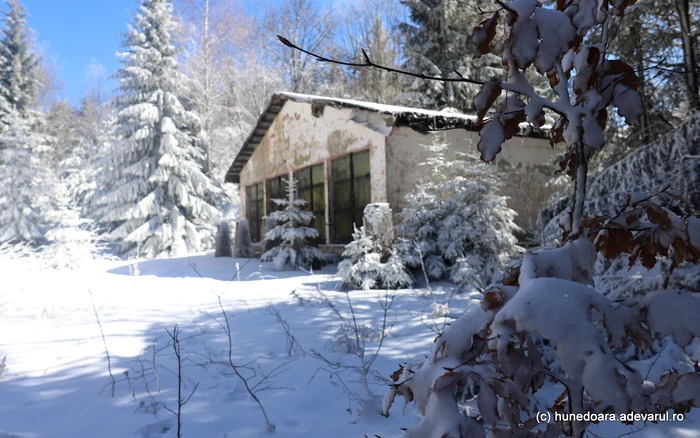
The military unit from Vadu Dobrii. Photo: Dniel Guță THE TRUTH
Fewer than ten people live permanently in Vadu Dobrii, one of the most isolated localities in Romania, located near the top of Muncel (1,140 meters) in the Poiana Ruscă Mountains.
The settlement in the Forest Land is difficult to access, due to the difficult dirt roads in winter, which climb from several directions on the ridge at over 1,000 meters above sea level, on which the old houses of the locals are lined up. A bike path of more than two kilometers, recently built on the outskirts of the village, has not made its road infrastructure any more accessible.
36 years ago, during the days of the December 1989 Revolution, the settlement's situation was a little different from today. Vadu Dobrii, located 50-60 kilometers from Hunedoara, depending on the chosen route, was as isolated from the other villages in the Poiana Ruscă Mountains, but somewhat more animated than today.
About 70 people lived here (65, according to the 1992 census), some engaged in animal husbandry and, unusually, agriculture, even though the terraces on which they grew grain were located at high altitudes and the climate was less favorable. A metal mine operated in the 80s at one end of the village, connected in the past to Hunedoara by an old funicular line from the 19th century, which crossed 60 ridges on a route of over 40 kilometers.
Vadu Dobrii, the forgotten village in the mountains, near the military unit
At the other end of the village, on a hill 1,200 meters above sea level, covered by dense forests, an anti-aircraft military unit had been established in the 1950s. In the 80s, the forbidden place in the Poiana Ruscă Mountains functioned as a fire division of the 15th Missile and Anti-Aircraft Artillery Regiment (RAA), which also included fire divisions in Hațeg (Sânpetru), Orăștie and Ilia (Sârbi) and a technical division in the Hășdat forest, on the outskirts of Hunedoara.
The 15th RAA regiment ensured the anti-aircraft defense of the cities of Deva, Hunedoara, Hațeg and Orăștie, the combines in Călan and Hunedoara, the Mintia thermal power plant, the mechanical and chemical plants in Orăștie, the iron mines in Ghelari and Teliuc, the railway junction and depot in Simeria and the military plant in Cugir. Initially, the regiment was equipped with Soviet-made rockets, then with Romanian-made anti-aircraft artillery, informs the County Association of Reserve and Retired Military Cadres from Hunedoara county “Sarmizegetusa”.
“Initially, the fire divisions were equipped with the “Dvina” missile complex, replaced in 1985 by the S-75M3 Volhov system, both of Russian origin. Each fire division, as well as the technical division, also had a 57 mm caliber anti-aircraft artillery battery for low-altitude air defense. In the 80s, the anti-aircraft artillery batteries were removed from the equipment and replaced by a platoon of four MR-4 anti-aircraft machine guns, caliber 14.5 mm, of Romanian origin”, informs the “Sarmizegetusa” Association.
Cantoned in the military unit called “Valea Ursului”, from Vadu Dobrii, the soldiers watched the sky above Hunedoara and its surroundings, and if necessary they could use the equipment provided for their defense. The unit's most valuable assets were the Soviet-made Volhov surface-to-air missiles, guided by ground control, weighing more than 2.3 tons and 11 meters long. They had an average range of over 60 kilometers and could shoot down a target at an altitude of over 30 kilometers within minutes of spotting it, their effectiveness being maintained even in conditions of intense electronic jamming.
“This capability is provided by the use of a team consisting of two operators, located in a cabin («dog house») mounted above the radar. The two crew members manually track targets when the automatic tracking system is jammed”, shows OE Data Integration Network (ODIN), the US Army's digital platform.
Some of the ex-servicemen remember that for the use of military equipment they were trained in the Capu Midia training ground, and others were sent, in the 70s, to training courses in the USSR, where they tested similar rockets by shooting at unmanned aircraft.
From the anti-aircraft unit established at the beginning of the 60s at Vadu Dobrii, for almost three decades, until the days of the December 1989 Revolution, not a single missile was launched. The events of December jolted the mountain settlement out of its stupor, even if the few locals here, almost cut off from the rest of the world during the winter, didn't know exactly what was happening.
The rockets that shook the village
During the days of the December 1989 Revolution, Romania's airspace was closed from the evening of December 22, but numerous unidentified aerial targets appeared on the RAA Regiment 15 radar screens.
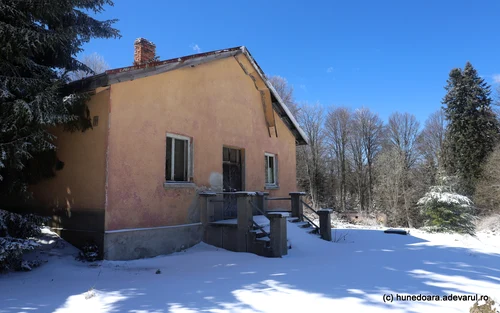
Image 1/13:
Vadu Dobrii military unit Photo Daniel Guță THE TRUTH (63) JPG
Following the diversion created on the screens of the radar stations, on the night of December 22 to 23, rockets were launched from the divisions of Sânpetru and Vadu Dobrii at such false targets. The Volhov missiles self-destructed in mid-air because they encountered no real “targets” from the ones visualized on the radar.
A part of the casing of one of the two rockets was discovered in 2021 by local residents, in the vicinity of a household in the village of Negoiu (video). The metallic remains, weighing several hundred kilograms, remained embedded in the ground, but no longer posed a danger.
“The discovered metallic elements are part of the casing of a missile produced in the Soviet era. It is a Volhov surface-to-air missile system. The metallic components do not pose a danger to the population, as they do not contain explosive or detonating material. For this reason, the pyrotechnic team was not required to lift the metallic object”, then inform the Inspectorate for Emergency Situations Hunedoara.
At Vadu Dobrii, the unit continued to be the target of diversions in the days that followed. At the same time, during the period 22–26 December 1989, the two military units of the regiment, UM 01933 and the technical division (UM 01852), were the scene of tragic events. Five people lost their lives and another 19 were injured in Hunedoara.
The soldiers Ioan Mircea Stângă, Dumitru Merticariu, Marinel Cotfaș, Lazăr Rotaru and Ioan Maruneac died by shooting, the first four in the perimeter of UM 01933, and the fifth victim at the city's water basins, located nearby. Nearly 20 other people were injured. The perpetrators of the crimes have not been identified.
In 2003, after four decades since its establishment, the former military anti-aircraft unit in Vadu Dobrii was decommissioned. The forest covered much of its land, over 26 hectares, on which buildings, hangars and the remains of former military installations remain. In its vicinity, the village of Vadu Dobrii remains immersed in silence during the winter.