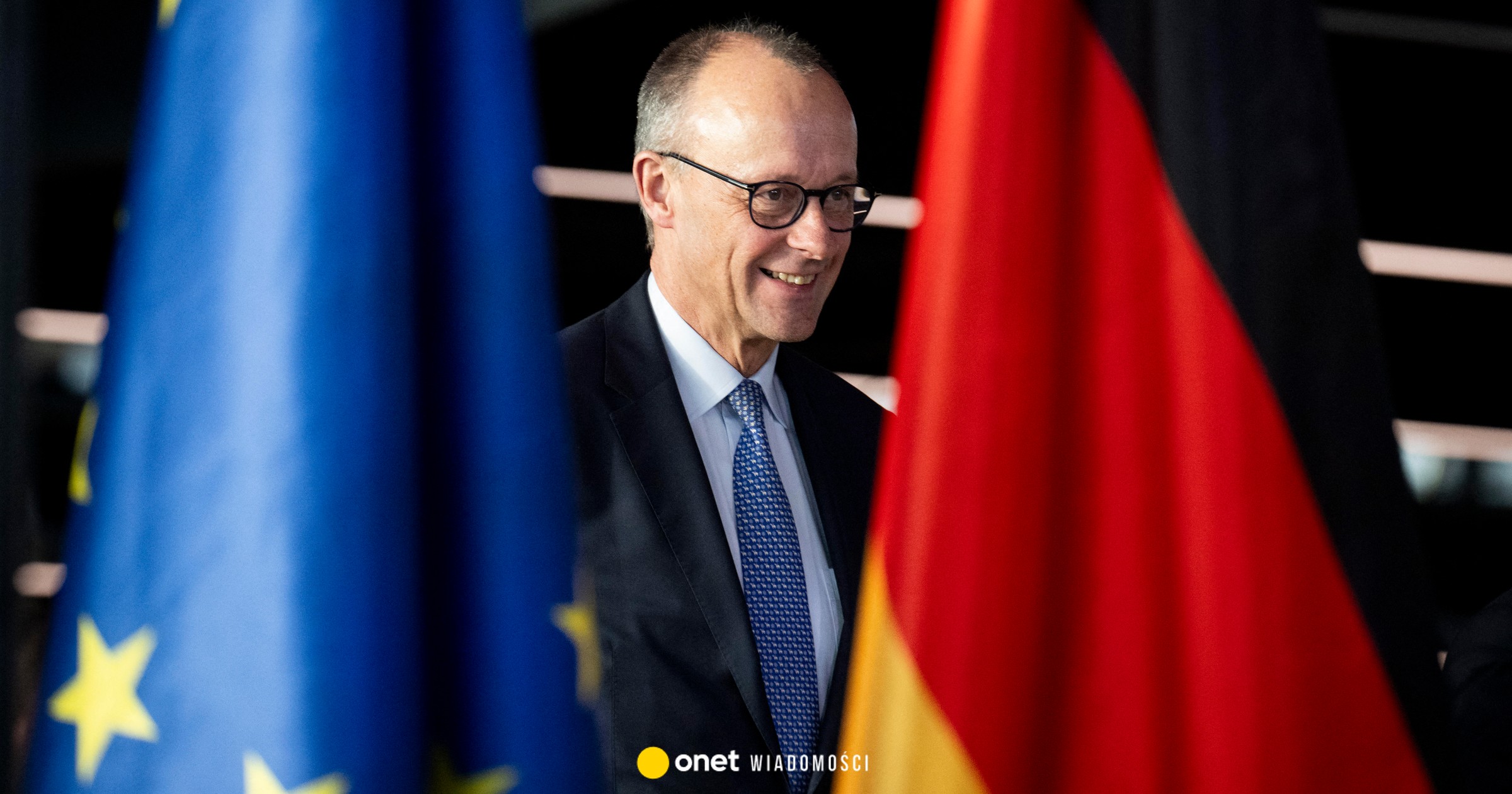
Merz, taking a much more active stance in the EU, took over the role traditionally played by the now weakened French President Emmanuel Macron. He has become the most visible European proponent of the EU's risky plan to replenish Ukraine's war funds with a loan of 210 billion euros (PLN 887 billion), secured by Russia's frozen assets.
Earlier this month he visited Belgian Prime Minister Bart De Wever, who rejected the plan, and European Commission President Ursula von der Leyen, trying to persuade the Belgian to withdraw his opposition.
— When it comes to the management of European affairs, Merz is the true opposite of Merkel — said an Italian diplomat about these actions.
Beyond EU affairs, the Trump administration's hesitations on military aid to Ukraine and the erosion of the transatlantic alliance have forced Merz to go beyond the current framework in Germany's foreign policy. He had already promised that Germany would play a “leading role” on the international stage.
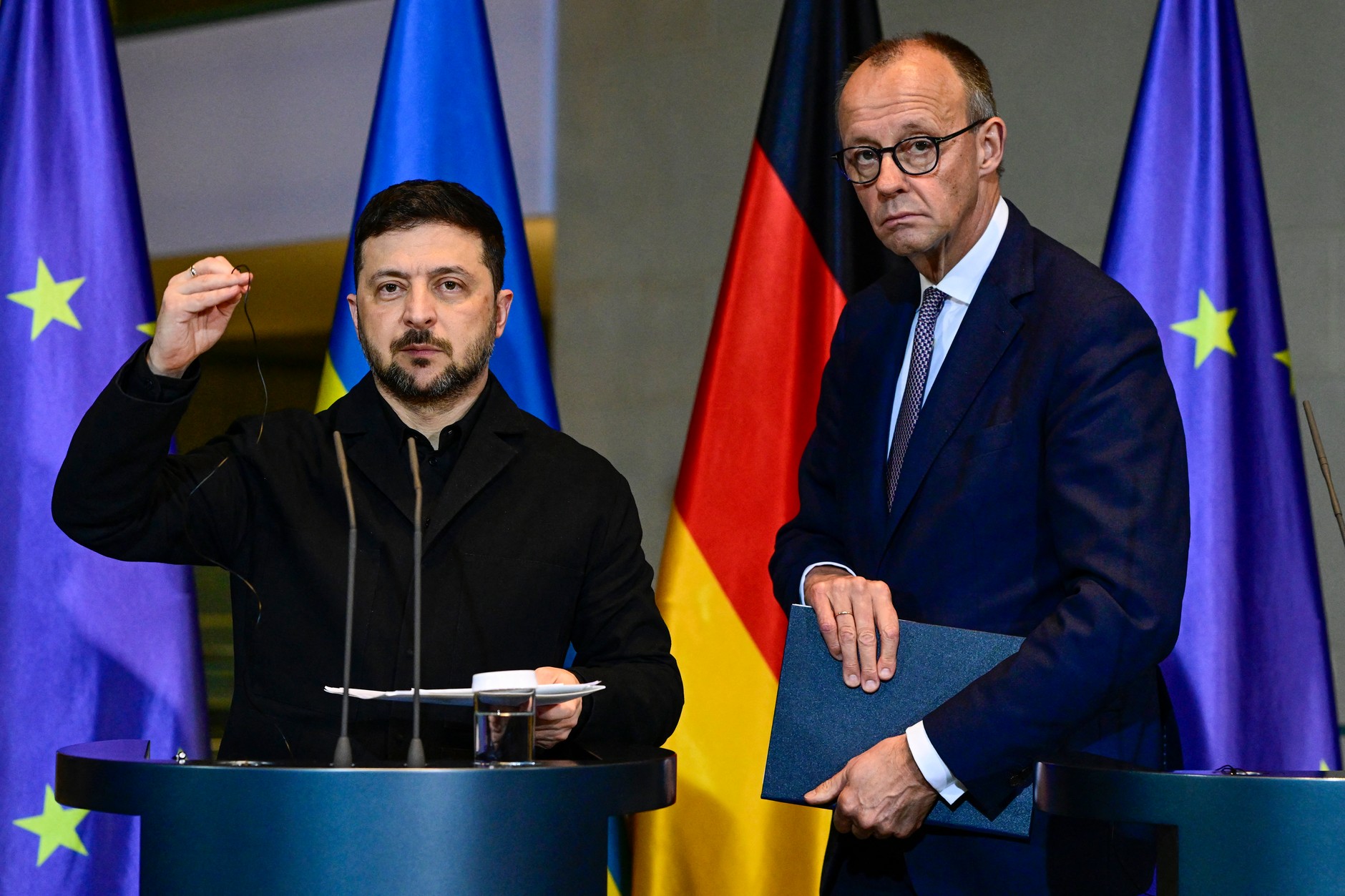
— The fate of Ukraine is the fate of all of Europe, Merz said on Monday at a conference with Ukrainian President Volodymyr Zelensky. — In this respect, this is a key task and I undertook to closely support Ukraine in the negotiationswhich are currently taking place here in Berlin.
A key test of unity
Merz's attempt to keep his promise of leadership was on full display this week.
Praising Donald Trump for pushing for a peace deal, the German chancellor in many respects he put himself in direct opposition to the US presidenttrying to prevent Washington from imposing an unfavorable agreement. The Trump administration has also opposed the EU's proposal for frozen Russian reserves, hoping to make a profit on those assets as part of a potential peace deal.
The article continues below the video
“Washington is currently exerting enormous pressure, so we need to show that we can stand up to it,” Norbert Roettgen, a German parliamentarian from the conservative Merz party, told POLITICO.
Ahead of a key meeting of European leaders on Thursday, Merz outlines the upcoming decision to use Russia's frozen central bank assets in the EU as a test of whether Europe can still defend its interests.
— Let's not kid ourselves. “If we fail to do this, the European Union's ability to act will be severely weakened for years, if not longer,” Merz said on Monday. — We will show the world that at such a key moment in our history we are unable to unite and take action to defend our political order on the European continent.
Ukrainian President Volodymyr Zelensky and German Chancellor Friedrich Merz during a press conference in Berlin, December 15, 2025.JOHN MACDOUGALL / AFP / AFP
Reflecting his government's new assertiveness, Merz has made Berlin the center of diplomacy for a potential peace deal. On Sunday and Monday, he hosted Ukrainian President Volodymyr Zelensky and US special envoys Steve Witkoff and Jared Kushner. On Monday evening, many of Europe's most powerful leaders gathered for dinner in Berlin to discuss the outline of a possible agreement.
— Berlin is currently the center of very important diplomatic talks and decisions, Zelensky said on Monday. — These conversations are always complex, never easy, but they were very productive.
Merz, standing next to the Ukrainian leader, also appeared to emphasize the role Germany played in the recent negotiations. — We have seen great diplomatic momentum — perhaps the biggest since the beginning of the war, he said. — We now have a chance for a real peace process for Ukraine. This is just a seed, but the opportunity is real.
Merz's risky strategy
But Merz's efforts to portray Germany as a key EU leader on Ukraine and other issues, from defense to trade, are also subject to risk.
European leaders have largely welcomed Merz's willingness to take on a greater leadership role — in particular the chancellor's decision, before he took office, to release hundreds of billions of euros in loans to strengthen Germany's military. But as Europe's largest economy, Germany must carefully balance within a 27-nation union, and Merz appeared to be pushing the boundaries recently.
After the Trump administration published its new national security strategy, which portrayed the EU as an organization “undermining political freedom and sovereignty,” Merz condemned the document as “unacceptable.” At the same time, he offered Trump a solution that seemed to further undermine the EU's importance: if you can't cooperate with Europe, at least partner with Germany.
Merz tried to assert Germany's interests in EU trade negotiations, as well as in the EU's proposed ban on combustion engines, effectively weakening it.
But the bigger risk for Merz is whether his latest efforts will succeed or fail. Presenting the upcoming decisions by European leaders regarding Russian assets as a decisive moment for the EU and Ukraine, Merz may expose himself to embarrassmentgiven the opposition of Belgium and Italy to this plan.
“Merz plays a very active role,” Roettgen told POLITICO. — Not because there is much competition for the leadership role, but because, in my opinion, Germany is currently best prepared to take this initiative.
— It also has to do with Germany's fiscal capabilities. We are now by far Ukraine's biggest ally. However, this should not take the form of national support, but rather European support. This needs to be organized and, in my opinion, this is Merz's job.
I’m Ashley Davis as an editor, I’m committed to upholding the highest standards of integrity and accuracy in every piece we publish. My work is driven by curiosity, a passion for truth, and a belief that journalism plays a crucial role in shaping public discourse. I strive to tell stories that not only inform but also inspire action and conversation.