Behind the closed doors: how the US negotiated with the EU to punish Putin/ “The only counselors of Putin are Ivan the Terrible, Peter the Great and Ecaterina the Great”

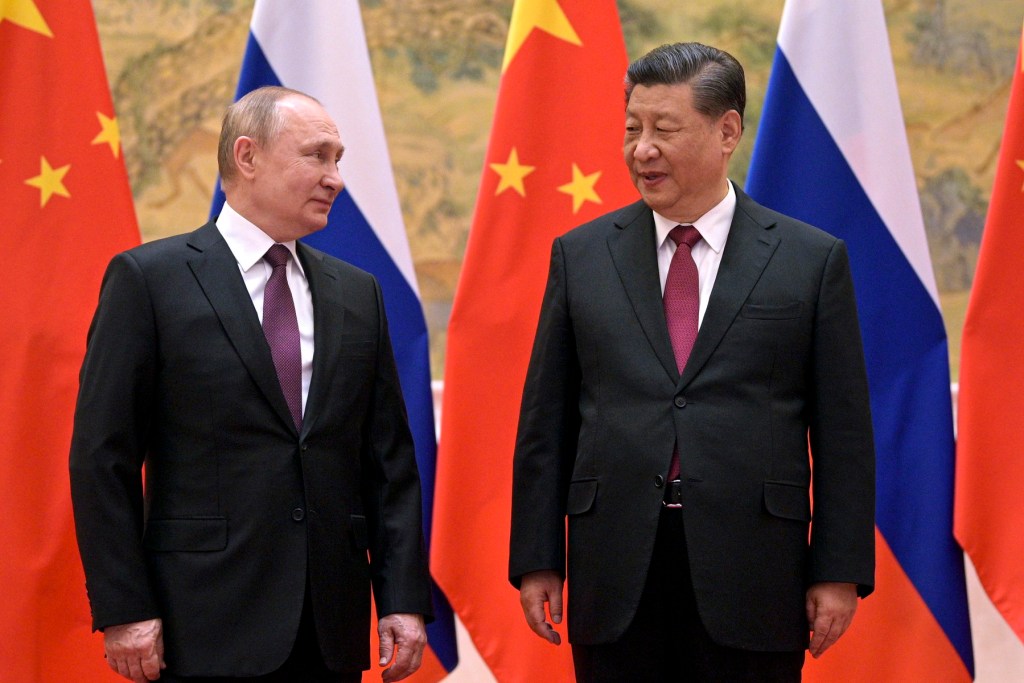
On February 4, the day of opening the Winter Olympics in Beijing, Putin met with the Chinese president to announce a new Chino-Russian partnership. “The friendship between the two states has no limits,” said in the common statement. Western information reports claim that Xi asked Putin to postpone any invasion until after the Olympics – a sign that Russia's planned war had the tacit agreement of Beijing.
The ceremony to close the Olympic games was scheduled for February 20.
The West had the ability to stop Russia's economy, but it is not clear if he had the necessary will, writes Edward Fishman in his book “Chokepoints”, where he describes how the great states were aligned to strangle Russia.
Olaf Scholz and his Party favored warmer relationships with Moscow
The decision to act was in the hands of the heads of states, but not everyone wanted to put himself with the “big bear”.
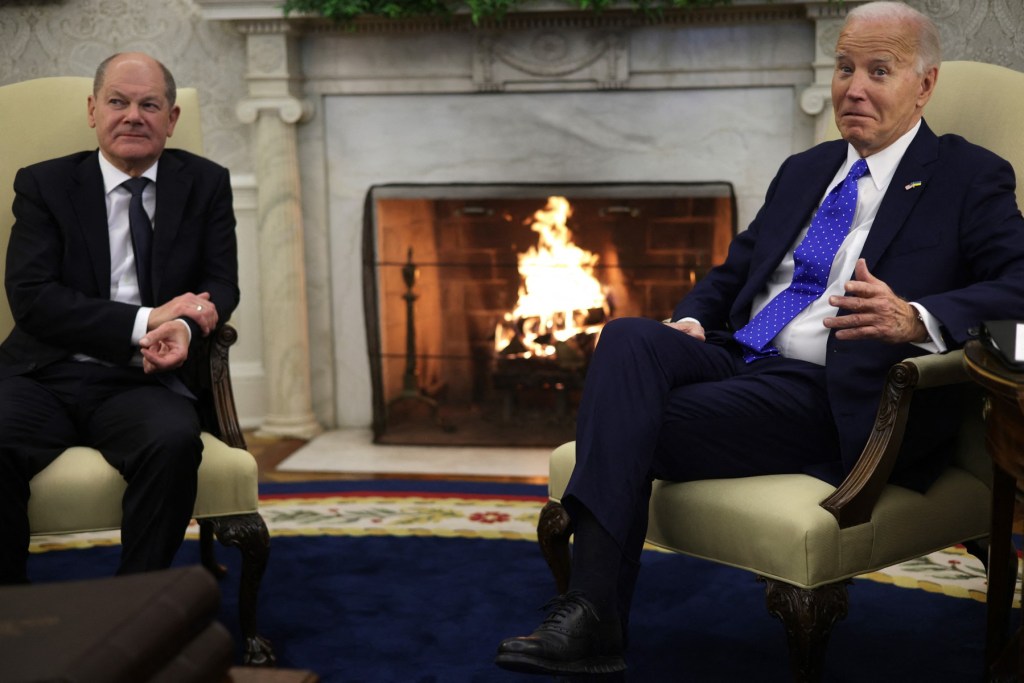
Olaf Scholz, for example, the German Chancellor, was leading the Social-Democratic Party, which favored warmer relations with Moscow. Prominent members of the party have publicly criticized the sanctions imposed on Russia. But Scholz's opinions remained unclear: he avoids direct diplomacy with Moscow but refused to send weapons to Kiev. His reluctance quickly eroded Germany's reputation as a trusted partner in Washington. “Berlin, we have a problem,” wrote Emily Haber, Germany's ambassador to the United States, in a cable sent home at the end of January.
Some progress was made when Scholz visited the White House in early February. In a joint press conference with Biden, the German Chancellor has provided support for “severe sanctions” in the event of a Russian attack. A reporter asked about North Stream 2, a neuralgic dispute between Berlin and Washington. “If Russia invades,” Biden said, “there will be no North Stream. We will put an end to them.” Scholz did not confirm Biden's threat, but did not denist.
In the scenes, the officials worked feverish to identify targets for the sanctions- financial and technological- with which to hit Russia.
The first two Russian banks were running 60% of the Russians' deposits, and more than half of all salaries in the country were paid through Sberbank.
Financially, choosing the goals was clear. The first two Russian banks, Sberbank and VTB, represented almost 60% of the warehouses in Russia, and more than half of all salaries in the country were paid through Sberbank. The third largest bank of Russia, Gazprombank, had a significantly smaller market share, but managed payments for energy sales in Russia. In order for financial sanctions to leave a sign, they should hit at least one of these banks, if not all three.
As these negotiations were in progress, Dalep Singh (ex-tradition at Goldman Sachs, deputy adviser for national security for international economy in the Biden Administration; the key architect of sanctions against Russia both in 2014 and in 2022) called on the largest American executives, urging them to prepare for the possibility of major sanctions. Many of the directors have set up companies to develop emergency plans to exit the Russian market, from the liquidation of assets to the evacuation of the staff.
Sunday, February 20, at noon, Biden convened an emergency meeting of the National Security Council
On Sunday, February 20, at noon, Biden convened an emergency meeting of the National Security Council. Jake Sullivan (US national security counselor under President Joe Biden; coordinated US policy in response to Ukraine's large-scale invasion of 2022), Tony Blinken (State Secretary), US, ex-Fed), Bill Burns (CIA director), Daleep Singh and other high-ranking offices. gathered in the operating room.
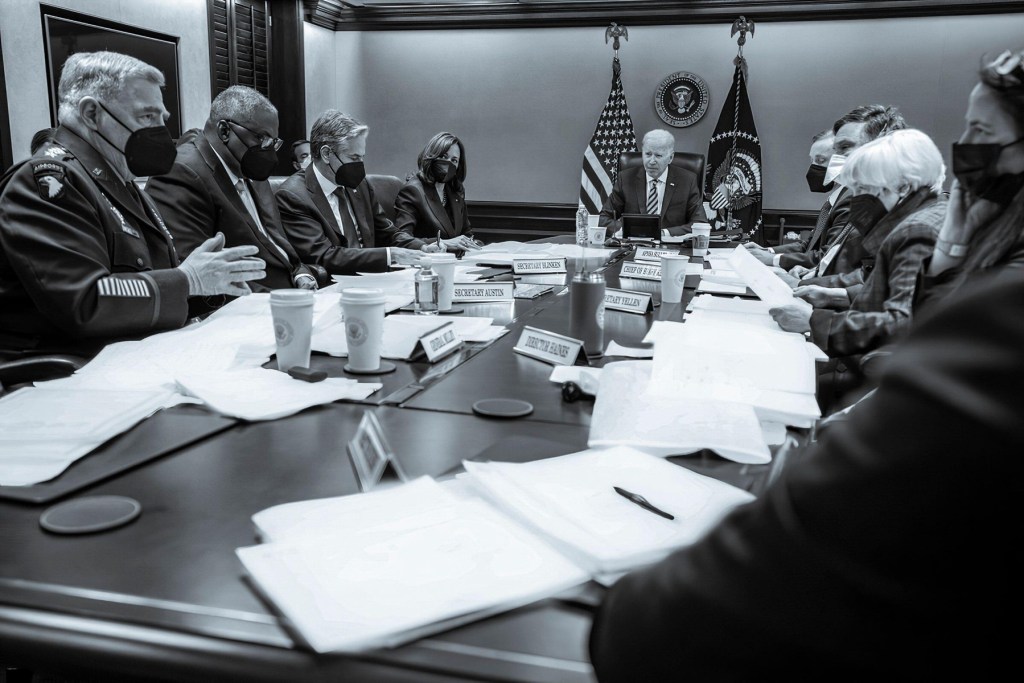
In Beijing, fireworks illuminated the night sky, marking the end of the Winter Olympics. Russian tanks could go to Kyiv at any time.
The financial sanctions package was ok, said Yellen. The foundation stone would be the sanctions against Sberbank and VTB, the two big banks in Russia. But there was also a danger: Sberbank and VTB had branches in Vienna and Frankfurt, and the blocking of sanctions risk spreading throughout the European banking system. “The wisest, said Yellen, would be to ban Sberbank and VTB from banking services on the US territory, without freezing all their assets. To compensate, the treasury would require sanctions to several smaller Russian banks.”
On Monday, February 21, Vladimir Putin discuss with the members of his Security Council, apparently about the recognition of the independence required by the Donetk People's Republic and the Lugansk People's Republic, the two self -proclaimed states of Donbas. But the real purpose of the meeting, says Fishman, was to convey that the war would take place soon.
“The only true counselors of Putin are Ivan the Terrible, Peter the Great and Ecaterina the Great ”
After the meeting, Putin signed a decree of recognizing the two separatist republics and ordered Russian troops to help “maintain peace” in Donbas. The decree had unanimous support of the Security Council.
Not that this consensus would count: Foreign Minister Sergei Lavrov is often cited that he would have told a Russian oligarch that Putin's only true counselors are Ivan the Terrible, Peter the Great and Ecaterina the Great.
Biden wanted a response from Europe; Was the EU determined to support the sanctions?
A surprise came from Germany: Olaf Scholz announced that it has canceled the Nord Stream 2 pipeline, transforming the submarine infrastructure worth $ 11 billion into a useless metal pile.
Eastern EU states, especially Poland and Lithuania, wanted tougher policies, while Greece and Hungary demanded caution.
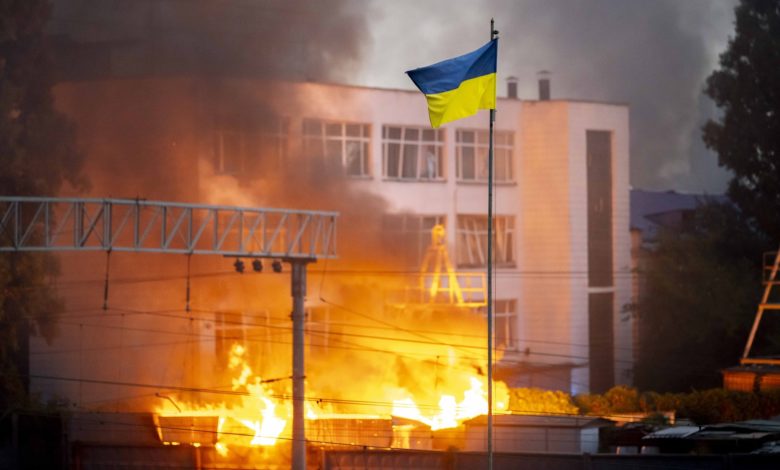
On Thursday, February 24, in the first hours before 5:00 in Moscow, Vladimir Putin returned to Russian TV screens. Standing at the same table from which he held the Security Council meeting on Monday, Putin announced that he ordered a “special military operation” for “demilitarization and denazification of Ukraine”. A few moments later, the rockets rained at airports and cities throughout Ukraine, from Kiev to Odessa.
Traders bet on the fact that Biden's threats were rather a dog barking, not a bite true
Biden continued to wonder if Washington should hit Russia's second largest bank. Janet Yellen expressed his reserves. VTB owned 20% of all Russia's banking sector assets. It would be one of the largest financial institutions that the Treasury has ever blocked. VTB had branches in Germany, and Berlin was not ready to sanction the bank, so a unilateral American blockage could break the transatlantic unit.
Finally, Biden approved the package. In addition to VTB locking sanctions, Washington would ask US financial institutions to close all Sberbank corresponding accounts within thirty days, a move that would disturb its ability to process payments. VTB, Sberbank and other Russian financial institutions processed almost $ 40 billion every day.
In the weeks before the invasion, the Russian financial markets went up and down, as the traders bet on the fact that Biden's threats were rather a dog barking, not a bite. But on February 24, the markets entered free fall. The main scholarship of Russia has lost one third of value in a single day. Rubla decreased to a record minimum compared to the dollar.
But in war, Russia continued to go. Hundreds of thousands of Ukrainians fled their homes. The explosions destroyed residential buildings and killed countless civilians. Zelenski declared the martial law and ordered a general mobilization, forbidding all Ukrainian men between the eighteen and sixty years to leave the country.
Compared to all this, the sanctions seemed inadequate. In relation to their main purpose – the prevention of Russian invasion first – they were a resounding failure. Months of preparations, threats and red lines had not impressed Putin. America and his friends “will always find an excuse to introduce more sanctions, regardless of the situation in Ukraine,” Putin told the Russian people. “The only objective they have is to limit the development of Russia.”
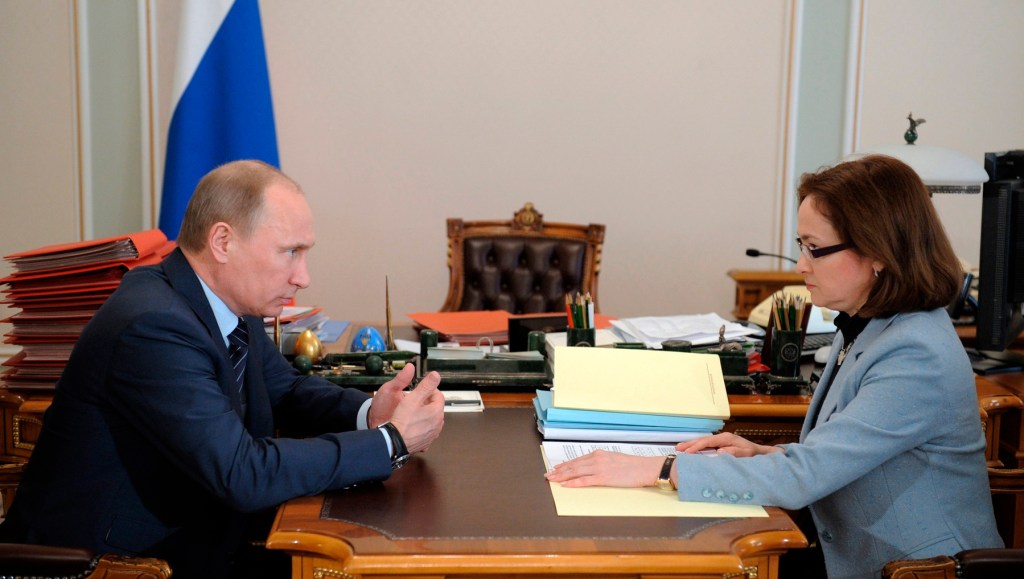
After the invasion of Crimea in 2014, the sanctions of Western capital markets and the decrease of the oil price caused the rubla to collapse. Russia's economy was rescued by Elvira Nabiullina, the governor of the Russian central bank, who rapidly increased the interest rates and spent the country's currency reserves, stabilizing. This taught Riași that he has to strengthen his currency holders. In the years after, the central bank has collected over $ 630 billion in foreign currency. The funds could be used to defend the rubla, to buy imports and to finance wars.
Now, Nabiullina has resumed her old strategy: she has increased interest, sold dollars and waited. And the US wanted to get this scenario.
But the house officials have forgotten an important thing: they did not talk to an extremely important G7 member: Japan. Japan is an essential member of the G7 and the issuer of a reserve currency- Yen-, so he neglected was an insult to them.
Singh called in Japan and apologized in abundance. Everyone at the White House was blocked until Japan's response. The prime minister's chief counselor said he would do his best to convince the prime minister of Japan, Fumio Kishida, to accept.
Around 5:30 pm, in Washington, G7 members, Minus Japan, issued a statement that undertakes to target the central bank of Russia. The statement did not give much details and was a kind of commitment to act in the future. However, she was seen as an unprecedented economic act, one who was sure she would shake financial markets and forever change the perception of Russia.