The idea of presenting the stories of young entrepreneurs who can inspire others to implement their ideas and create cross-border companies came up with the idea of Tomasz Karwatka, a business angel and author of the book “The 5”. During the book launch, in the inaugural panel, he encouraged them to reveal the behind-the-scenes of building brands that were unlikely to succeed, but changed the markets.
The rest of the article is below the video
Read also: “Study, otherwise you will end up in manual labor.” They didn't listen and they are millionaires
From tomatoes to the beauty market
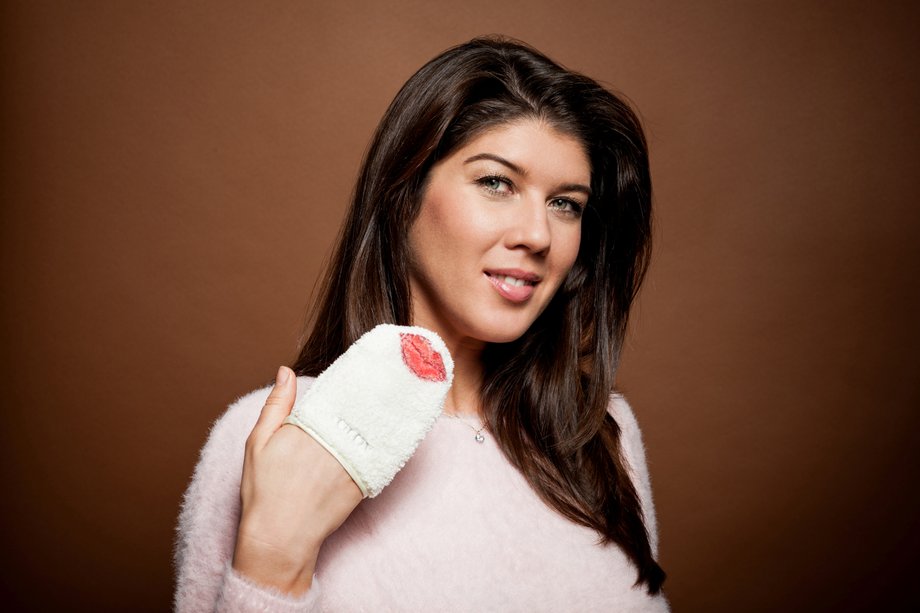
– The Polish countryside is the best school of entrepreneurship – began her story Monika Żochowska, co-founder of Phenicoptere and one of the heroines of “The Real Housewives Warsaw”. Her story, like the story of Tomasz Karwatka, it starts with selling tomatoes at the local market. A global brand has grown from childhood experiences, which with one simple product – a make-up removal glove used only with water – opened up almost the entire global beauty market to it.
Similar lessons were learned by Rafał Han, today CEO of the American Silvair, who compares the development of a start-up to a slippery slope: full of chaos, but also moments of pure clarity when it is known which decisions may determine the future of the company. In turn, Bartek Pucek, an investor and advisor to technological giants, emphasizes that every breakthrough company starts with people who try to bring the future to the present and do not recognize geographical limitations.
Everyone agrees on one thing: global ambitions do not come from comfort, but from courage. From dreams bigger than the local market, from e-mails sent to the best experts in the world and from the willingness to sleep overnight on the floor of the client's office if it allows the product to be delivered on time.
Global by nature: how Polish founders build companies that transcend geography Monika Żochowska, co-founder of Phenicoptere
|
Arek Markowicz / Wprost / FORUM / Forum Polish Photographers Agency
The secret of success is thinking that knows no boundaries — geographical, cultural or mental.
The winners are not those who start from the best position, but those who learn the fastest, adapt and are not afraid of ridicule when they send an email to Apple. A perfect example of this is Monika Żochowska, who – as she admits – carried out her first successful debt collection at the age of 12, when her father sent her to a debtor who had not paid for a long time. She played on emotionsshe asked for money because school was approaching and she needed to buy books, and she got the entire amount back.
In adulthood, the same determination of an unemployed girl looking for a job turned into a product that bypassed almost all barriers to entry into the global beauty market. The make-up removal glove, which only works with water, turned out to be so simple it was brilliant, and because it was sold as a towel, its introduction to the market did not require complicated procedures.
— Cosmetic products have codes, consents, registrations. We technically had a towel. Zero CPNP – Cosmetic Products Notification Portal, zero FTA – Free Trade Agreement. The client wanted it – we sent it – recalls Monika. — It wasn't just a chosen niche. “It was a conscious strategy: to build a category that had no existing rules or dominant competitors,” he adds.
The first trap: the Polish market as an illusion of security Rafał Han, creator of Silvair
|
Dariusz Lewandowski / Forum / Forum Polish Photographers Agency
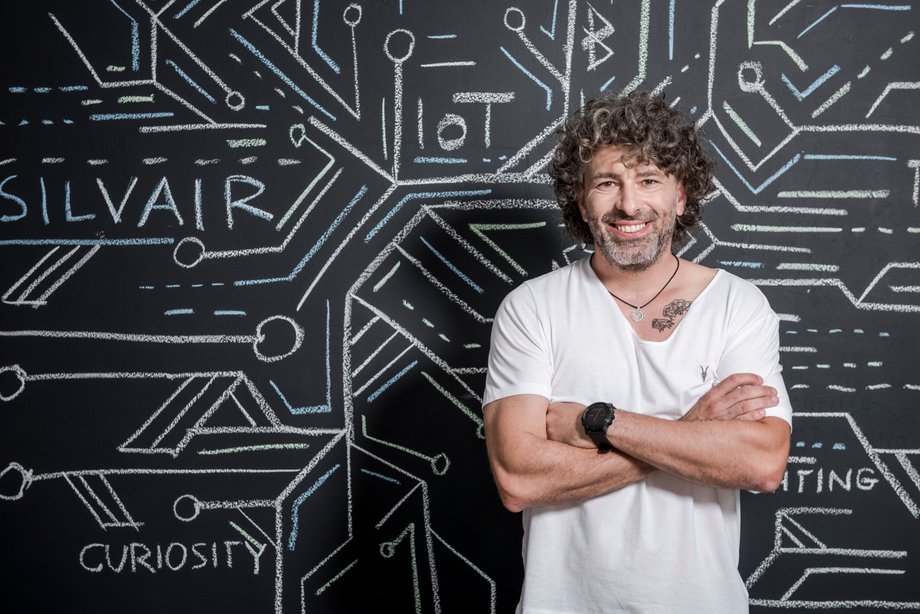
Rafał Han – today CEO of global Silvair, a company developing the standard of interoperable communication for devices in buildings – talks about another lesson: the biggest mistake? Thinking that you can build a global company starting from the Polish market.
Silvair started as a service project. Only an outside investor – and a brutal confrontation with market realities – made the founders realize that the name did not scale globally, the structure did not match American standards, processes only worked locally, and the product did not solve the biggest problems of the largest markets.
— Poland remained too small, too free, too dispersed. AND time in the world of technology is a currency more valuable than money – emphasizes Rafał. — That's why the decision was radical: to rebuild the company from its foundations. Business model, customer segment, go-to-market, positioning – everything, he adds.
The entrepreneur describes this process as entering a “tornado”: – The life of the company becomes incredibly fast. From the outside it looks like chaos, but inside there is total clarity. You know what to do. You also know what not to do, he explains.
The breakthrough moment came in Palo Alto. — We thought we would fix the local market. There we heard: don't fix the market – build a global standard. We will provide an umbrella, you will create a working group. You must have at least three members, specifications, tests, implementation – recalls co-founder Silvair.
A year later, his friend led a group that included people from Apple, Google, Intel and the world's largest lighting companies. He is convinced it was not a coincidence. It was a consequence of the principle: don't look at the geography – look at the problem.
The world is not waiting for locality. The world is waiting for solutions to problems Bartek Pucek, founder of Forward Operators AI Lab
|
Wojciech Kurczewski / Forum / Forum Polish Photographers Agency
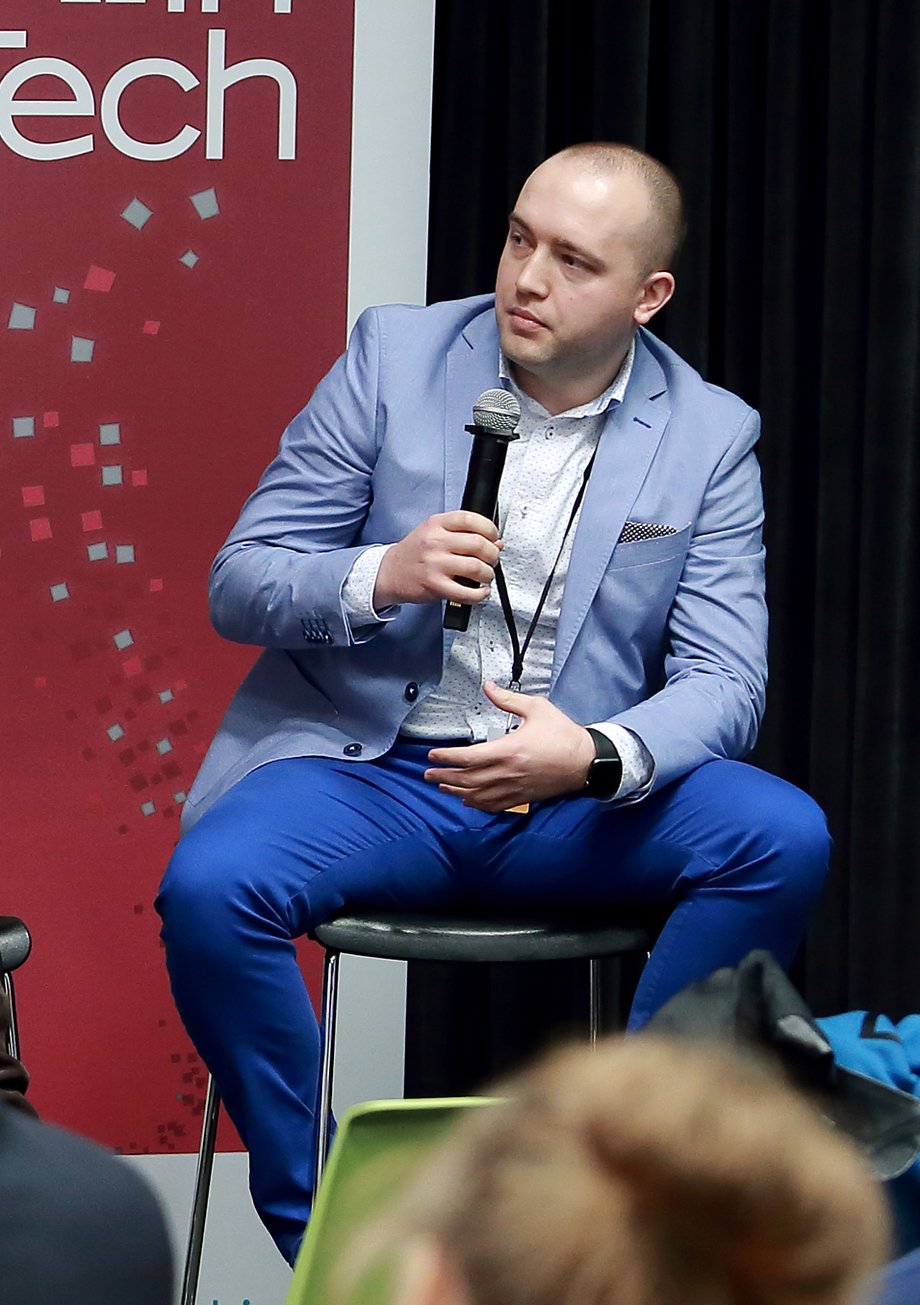
Bartek Pucek, entrepreneur, investor and advisor to global technology companies, leaves no doubts.
— There is no such thing as a European market. It's quicksand. Regulations are changing faster than technological possibilities. And the decision-making process in the United States is 3-5 times faster, explains the entrepreneur.
In his opinion, the foundation of global success is not the product. The foundation is category formation.
— The best companies don't build a product. They create a category. Then you're not racing against your competitors. They have to adapt to you, argues Bartek. — This is the key difference between a good company and a globally inescapable company.
All the interlocutors surprisingly agree on this – there is no insurmountable barrier. This is also confirmed by Tomasz Karwatka, who points out that the cultural code has changed. Accent, poor English, lack of friends – it doesn't matter. If you have something interesting, you have 30 seconds of their attention.
How to use them? Monka Żochowska suggests – people on top of the world reply because they are appreciated. If you wrote: I respect your work, would you take five minutes to share your opinion? — the probability of a response will increase significantly.
Bartek Pucek has a similar opinion and shares his own principle that he uses when working with founders: ask for an opinion, not for help, because asking for an opinion triggers curiosity. Asking for help feels like an obligation, and curiosity has a much higher conversion rate.
Bartek Pucek draws attention to a trend that is just beginning in Poland, but is becoming a standard in the world: engineers sent to the front line to the customer.
— The best engineers don't stay in the basement. They fly to the client, sleep in the office, and come back after one night with a solution. Competition has no chance, he argues. — This pace is impossible to achieve in classic ticket → sprint → implementation cycles. And in global B2B, the winner is the one who is at the customer's office in hours, not weeks, he adds.
What do global founders believe?
During the conversation, the entrepreneurs also shared a set of rules that sound simple – but require courage.
1. Dream as far as you can. Don't build products that fit local reality – build products that solve world problems.
2. Geography doesn't matter In digital, a customer in San Francisco and a customer in Berlin have identical needs – only the pace of decisions differs.
3. Global success doesn't require a perfect start. They themselves confirm it one hundred percent: Monika Żochowska started as unemployed. Rafał Han as a service provider who had to break out of the local trap, while Bartek Pucek started by analyzing how the largest companies operate.
4. The most difficult problems attract the best people. — The best are only interested in the most difficult challenges, says Bartek Pucek.
5. One message can and usually does change the trajectory of a company.
Rafał Han is convinced that today's world is fueled by the above-mentioned tornado, which puts business into a tailspin. — This is the moment when the world looks like chaos and inside you have absolute clarity. Once you feel that glide, you want to feel it again, he says. — This is why founders keep coming back to building more companies. Not for money. Not for prestige. For the feeling that they are creating the future before others notice it. This is their addiction, he adds.