
The latest analysis by VeloBank's economic team shows that it is differences in monetary policy (mainly in terms of interest rates) that are driving the region's strengthening and keeping it among the most attractive emerging markets.
The rest of the article is below the video
Currency rates. Zloty against the background of the Hungarian forint and the Czech koruna
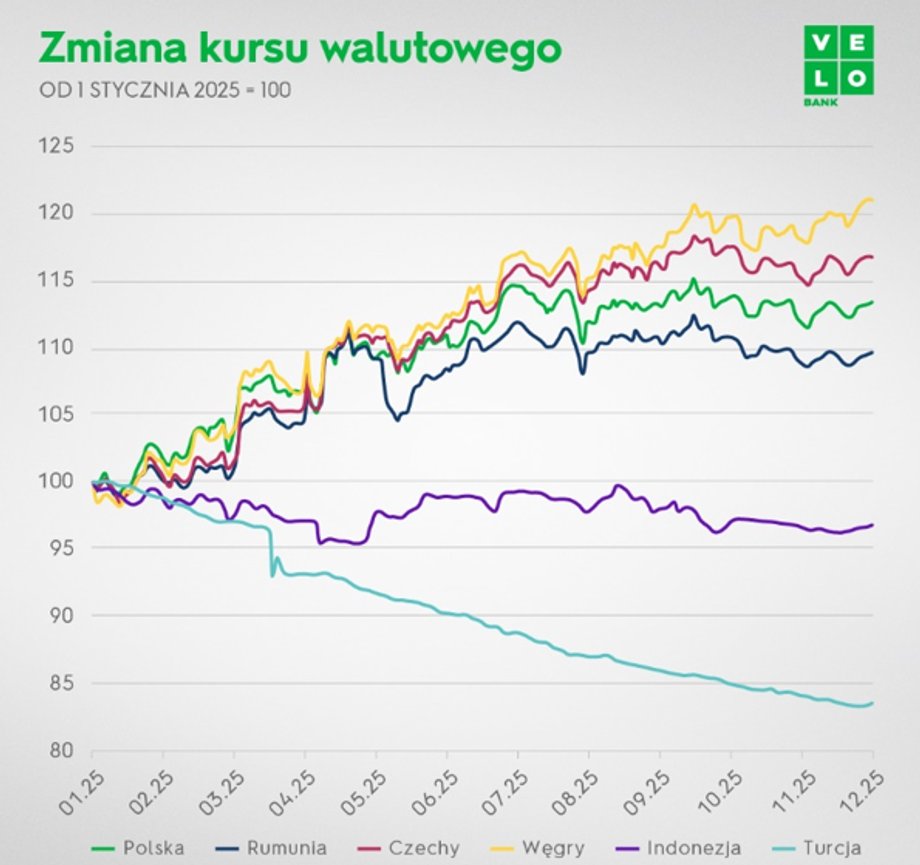
“Central European currencies maintain a strong upward trend as investors expect high interest rates to remain high for a longer period of time. The forint, koruna and zloty have generated double-digit gains against the dollar this year,” we read in the analysis.
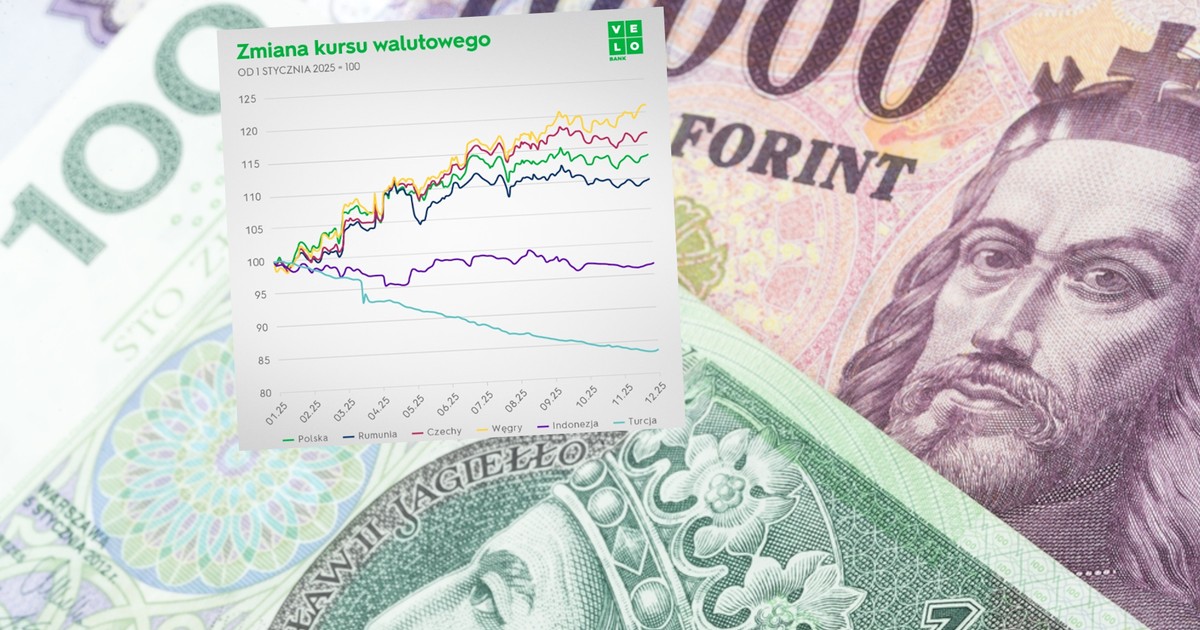
Indicates specifically that the zloty strengthened by 13 percent, while the Czech crown gained 17 percent and the Hungarian forint as much as 21 percent. For comparison, the Romanian leu increased by 10 percent, the Indonesian rupiah lost over 3 percent and the Turkish lira lost 16 percent.
|
VeloBank
“The key factor supporting currencies remains high interest rates, which still exceed the level of inflation by about 1.5 percentage points. Comparing real interest rates, i.e. the differences between the main reference rates and the inflation rate, it turns out that among developing markets there is a similar level of impact of monetary policy ranging from 1.5-2.5 percent. This is the case of Poland, the Czech Republic and Indonesia. The situation is slightly different in Romania, where since the increase in VAT and the increase in inflation in recent months Romania could decide to tighten its monetary policy. Turkey has a strict policy, which has been struggling with inflation for years and has recently been pursuing a more orthodox monetary policy,” the report reads.
See also: Dollar exchange rate after the Fed's decision. See how this affects wallets
Currency rates. What next for the zloty, forint and koruna?
Economists indicate that in Poland, despite the last rate cut in December and subsequent ones in 2026, the policy easing cycle will soon end at the level of 3%, i.e. approximately 1 percentage point in real terms. over inflation. After the last rate cut in December, we will only have a gradual adjustment in 2026. In the Czech Republic, the central bank will most likely keep interest rates unchanged at the next meeting, while the Hungarian base rate has remained stable for over a year. This stability, despite political pressure, supports the appreciation of the local currency.
“It is too early to talk about the end of the rising wave of currencies in the region. High interest rates and the cautious approach of central banks support maintaining strong exchange rates and increase resistance to a moderate strengthening of the dollar in the coming months,” comments Piotr Arak, chief economist at VeloBank.
See also: Hungary in crisis: Viktor Orban's failing economic model
In his opinion forint, at the current rate of 6.5 percent, remains particularly attractive to investors. “If the authorities of the American central bank change, interest rates there will fall faster and the dollar will weaken more,” says Piotr Arak.


