Ukraine restructures its control and control system of armed forces by creating new military bodies. The first of these was already formed around the Azov brigade, one of the most effective combat units of the country, and two others are to be constituted on the basis of the national guard.
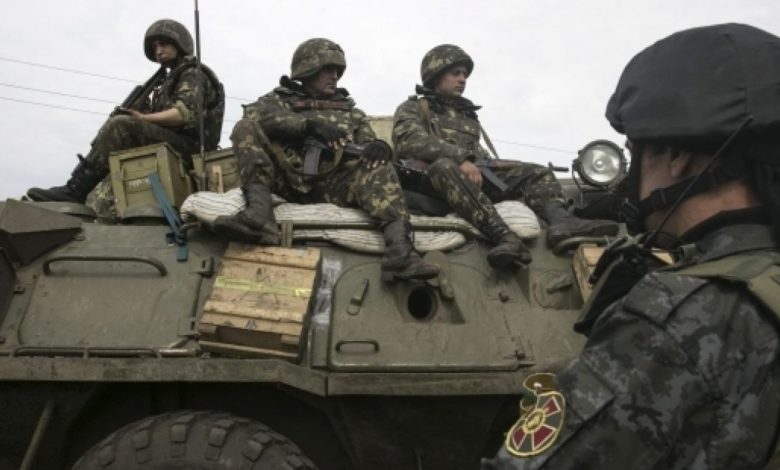
Ukraine's ground forces will have 13 army/ photo bodies: Archive
The new system of army corps will be a higher level of command, integrating several brigades. Experts are convinced that this reorganization will improve coordination and efficiency on the front, reports Kyiv Post.
Better late than never?
On February 23, 2025, President Volodimir Zelenski approved the composition of an army and the appointment of 18 potential commanders. Each body will be designated on a sector of the front and will have under the command to permanent brigades. A standard body will include five brigades, and some will include seven.
Ukraine's ground forces will have 13 army bodies, plus two air assault, a navy and two national guard bodies.
“For three years, I have accumulated unique experience in fierce fights, we have done successful counterattacks and became the most efficient in using the drones on the front. We introduced technologies, I changed approach to staff training and we created the best recruitment system in the country. Now it is time to expand the horizons.”said Andri Betteski, the commander of the third assault brigade, without providing additional details.
Why is Army Corps needed?
So far, the command at the Army Corps level has been provided by operational and operational-tactical groups (OSUV and OUV). Andri Haruk, a military history and teacher at the Ukraine's Academy Academy, explains that the structure on the army will lead to a higher quality of the operational command.
“The bodies should replace OSUV and OTUV. Brigades should be united by a common history, types of weapons and similar missions. Now we have a different” salad “and” attached “units that are chaotic, losing coordination. Army is an integrated structure“Says Haruk.
One of the reasons for introducing this system is the numerical growth of the army. In the 2000s, Ukraine abolished the structure on the bodies, and under the president of Viktor Yanukovici, the army was intentionally weakened, reaching a number of only 100,000 soldiers – half of them being support bands.
A new generation of commanders
However, the bodies of 2025 will be fundamentally different from the Soviet ones from the 1990s. Then, these were only administrative units, not tactical. Now, change requires experiences with experience and superior skills – a resource that Ukraine still suffers from.
“We need people who can plan and lead tactically-Maiori, Lieutenant-Colon and Colonians who understand the strategic situation. This is a completely new military reality,” explains a military analyst.
Why did the Azov brigade the first one?
The rumors about the transformation of the Azov brigade into an army circulated long. The unit, made up of patriotic volunteer officers and reorganized by NATO standards, has proven its efficiency in the defense of Mariupol.
“The main purpose of the Army Corps is the union of brigades in a single operational area to improve the coordination. Most of the command officers and the General Staff come from the Azov Brigade,” said a unit spokesman.
Unlike the current system, in which the brigades are rotated individually, the bodies will act as autonomous units, with their own logistics structures, drones.
Challenges and perspectives
Although the reform seems beneficial, its implementation will not be without obstacles. One of the biggest problems remains the chronic lack of experienced commanders. The war has caused heavy losses among officers, and the formation of a new generation of military leaders is a process that requires time.
“We do not have enough General Staff officers who can handle such complex structures. Our brigades have learned to fight autonomously, but managing an entire body is something else,” a colonel from the ground forces recognizes.
In addition, some observers warn that reorganization during the war may create temporary confusion, and some units may resist changes for habit or internal rivalries.
The future of the Ukrainian army
If the reform is successfully applied, the army bodies will provide Ukraine a more flexible and easier to coordinate structure, similar to NATO models. This will be essential not only for long-term resistance against Russia, but also for future integration into Euro-Atlantic structures.
However, success depends on several factors:
-The rapid instruction of new commanders
-The assignment of the necessary resources (weapons, equipment, logistics)
-Monderation of the moral of the troops under the conditions of an exhausting struggle
Azov, 3AB and other elite brigades will be the pillars of this transformation, but the question remains: will the other units be able to adapt to this new model?
Anyway, Ukraine again shows that she learns from the experience of war and is not afraid to innovate even under the fire of the enemy. And this, in itself, is a sign of resilience, notes Kyiv Post.