Friedrich Merz sets a condition for a Europe without borders. He talks about migration control


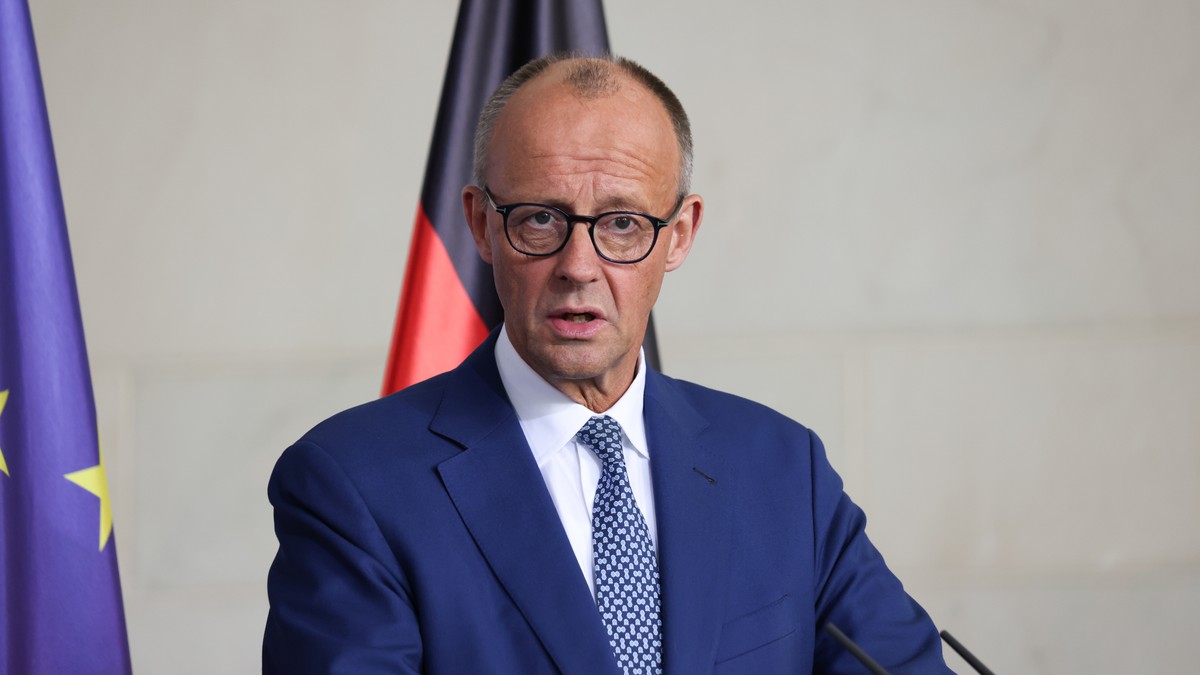
German Chancellor Friedrich Merz expressed his belief that that the European Union's common asylum policy can restore Europe to a space without internal borders. According to the German leader, the key to this is to transfer control to the external borders of the community.
The text continues below the video
During the meeting in Mainz, Friedrich Merz emphasized thatthat transferring border controls to Europe's external borders will allow for the reconstruction of a space without internal borders, which, as he emphasized, he has always supported. His statement was quoted by the regional broadcaster SWR.
EU approves migration plan. Relocations, payments and operational support
On Monday, the interior ministers of the European Union countries preliminarily approved the European Commission's plan as part of the migration pact. The solidarity mechanism, which is part of this plan, assumes the relocation of 21,000 people. people in 2024 within the EU. Additionally, Member States will allocate EUR 420 million for support related to migratory pressure.
This mechanism allows EU countries to choose the form of their contribution: relocation of migrants, financial contribution of PLN 20,000. euros for each person not recruited or for operational support, for example through secondment of staff. However, the European Commission exempted six countries that are in a particularly difficult migration situation from the obligation to participate in the mechanism. These included Austria, Bulgaria, Croatia, the Czech Republic, Estonia and Poland.
Read also: German Chancellor on American strategy. Clear position
Controls at German and Polish borders
Border controls in Germany, introduced by Olaf Scholz's government in September 2024, cover all of the country's land borders. However, already earlier, from October 2023, they were in force at the borders with Poland, the Czech Republic and Switzerland. After the February parliamentary elections, the Christian Democratic bloc CDU/CSU, which came to power, announced a tightening of migration policy, indicating strengthening border controls as one of the key tools. For the Christian Democrats, the issue of migration remains a priority, especially in the face of growing support for the right-wing populist AfD party.
Poland also conducts controls on its side of the border. However, their effects are felt not only by services, but also by residents of border regions and local entrepreneurs for whom traffic disruptions constitute a serious challenge.
Read also: Poland extends border controls with Germany and Lithuania. There is a new date