The US Secretary of State has ordered diplomats to immediately return to the “Times New Roman” font, and stop writing in “Calibri”

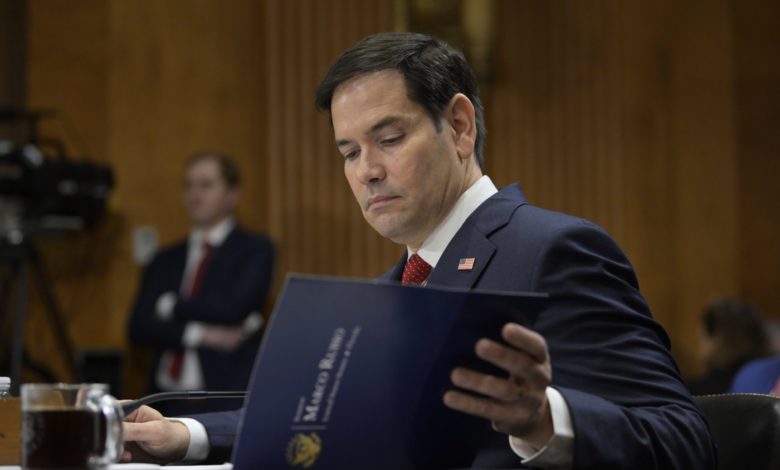
Marco Rubio, US Secretary of State, during his Senate confirmation hearing in January, PHOTO: Lenin Nolly / Sipa Press / Profimedia Images
US Secretary of State Marco Rubio on Tuesday ordered diplomats to return to using the “Times New Roman” font in official communications, calling his Democratic predecessor Antony Blinken's decision to adopt “Calibri” a “wasteful” diversity measure, according to an internal department cable seen by Reuters.
Under Blinken's leadership, the State Department had switched in early 2023 to “Calibri,” a modern sans-serif font, saying it was a more accessible font for people with disabilities because it lacked decorative angular elements and was the default font in Microsoft products. Although the difference is almost imperceptible to ordinary people, sans-serif fonts lack some of the small decorative lines that appear at the ends of letters in other fonts.
Calibri, Arial, and Helvetica are examples of other sans-serif fonts.

A December 9 telegram sent to all American diplomatic missions stated that typography affects the professionalism of an official document, and “Calibri” is informal compared to serif fonts.
“To restore decency and professionalism to the Department's written materials and to eliminate yet another wasteful DEI program, the Department is reverting to Times New Roman as the standard font,” the telegram said.
“This formatting standard is consistent with the One Voice for America's Foreign Relations presidential directives, emphasizing the Department's responsibility to present a unified and professional voice in all communications,” states the telegram signed by Marco Rubio.
The State Department did not immediately respond to Reuters' request for comment.
A font caught in the middle of the White House's “anti-diversity” fight
The State Department's 2023 decision came as some studies suggest that sans-serif fonts, such as Calibri, are easier to read for people with certain vision impairments.
After his return to the White House in January, Donald Trump and his administration moved quickly to eliminate federal programs that promote diversity, equity and inclusion (DEI) and threatened the private sector as well to drop them.
Among the measures taken were the firing of diversity officers in federal agencies and the withdrawal of grant funds for a wide range of programs.
The so-called DEI policies, intended to encourage the employment of people considered disadvantaged due to ethnic criteria or sexual orientation, became more widespread after the large-scale protests that took place in 2020 in the USA due to the killing of African-American George Floyd by the police in Minneapolis.
Trump and other critics of the diversity initiatives argue that they are discriminatory against white people and men and that they affect merit-based decision-making.