Fear of Russia changes armies. Which countries are reintroducing compulsory military service?

France and Germany are planning to introduce new models of military service, which has long been voluntary in many European countries – including Poland. Due to the threat from Russia, compulsory military service was restored by, among others, Lithuania and Sweden.
French President Emmanuel Macron announced last week that a program of voluntary, 10-month military service for young people aged 18-19 will begin in 2026. Next year, the program is expected to cover 3,000. people, and the goal is to bring this number to 10,000 in 2030.
According to AFP, people aged 18-19 will constitute 80 percent. chosen to serve. The remaining 20 percent was reserved for people with a more specialized profile (engineers, data analysts, paramedics). They will be able to serve before they reach the age of 25.
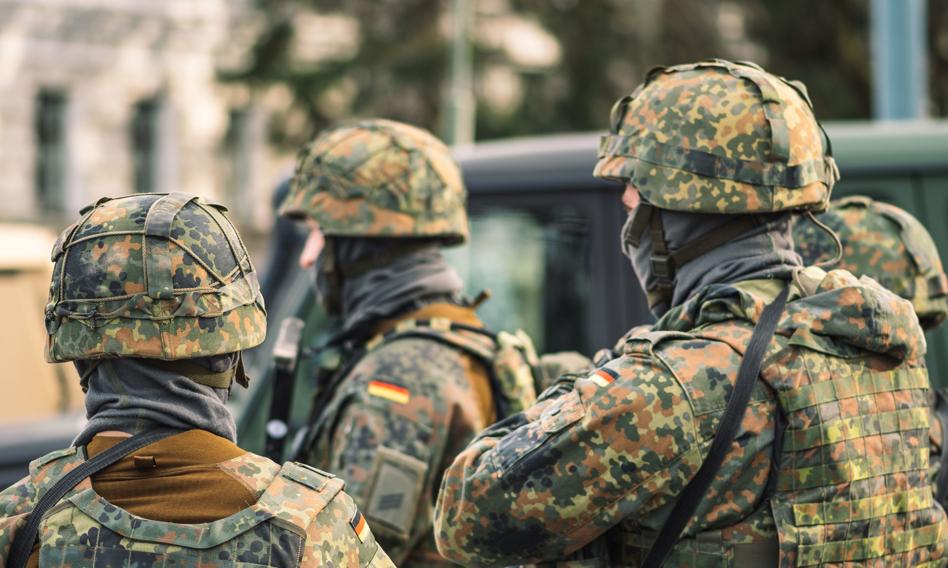
There has been no compulsory military service in Germany since 2011. Persons who are over 17 years old, have German citizenship and meet health requirements can apply to join the Bundeswehr.. However, growing staff shortages resulted in the government plans to significantly increase the number of armed forces – to approximately 260,000. soldiers – to meet NATO requirements and strengthen the country's defense capabilities. Ultimately, approximately 200,000 will be needed. reservists.
To achieve this goal, the CDU/CSU and SPD government coalition has agreed on a new model for military service, which is expected to be approved on Friday. It provides for mandatory medical examinations for all young men and the possibility of introducing conscription by lot if the number of volunteers turns out to be insufficient. However, this does not mean the automatic restoration of the former compulsory military service. The new regulations are to enter into force on January 1, 2026.
In Britain, conscription was introduced twice in modern times, and in both cases the cause was world wars. Conscription was first introduced in 1916 and remained in force for four years. Such a step was taken again in September 1939.
After the end of World War II, due to the still tense situation in the world, the then Labor government decided to maintain conscription – from 1949, all able-bodied men aged 17-21 were subject to it, and military service initially lasted one and a half years, and later two years. Compulsory military service began to be restricted in 1957 and was finally abolished in 1960.
There are currently no plans in the UK to reintroduce universal conscription, or even any serious discussion of it, although following the Russian invasion of Ukraine there have been some suggestions for expanding military service in some form.. In early 2024, then-Chief of the General Staff, Gen. Patrick Sanders, called for the introduction of military training for citizens who would become a “citizen army” in the event of a conflict.
Then-Prime Minister Rishi Sunak announced before the July 2024 election that if his Conservative Party remained in power, the government would introduce compulsory military service for 18-year-olds, although with the possibility of replacing it with volunteering. With the defeat of the conservatives, the proposal lost its raison d'être. The currently ruling Labor Party is against the reintroduction of conscription.
In Italy, compulsory military conscription was suspended in 2004. Since 2005, the army has been completely professional. Proposals for the partial restoration of conscription regularly appear in the public debate, but they quickly disappear.
RAI television reported that Defense Minister Guido Crosetto said at a meeting in Paris with French Minister Catherine Vautrin that he planned to present a draft law on voluntary, voluntary military service, in line with similar proposals in France and Germany. According to this proposal, an additional reserve force of 10,000 would be created. people, ready to act if necessary.
In Sweden, the government reintroduced compulsory military service in 2017 due to the threat from Russia. Previously, this obligation was suspended in 2010, when it was recognized that there was peace in Europe and the army could remain professional. Both men and women receive draft calls. This year, approximately 8,000 will be trained. young people, by 2028 this number is expected to increase to 12,000. annually.
The Swedish armed forces currently number approx. 26,000. people in full-time jobs; most of them, 15.4 thousand, are professional soldiers, including 9.7 thousand officers. There are also 10.5 thousand people working in the army. civilians. The army also uses reservists, employed periodically during exercises or missions, as well as over 22,000 Home Guard volunteers (territorial defense troops). This type of service has become very popular after the outbreak of the full-scale Russian war in Ukraine.
In total, the army in Sweden numbers over 56,000. men and women.
Lithuania reinstated compulsory military service in 2015 in response to the threat from Russia. So far, it covered men aged 18–23 and was selective. The annual collection amounted to approximately 3.5–4 thousand. people. The training lasted nine months.
The Lithuanian Armed Forces announced that in 2026, approximately 5,000 will be conscripted for military service in Lithuania. people. Conscription will run year-round, from January 2 to December 31, and programs and length of service will vary.
Currently, the Lithuanian army numbers about 20.5 thousand. soldiers, including approximately 10.9 thousand professional and 5.4 thousand members of the Volunteer National Defense Forces, as well as conscripts of compulsory military service.
In the Czech Republic, conscription into the army was abolished in 2005. The army is fully professional and numbers about 25,000. soldiers. There is also an active reserve of approximately 5,000. members. Army commanders are not satisfied with the recruitment and hope that in 2030 the professional army will number 30,000 and the active reserve – 10,000. Current regulations do not provide for conscription except in states of emergency and war.
There has been no conscription in Slovakia since January 1, 2006, and the army is fully professional and numbers about 17,000. soldiers. In addition to the active reserve, the National Defense Forces were established in 2025 to support the regular army in a crisis situation. The training lasts two weeks.
Hungary officially suspended military conscription in 2004. The army is fully professional, military service is voluntary, and conscription is only possible in a state of war. The government of Prime Minister Viktor Orban is firmly opposed to the restoration of compulsory military service and accuses the most important opposition group, TISHA, of wanting to restore it, which the party denies. A study by the Szazadveg think tank published in the second half of November showed that 80 percent Węgrów opposes the reintroduction of conscription.
In Romania, whose armed forces number nearly 70,000. professional soldiers, the government project of a voluntary military service program is expected to be implemented by the end of 2025. Paused in 2007 compulsory military conscription is to be replaced by four months of training for volunteers, both men and women, aged 18-35. In total, during the training period in a military unit, the volunteer would receive the equivalent of EUR 6,000.
At the end of October, the Croatian Parliament passed an amendment to the Defense Act, restoring compulsory military service. It will cover men who turn 18, and basic military training (TVO) will last two months. The authorities have provided for the possibility of refusing to serve due to religious or moral beliefs – these people will be able to choose three-month basic training in civil defense or in field units for a period of four months.
The salary for military training will be EUR 1,100 per month, and for civil service it will be lower, and its amount will be regulated by law. Women are not subject to compulsory conscription, but they can join the army voluntarily.
In Spain, the government emphasizes its attachment to the current model, based on professional military service; Compulsory conscription was abolished in this country in 2001. In 2024. Defense Minister Margarita Robles said she did not believe that “anyone would ever think of restoring compulsory military service.” The Spanish armed forces number – together with reservists – about 150,000. soldiers.
In Portugal, compulsory military service was abolished in 2004. The local armed forces rely on professional soldiers, of whom there are currently almost 25,000. Although it is possible to undergo a one-year training for volunteers, few Portuguese take part in it. A short, day-long military knowledge training course is mandatory. It covers men and women aged 18-35.
Poll for WP: 59.4 percent Poles believe that compulsory military service should return
59.4 percent Poles believe that due to the current international situation, Poland should restore compulsory military service – according to a United Surveys survey commissioned by Wirtualna Polska. 30.9 percent is against such a solution.
Respondents were asked whether they “agree that due to the current international situation, Poland should restore compulsory compulsory military service?”
59.4 percent respondents agreed with this statement, including 14.7 percent said they strongly agreed, and 44.7% said they rather agreed. 30.9% have a different opinion. respondents – 15.7 percent stated that they strongly disagreed with the restoration of compulsory military service, and 15.2 percent found that they rather disagreed. In turn, undecided people constitute 9.7%.
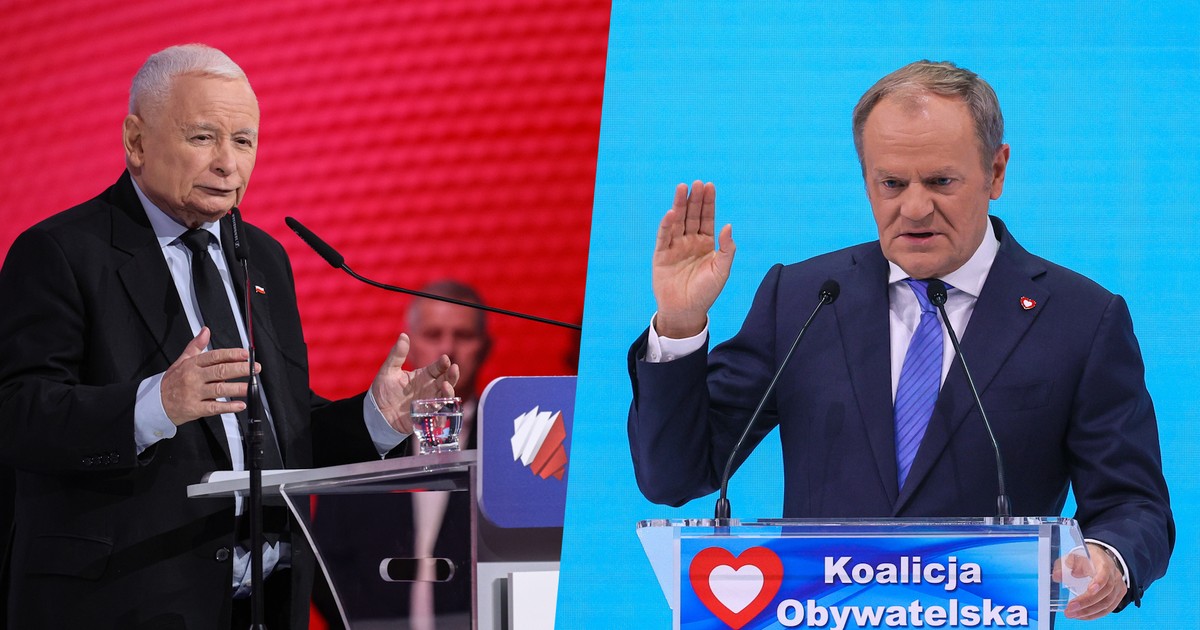
50% agree with the statement. voters of the ruling coalition, including 12 percent definitely, and 38 percent probably yes. In turn, 41% of government supporters are against such a solution. respondents – 24 percent probably not and 17 percent definitely not. Undecided people constitute 9%.
The greatest support for restoring compulsory military service was expressed by PiS and Konfederacja voters – 67%, including 15%. strongly agreed, and 52 percent I tend to agree with this idea. A total of 26% are against it. opposition voters, including 15 percent expressed strong opposition, and 11 percent found that they rather disagreed. 7% remained undecided. respondents.
The United Surveys survey for Wirtualna Polska was conducted on November 21-23, 2025, using the CATI and CAWI methods, on a representative group of 1,000 Poles.
mbed/ mrr/
mrf/ awl/ bjn/ ptg/ jbw/ sw/ zys/ zat/ ipa/ aki/ akl/