Hungary wants to send businessmen to Russia. Orban ponders 'world after war and post-sanctions'


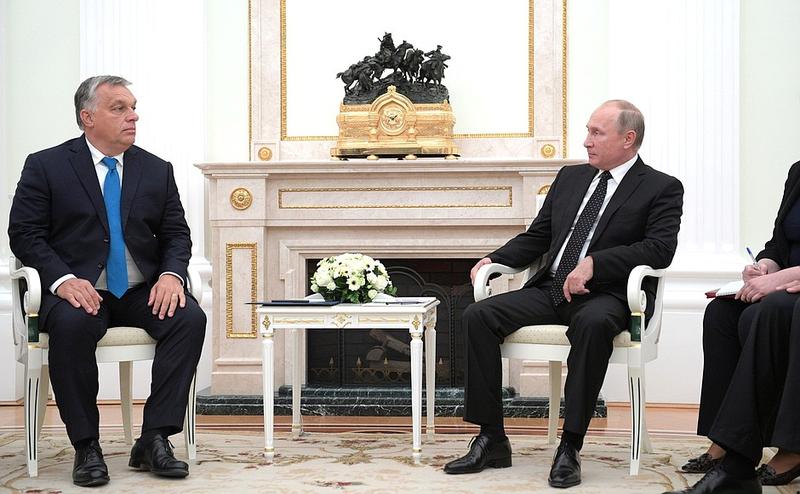
Viktor Orban and Vladimir Putin, Photo: kremlin.ru
Hungarian nationalist Prime Minister Viktor Orbán announced on Saturday, during a meeting organized a few months before the parliamentary elections in his country, that he will send a delegation of businessmen to Russia in the coming days to prepare the post-war period in Ukraine, reports AFP, taken by News.ro.
This mission will focus on economic cooperation and is part of the desire to “think from now on about the world after the war and after the sanctions”, he declared in front of about a thousand people gathered in a gym in Kecskemét, in central Hungary.
Viktor Orbán, one of the few European leaders close to both US President Donald Trump and Russian President Vladimir Putin, has said that he is talking to both the Americans and the Russians. “I can't reveal all the details,” he said.
“We have to anticipate, because if God helps us and the war ends without us being involved, and the American president manages to reintegrate Russia into the world economy and the sanctions are lifted, we will find ourselves in a completely different economic space,” he added.
According to Hungarian media, the Hungarian oil and gas company MOL intends to acquire refineries and gas stations in Europe, owned by the Russian groups Lukoil and Gazprom, which are subject to American sanctions, as well as stakes in production units in Kazakhstan and Azerbaijan – topics that would have been discussed during the meeting between Viktor Orbán and Donald Trump, at the beginning of November, in Washington.
At the end of November, Viktor Orbán traveled to Moscow, where he promised Vladimir Putin to continue imports of Russian hydrocarbons, on which Hungary continues to depend, once again defying the European Union in this regard.
Indeed, the Hungarian leader has not tried to really diversify his country's imports since the start of the Russian offensive in Ukraine in February 2022, unlike many of his European neighbors.
In November, he announced that he had referred the Court of Justice of the European Union (CJEU) to oppose the decision of the majority of member states to approve in October the principle of banning Russian natural gas imports until the end of 2027.