INTERVIEW In the Prahova water crisis, “it was not the mud that stopped the water, but the state institutions”, says a specialist. Paltinu lacked something that is not talked about


Dumitru Chisăliță is an engineer graduated from “Oil and Gas”, with a master's degree in energy in Romania and doctoral studies in France. What does the president of the Intelligent Energy Association say about the crisis that surprised Romania by its scope and duration.
We could learn three lessons from the Paltinu case, believes Dumitru Chisăliță, energy expert and president of the Intelligent Energy Association.
In a dialogue with HotNews, the engineer specialized in the management of energy fields is categorical in summarizing the crisis that left over 100,000 people without tap water in two counties, Prahova and Dâmbovița, since last Friday:
- “We have an acute shortage of coordinators.”
- “It's time to restore the idea of good practice.”
- “Hydroenergy will save Romania”.
“Romanian waters” ran away from their role
One of the fundamental mistakes that led to the water crisis is related to leadership. The lack of an entity to make decisions, says Chisăliță.
“I think there should have been a conductor, and that was missing there. Someone has to take it on, say 'I conduct, I do'. Don't hold the idea that the person downstream always knows what the person upstream is doing. Like in an orchestra, you must have a conductor, even if you have the best instrumentalists. In works of this kind, someone needs to say clearly: 'I am the one who coordinates' and everyone else is coordinated by that single entity”, he says the expert.
“Here, that unique entity was missing which, I think, should have been the Romanian Waters. I don't know if I'm right, but I think so. For any action you need a captain, it was missing here.”
He also mentioned another problem, a “basic thing”, the lack of filling the adjacent capacities, because it would normally have been to have alternative sources of water, prepared in time.
“Institutions fail and the effect is that the citizen dies or pays”
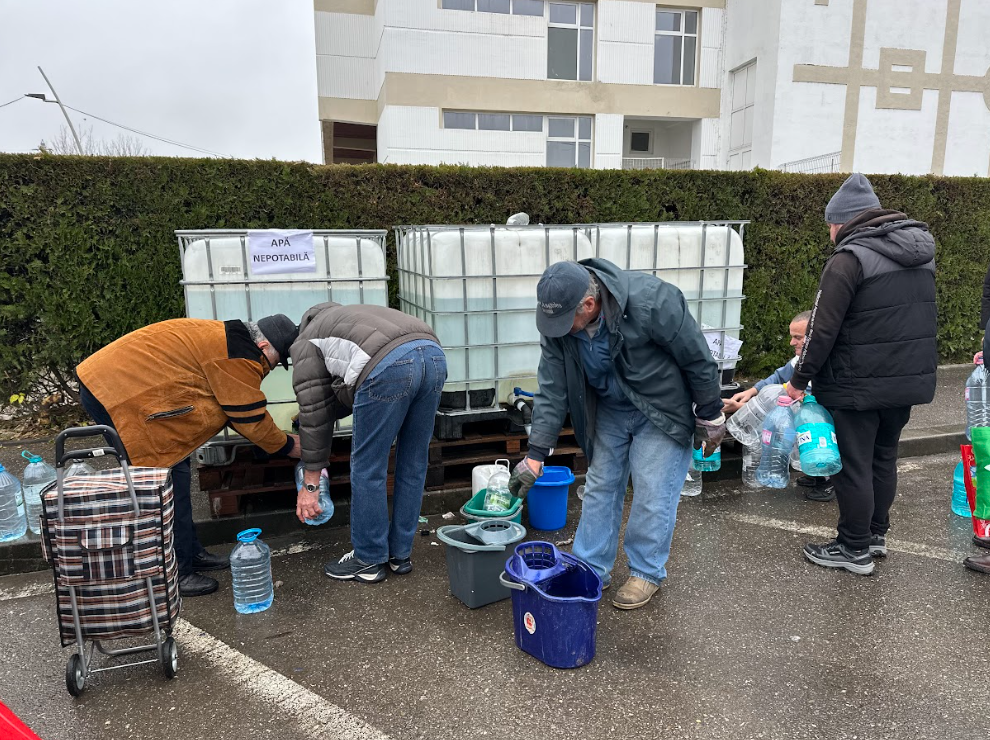
Chisăliță also said that there were at least “seven fundamental mistakes” and added that disasters like Paltinu, Rahova, Colectiv – although they are very different – have in common basic elements “that keep repeating and expanding to other levels and tiers. Institutions fail, and the effect is that the citizen dies or pays”.
“This effectively shows that, in fact, it was not the mud that stopped the water, but the state institutions, due to malfunctioning. Here we are discussing a systemic problem that is repeated in various forms and areas and we do not see any light at the end of the tunnel”, says the director of the Intelligent Energy Association.
It cost half a million euros from Brazi
Why is it worth comparing the case of Colectiv with Paltinu? “And Rahova was a smaller Collective and all these cases are based on some malfunctions and inefficiencies in how to prevent certain situations”.
“Institutions fail, and the effect is that the citizen dies or pays,” says Dumitru Chisăliță. He also gave an example of costs: shutting down the Brazi refinery for a day cost half a million euros.
Why “hydroenergy saves Romania”?
“I would say that the most important lesson we should remember is that hydropower saved us, so stop throwing stones at it, but put it on a pedestal. If there was no hydro, we would be woeful and bitter,” says the expert, who adds that we should discuss and make decisions based on numbers, not “on stories and poems.”
Chisăliță: “The population should have been notified weeks before, not in the hours before the crisis”
In the opinion of Dumitru Chisăliță, the chain of errors included:
- Lack of alternative water sources.
- Lowering of the lake water level during hydrological risk weather codes.
- Lack of water buffer (full tanks).
- Catchment from deep layers of the lake has caused the raw water to become “sludgy”, which has made the Voila WWTP non-functional, as it does not have extreme turbidity technology.
- Delayed communication. The population should have been notified weeks in advance, not in the hours leading up to the crisis.
- Lack of coordination between institutions: Apele Române, Hidroelectrica, ESZ Prahova, CJSU: they worked in parallel, not integrated, decisions were not synchronized, information was not fully distributed early.
- Work on dredging (GF2) was started without a complete plan.