The King's Road, built in the Zarandului Mountains. Life in archaic villages, where the asphalt reaches for the first time


More than 42 million euros are invested in the construction of a 17-kilometer road, called the “King's Road”, which crosses the Zarandului Mountains. The works bring asphalt to one of the most isolated areas, but their usefulness raises doubts.
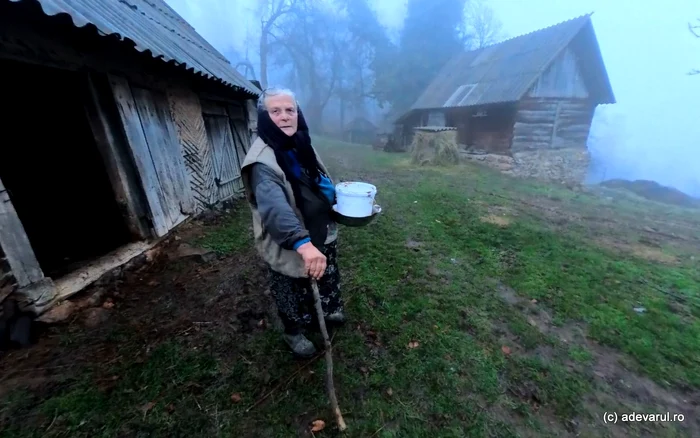
Villager from Obârsia. Photo: Daniel Guță THE TRUTH
Several mountain roads built in recent years in Romania have sparked controversy regarding their utility, due to high costs and low traffic on them.
The King's Road, from the Zarandului Mountains
Although it was called the “King's Road”, a new mountain road built in western Romania could be added to the list of high-value, but less useful investments for the area's road infrastructure. The project, with costs of 42 million euros, aims to modernize a 17-kilometer sector of county road 707 (13 kilometers in Hunedoara County and four kilometers in Arad County).
The commune of Petriș, on the Mureș valley, is located near the town of Săvârșin, where the castle of the royal family is located. Over the hills, Vața de Jos is one of the old spa resorts in Apuseni, but also the birthplace of the clergyman Arsenie Boca.
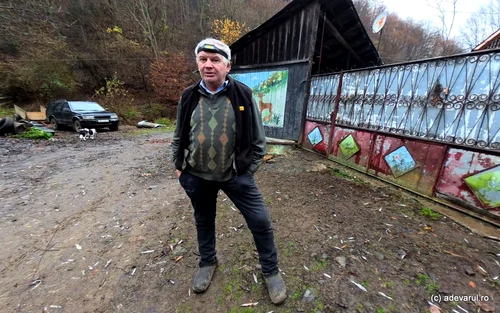
Image 1/20:
Eugen one of the few locals from Obârsia Photo Daniel Guță jpg
“The King's Road, an important investment for the development of tourism in Hunedoara and Arad counties, will be modernized through the Western Regional Program. The spa resort of Vața de Jos, known for its thermal waters, the Apuseni Mountains, the Royal Castle of Săvârșin and other tourist attractions in the two counties will be easier to access and visit thanks to the modernization of the King's Road. This picturesque mountain road, built in the post-war period by order of the King Mihai I of Romania, once modernized, will bring benefits both to tourists willing to explore the area and to the communities of the two counties, offering an alternative route to the congested roads and reducing travel times”. informs the West Regional Development Agency.
The communes of Vața de Jos and Petriş are separated by the ridges of the Zarandului Mountains, covered by forests and a few hamlets.
The isolated villages of the Zarandului Mountains
In recent years it has been said that the road connecting them was paved and used by members of the royal family to shorten the route between the Săvârșin estate and the resort. However, the locals of Petriș and the Vața area do not believe in such a story, because the forest road was not passable by car.
“Here, most of the locals were engaged in forestry work, or they worked in mining in Ciungani and Căzănești, in Hunedoara, but there were no cars to go on such roads, which have always been difficult to cross. To get to the neighboring villages of Arad and Hunedoara, we walked on foot, on the paths”. says Eugen, one of the few locals left in the village of Obârsia, of the Petriș commune, located on the border of Hunedoara and Arad counties.
The “King's Road” is currently paved up to the edge of Obârsia village, near the villager's home. From here it climbs in serpentines to Cota Zero, located on the border of Arad and Hunedoara counties. The whole of Petriș – Vața de Jos was in the past centuries also a border (buffer) of Banat with Transylvania.
On the ridges, a few abandoned houses and villages welcome the explorers of the Zarandului Mountains. Their wooden walls were painted by a local and decorated with drawings of animals, biblical scenes and optimistic messages.
“An elderly man now moved to Petriș painted our houses many years ago. The man liked to paint even though he was a veterinarian. He beautified a lot of case from Obârsia and Petriș”, remembers a Swiss who moved to Obârsia.
There is still an inhabited household on the mountain, right at Cota Zero, the place from where the route descends through the forest to Vața de Jos.
“Up until here, people worked on the road. They widened it, then, as it was autumn, they stopped working. Towards Vața de Sus, the road is almost impassable, because the berc (forest and fruit trees) have grown on its edges, and cars can hardly pass there. I have not gone down to Vața in recent years, we have no connection with Hunedoara“, says the old woman who lives in the hamlet of Cota Zero. Without electricity, water and utilities, the old woman remained in the abandoned hamlet in the mountains.
From the peaks of Zarandului, the new road will descend towards the villages of Vața de Jos commune, from the Ponorului valley. In the valley, the journey reaches Căzănești, the village where Arsenie Boca (1910 – 1989), one of the great Romanian personalities, was born. Here and in the neighboring village of Ciungani, the locals have been busy in the past with animal husbandry, forestry work and working in the area's metal mines. During the Second World War, a labor camp also operated in Căzănești, for several dozen Soviet prisoners.
“They are made to work rough, in the metal mine, where both on the ground, on the ground on which they tread, but also from above, they are constantly in water, so that as they are shod and dressed, they resist only with strength, mostly being young people. They only have one change of clothes, unlike the previous time and the rest of the detachments, and that mostly completely damaged”informs the Hunedoara Gendarmerie Legion.
The copper deposits of Căzănești and Ciungani continued to be exploited and, above all, researched during the decades of communism, and several mine shafts can be seen in the forests surrounding the village. In ores with low copper and iron content, geologists have also identified vanadium.
But the attraction of the “King's Road” remains the Vața de Jos resort, whose thermal springs were discovered by the Turks at the beginning of the 17th century. The waters rich in calcium, sulphur, sodium and magnesium, with a temperature of 36-37 degrees Celsius, became famous also for their therapeutic qualities in the 19th century. Then, a small resort was established here, and publications from the Austro-Hungarian Empire and from Romania often presented the benefits brought by the waters of Vaţa.
At the beginning of the 20th century, the baths in Vaţa were frequently visited by King Carol II. In the 1970s, the communist regime expanded the resort, turning it into a treatment place for tourists with locomotor and peripheral nervous system conditions.
Expensive roads, no drivers
In recent decades, several mountain roads in western Romania have been modernized, but drivers rarely drive them.
In the 2000s, the Romanian state started an ambitious infrastructure project, which aimed to connect the cities of the Jiului Valley with the Băile Herculane resort through a mountain road of over 100 kilometers. The route started from Uricani, passing through the foothills of Retezat and through the Domogled–Valea Cernei National Park, going down Valea Cernei, towards Baile Herculane and Orșova. Environmental organizations opposed the continuation of the project, which remained blocked after the completion of a sector of about 20 kilometers, between Uricani and Câmpusel – an old forestry canton at the foot of Retezatu Mic.
From Câmpusel, a place located at the springs of the West Jiu, on the border of Hunedoara and Gorj counties, the road is no longer practicable. The road is continued by a forest road that goes up through the Jiul–Cerna pass, thus entering the Domogled–Cernei Valley National Park. The 20 kilometers of the DN 66A road, which stops in the wilderness, crosses isolated land and is rarely traveled by motorists.
Recently, another five-kilometer road (DJ 672C) was modernized, which separates from DN 66A and goes up from the Valea de Pești dam to the border of Hunedoara county with Gorj county. And it stops in the forest, being continued by an almost impassable forest road, through the Sohodolului Gorge, with a length of almost 20 kilometers, in Gorj county. The investment in this segment cost almost 50 million lei, funds attracted by the Hunedoara County Council through the “Anghel Saligny” National Program.
Also in Hunedoara, another recently modernized mountain road connects the villages of Curechiu and Almașu Mic de Munte, in the Apuseni Mountains. The new road (DJ 741), made through an investment of over 32 million lei by the Hunedoara County Council, was modernized on a 5.6 kilometer segment, but is rarely used by drivers. The communes of Balșa and Bucureșci, which it crosses, together have approximately 2,000 inhabitants, and their villages are among the most isolated in Hunedoara.