Sweden has recently taken action, this week proposing to give local authorities new powers to block “hostile countries” from participating in infrastructure tenders if their involvement could threaten national security.
“It's a security issue,” a Swedish official tells POLITICO, describing growing concerns about countries such as China's access to public infrastructure. — We are acting very quickly on this matter because we see the risk that hostile states may try to infiltrate infrastructure such as ports, but also IT solutions and energy infrastructure.
This is also a cause for concern in Poland and Austria, which are rushing to introduce safeguards to block or at least monitor third-country investment in key technological and transport infrastructure.
Warning signal
The factor that accelerated Sweden's actions was a recent EU court ruling regarding Turkish and Chinese companies bidding for the implementation of two railway projects. The judges concluded that suppliers from countries that have not concluded a free trade agreement with the EU do not enjoy the same rights as EU companies. Stockholm treated this as both a green light and a warning signal.
The new rules in Sweden are scheduled to come into force in 2027. No specific cases were cited, but the investigation repeatedly pointed to China, which is also the subject of very similar concerns in Poland.
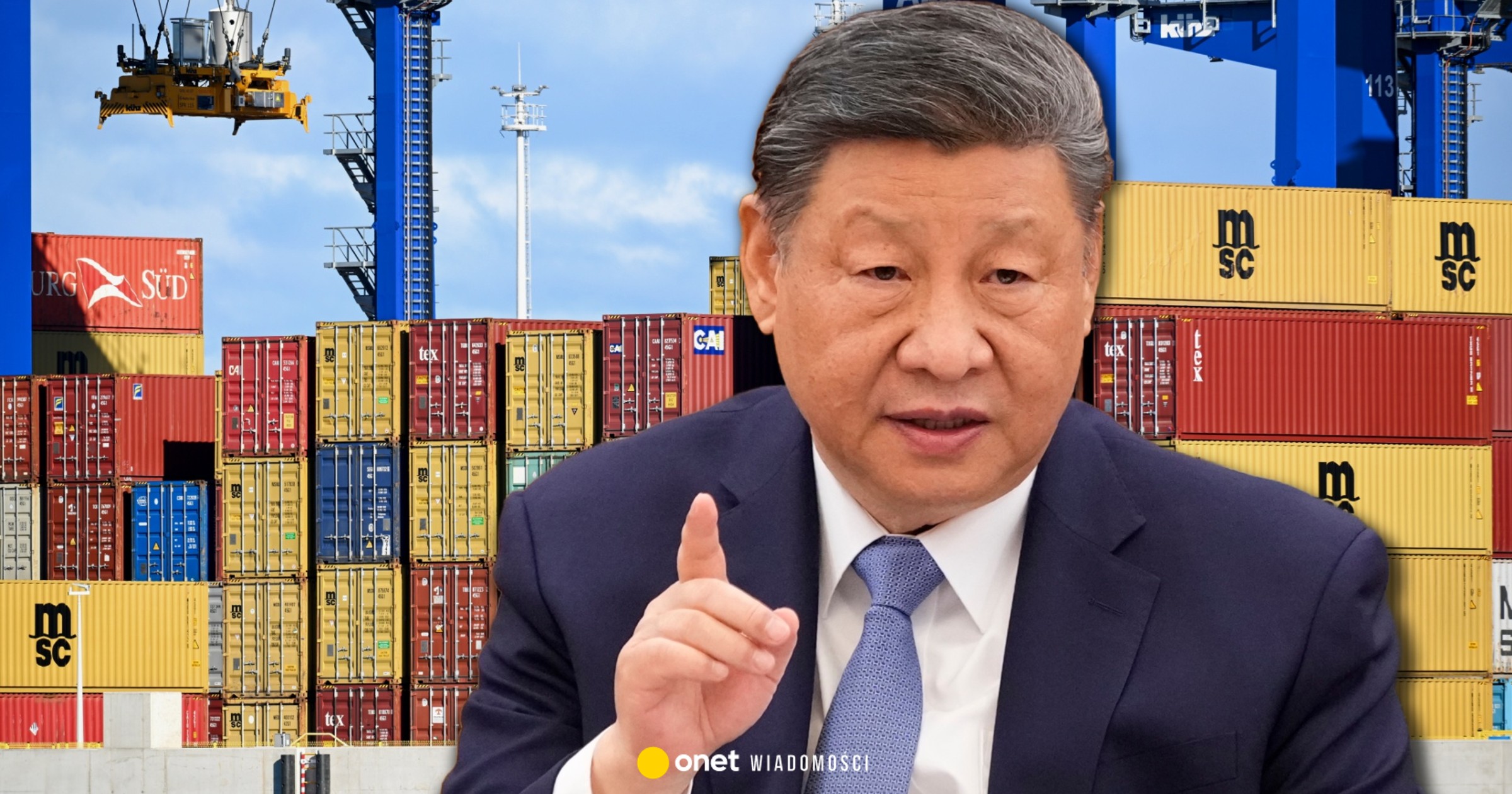
Warsaw for a long time feels anxious about the scale of China's involvement in its ports. The new bill presented by President Karol Nawrocki aims to “adapt existing regulations on the operation of ports, in particular the ownership of real estate located within the port boundaries.”
The article continues below the video
The president argued that the current model – state-owned port authorities owning land and infrastructure and leasing it on a long-term basis to terminal operators – needed to be tightened if the country wanted to maintain control over assets “of fundamental importance to the national economy.”
Gen. Dariusz Łuczak, former head of the Internal Security Agency and currently an advisor to the Special Services Committee, told the Polish media late last month that “the most important are the provisions regarding the early termination of perpetual usufruct agreements.”
Europe's “strategic weakness”.
The EU is also taking action. Ana Miguel Pedro, a Portuguese MEP from the center-right European People's Party, told POLITICO in spring that the growing presence of Chinese state-owned enterprises in European port terminals ““is not only an economic problem, but also a strategic weakness”.
These concerns are reflected in the new military mobility package, which calls on member states to introduce “more stringent rules on the ownership and control of strategic dual-use infrastructure.” Transport Commissioner Apostolos Tzitzikostas also drew attention to China's presence in ports and stressed that it will be taken into account in the European Commission's future ports strategy, to be presented in 2026.
Austria was also drawn into the debate after long-distance trains built by Chinese state-owned manufacturer CRRC entered the Vienna-Salzburg line for the first time, sparking a political backlash.
The country's Mobility Minister Peter Hanke said the EU must tighten public procurement and digital security rules for state-backed rail purchases, and Vienna plans to propose new rules before the end of the year.
The commission did not immediately respond to a request for comment.
A relic of a previous era
Industry is pressing Brussels to go even further. The European Railway Industry Association argues that EU public procurement rules are a relic of a previous era and has asked the Commission to update them so that companies from countries that exclude EU bidders they could not freely apply for European contracts.
Swedish investigators saw the same threats.
— Suppliers from third countries who have not concluded a contract [o wolnym handlu z UE]should not have a more advantageous position than that of other suppliers, Anneli Berglund Creutz, who led the Swedish government's public procurement review, told reporters.
She added that contracting authorities should be able to “take into account the nationality of suppliers and select suppliers from hostile countries” – possibly excluding them “where this serves to protect national security.”
I’m Ashley Davis as an editor, I’m committed to upholding the highest standards of integrity and accuracy in every piece we publish. My work is driven by curiosity, a passion for truth, and a belief that journalism plays a crucial role in shaping public discourse. I strive to tell stories that not only inform but also inspire action and conversation.