“Extreme danger.” The EU is considering an unprecedented step towards Russia


Russian drones and Kremlin agents are increasingly conducting hybrid attacks in NATO countries. So Europe decided to do something that would have seemed completely unthinkable just a few years ago: retaliate.
As two senior European government officials and three EU diplomats reveal anonymously, various ideas are being considered in Brussels – from offensive cyber operations against Russia, through faster and more coordinated attribution of responsibility for hybrid attacks and a clear indication of Moscow as the perpetrator, to more frequent military exercises led by NATO.
“The Russians are constantly testing the limits – testing the reaction and how far they can go,” Latvian Foreign Minister Baiba Braze noted in an interview with POLITICO. — A more proactive response is needed. And it is not words that send a signal, but actions.
An unprecedented scale
In recent weeks and months, Russian drones have violated the airspace over Poland and Romania and caused chaos at airports and military bases across the continent. However, these are not all the incidents committed by the Kremlin – there was also the jamming of the GPS signal, the intrusion of combat aircraft and warships into the space of other countries, and the sabotage of a key Polish railway connection transporting military aid to Ukraine.
— As Europe and the Alliance [Północnoatlantycki] we must ask ourselves how long we are willing to tolerate this type of hybrid warfare [i] whether we should consider more active actions in this area, German Secretary of State for Defense Florian Hahn said last week in an interview with Welt TV.
Hybrid attacks from Russia are nothing new. In recent years, she has repeatedly sent assassins to murder political enemies in Great Britain, was accused of blowing up weapons warehouses in Central Europe, tried to destabilize the EU by financing far-right political parties, engaged in information wars on social media and tried to influence elections in other countries, including in Romania and Moldova.
However, the scale and frequency of the current attacks are unprecedented. The Prague-based analytical center Globsec calculated that from January to July there were over 110 acts of sabotage and attempted attacks in Europe, mainly in Poland and France. People linked to Moscow were responsible for them.
Moscow's decisive response
— Today's world creates a much more open, and one might even say creative, space for pursuing foreign policy, said Vladimir Putin during the October conference in Valdai. — We are closely monitoring the growing militarization of Europe. Is this just rhetoric or is it time for us to respond? he added.
Russia sees the EU and NATO as rivals and even enemies, as former Russian president and current deputy head of the Kremlin Security Council Dmitry Medvedev said explicitly last month. “The United States is our adversary,” he said.
However, Europe does not want a war with Russia, which has nuclear weapons. He must figure out how to respond to her provocations in a way that will deter Moscow, but not cross any Kremlin red lines that could lead to open confrontation.
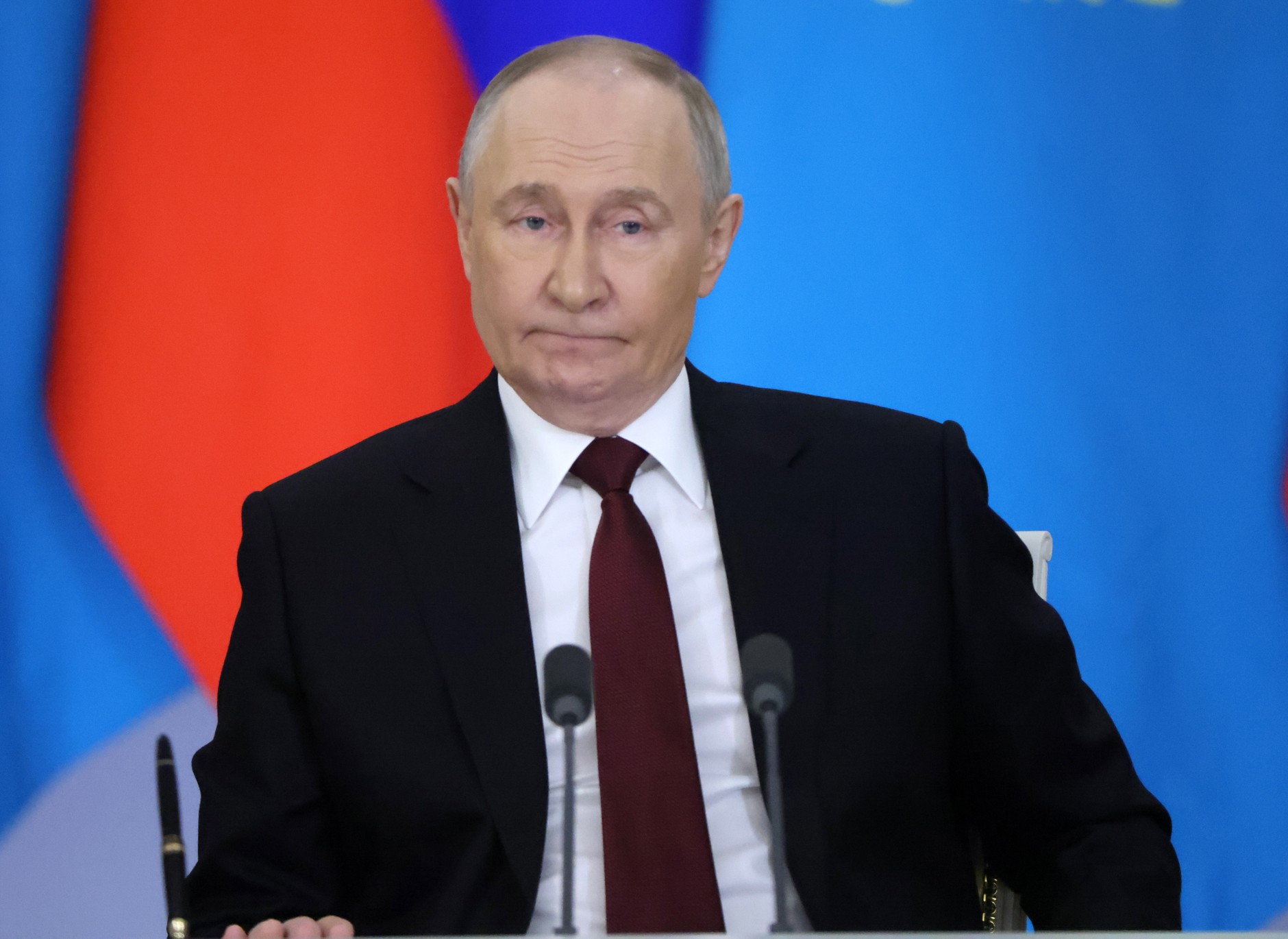
Vladimir Putin, Moscow, December 12, 2025Contributor / Contributor / Getty Images
However, according to the Supreme Commander of the Swedish Armed Forces, General Michael Claesson, this does not mean that we should give in to fear. — We cannot afford fear and fear of escalation. We have to be decisive – he said.
So far, Europe's response to Russian interference has been to strengthen its defenses. After shooting down Russian combat drones over Poland, NATO announced that it would strengthen air defense systems on its eastern flank. The EU took a similar position.
This has already drawn the ire of Moscow. —They should fear and tremble like stupid animals in a herd being led to slaughter. They should get dirty out of fear, sensing their imminent and painful end, Medvedev said.
Change of attitude
Russia's frequent provocations are changing the tone of statements in European capitals.
After sending 10 thousand soldiers to protect Poland's critical infrastructure, which happened after sabotage on the railway line connecting Warsaw and Kiev, Polish Prime Minister Donald Tusk accused Moscow of “state terrorism”.
After this incident, the head of EU foreign policy, Kaja Kallas, stated that such threats pose an “extreme danger” to the EU and added that it must “react decisively” to these attacks.
The article continues below the video
Last week, Italian Defense Minister Guido Crosetto criticized the European continent for its “passivity” in the face of increasing hybrid attacks from Russia and presented a 125-page retaliation plan. He proposed the creation of a European Center for Combating Hybrid Warfare, a 1,500-person cyber force, as well as military personnel specializing in artificial intelligence.
— Everyone must review their security procedures, added Polish Foreign Minister Radosław Sikorski. — Russia is clearly intensifying its hybrid war against EU citizens.
From words to deeds
Despite the intensifying rhetoric, the question remains which means the more decisive response that European politicians are talking about. This is partly due to differences between Moscow and Brussels in terms of capacity to act – the latter being more limited by the need to play by the rules, notes Kevin Limonier, professor and deputy director of the Paris-based think tank GEODE.
— This raises an ethical and philosophical question: can countries governed by the rule of law afford to use the same tools and the same strategies as the Russians? he asked.
Some countries – such as Germany and Romania – are strengthening regulations allowing them to shoot down drones flying over airports and facilities of military importance. These are public actions – national security services can take actions in a gray legal zone. Some countries – from Denmark to the Czech Republic – already allow them to conduct offensive cyber operations. The UK reportedly hacked into ISIS networks to obtain information about its early-stage drone program in 2017.
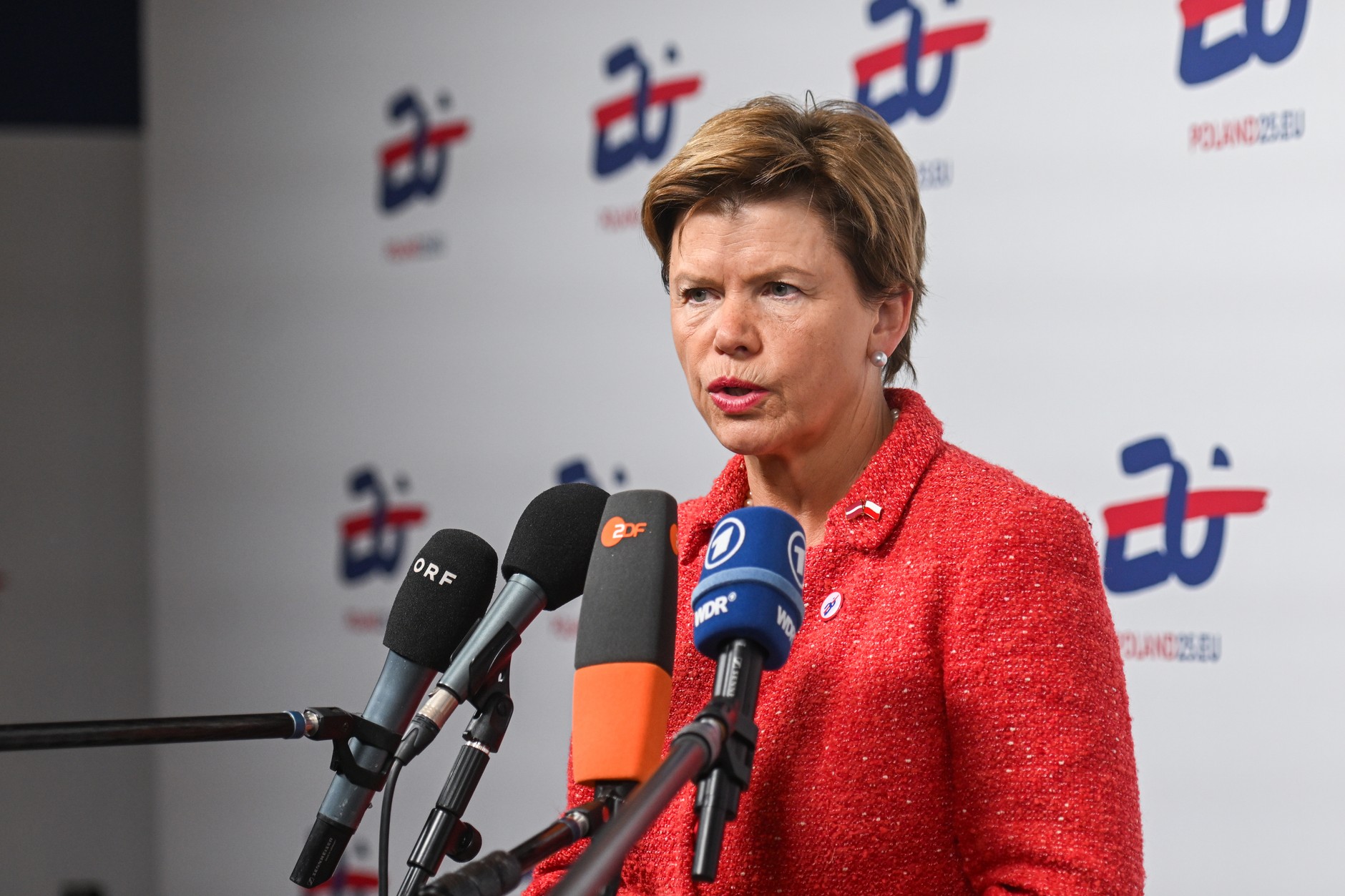
Minister of Foreign Affairs of Latvia Baiba Braze in Warsaw, May 7, 2025.Omar Marques/Stringer/Getty Images
Baiba Braze stated that members NATO must “be more proactive in the cyber offensive” and focus on “increasing situational awareness – connecting and coordinating [działań] security and intelligence services.
In practice, European countries could use cyber activities to launch attacks against systems crucial to Russia's military operations. The target of this offensive could, for example, be the Alabuga economic zone in Tatarstan in east-central Russia, where Moscow produces Shahid drones or energy facilities or trains carrying weapons, noted Filip Bryjka, a political scientist and expert on hybrid threats from the Polish Academy of Sciences. “We could attack the system and disrupt it,” he said.
Europe must also consider how to respond to large-scale Russian disinformation campaigns with its own actions.
— Russian public opinion is in some sense inaccessible. We need to work with allies who understand Russian thinking in some detail. This means that cooperation with them in the field of information warfare should be established, said one of the senior military officials. However, one EU diplomat stressed that in his opinion any new measures “must have credible justification.”
Demonstration of strength
NATO is a defensive organization, so it approaches offensive operations with caution. — Asymmetric reactions are an important part of conversations, but we do not intend to stoop to using the same tactics as Russia – said one NATO diplomat.
According to Oana Lungescu, a former NATO spokeswoman and member of the London think tank Royal United Services Institute, the alliance should prioritize demonstrations of force that show its power and unity. In practice, this could mean reacting quickly to hybrid attacks and indicating whether Russia is responsible for them, and conducting “unannounced” military exercises on the Russian border with Lithuania or Estonia.
The NATO-backed Center of Excellence for Hybrid Threats in Helsinki, which brings together allied officials, also provides expertise and training and develops “policy to counter these threats,” said Maarten ten Wolde, a senior analyst at the organization.
“More action clearly needs to be taken on hybrid threats,” said one senior NATO diplomat. In his opinion, we need to make sure that “we use various means to show that we pay attention [na zagrożenia] and we can flexibly move resources.”