Several Metropolitans have prepared proposals to be validated new bishops-vications, thus increasing the scheme of high clergy for whom the state fully supports the payment of salaries. It would have been, initially, six such stations to be approved in the BOR Synod, but only two would have remained, according to “Adevărul” information.
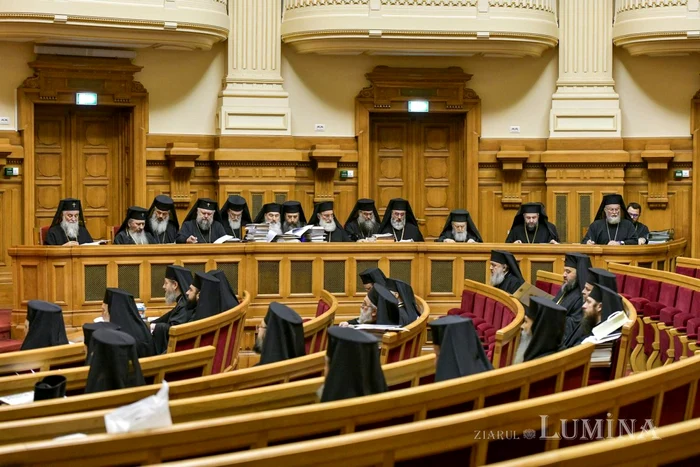
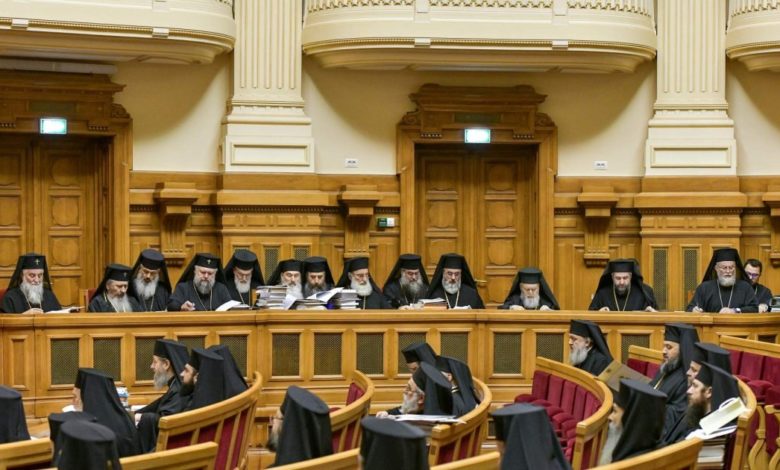
The BOR Synod is about to meet in July Photo: Ziarul Lumina
The synod of the Romanian Orthodox Church meets on July 2, and on the agenda would be the validation of new bishops/vicari archer, according to the sources “Adevărul”. The salaries of the high clergy, assimilated to the dignitaries, are 100% supported from the budget, through the State Secretariat for Cults, the amounts being approved annually.
Some of the proposals for the positions of bishop-vicar have already been made public, being validated in the meetings of the metropolitan synods. This is the case of the Metropolitan Synod of the Metropolitan Church of Moldova and Bukovina, who in June 19 endorsed the proposals in order to choose by the Holy Synod of the Romanian Orthodox Church of the Vicar Bishop of the Roman and Bacău. According to doxologia.ro, there are two candidates: Archimandrite Father Teofil Anăstăsoaie, the representative of the Romanian Patriarchate in the Holy Places, and the Archimandrite Father Nicolae Dănilă, administrative exarch of the monasteries in the Archdiocese of Roman and Bacău, the one with real chances of being designated being the representative of the Romanian Patriarchate. The presence of two names in such situations is an obligation arising from the status for the organization and functioning of the Romanian Orthodox Church, where the procedure for choosing the Bishops-Bishops is provided.
Another proposal to the BOR Synod would be for a position of Bishop-vicar ambassador for Europe, “in books” being an “ostener” from the Patriarchal Administration, trimmed this spring in monasticism. This is the new monk Augustine. According to the newspaper Lumina, Rasoforul Viorel Coman received the trimming in monasticism in March 2025, becoming the monk Augustin, so that in four months all the stages passed to be proposed for the position of bishop-vicar.
The Romanian Orthodox Episcopate of Italy, based in Rome, the sources “Adevărul”, as well as the Archdiocese of the Lower Danube, would also need the vicar.
How much does the state spend for the wages of high church faces
For the high church faces the state supports 100% the salary granted, and the payments are made through the State Secretariat for Cults. According to the information on the website of the Secretariat for Cults, the approved budgetary credits regarding the contribution of the state to the salary of the worship personnel (it is both positions of chiefs of the cults, as well as of priests, teachers from theological schools, etc., for the execution positions, however, not fully covering the salary), for 2024, are 1.212.12.19 thousand lei.
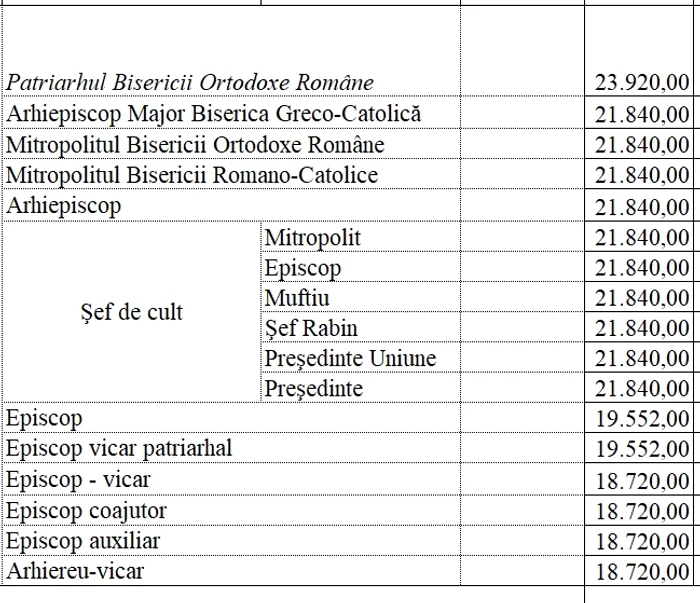
Salary support granted to clerical personnel, source: State Secretariat for Cults
The salary of the patriarch of the Romanian Orthodox Church is, according to the website of the State Secretariat for Cults, of 23,920 lei \ month, higher than that of the Major Archbishop of the Greek-Catholic Church (21,840 lei). A metropolitan from the BOR has a salary of 21,840 lei \ month, similar to the metropolitan of the Roman Catholic Church. The same salary – 21,840 lei – supports the Romanian state and for archbishops and chiefs of worship (Metropolitan, Bishop, Muftiu, Rabin chief, Union president, president).
A bishop of the BOR has provided from the state a salary of 19,552 lei, a patriarchal vicar bishop-19,552 lei, a vicar bishop (as are those who are preparing to climb in positions after the BOR synod)-18,720 lei, a co-judicial bishop-18,720 lei, also 18,720 lei being foreseen for the positions of axillary bishop and archive.
The personnel in the management of the recognized cults are assimilated to the one framed by functions of public dignity, hence the high salary level.
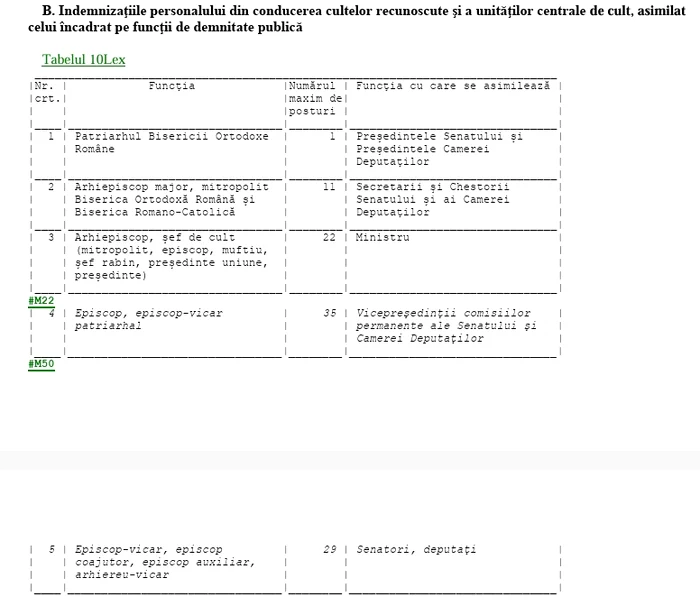
Salary support granted to clerical personnel, source: State Secretariat for Cults
The Patriarch of the Romanian Orthodox Church is assimilated to the President of the Senate and the President of the Chamber of Deputies; The Major Archbishop, the Metropolitans of the BOR and those of the Roman Catholic Church are assimilated to the Secretaries and Cubes of the Senate and the Chamber of Deputies, in 2024, 11 major archbishop/metropolitan positions were financed; Archbishops BOR and the heads of worship (Metropolitan, Bishop, Muftiu, Rabin Chief, Union President, President) are assimilated to the ministers and 22 positions are financed; The bishops and bishops of the Patriarchal vicari are assimilated to the vice -presidents of the permanent commissions of the two parliamentary chambers – 35 budgeted positions; Bishop-vicar, co-help bishop, auxiliary bishop and, respectively, vicar archer are stations assimilated to the senators and deputies, 29 positions being budgeted.
How to choose bishops-Vicari and archers-Vicari
The bishops of vicar are clergy who act as deputy or assistants of a titular bishop, an archbishop or a metropolitan, replacing or helping them in the pastoral and administrative responsibilities of an eparchy. However, the vicar station brings them closer to the vacancy hierarch positions, the bishops-Vicari being enrolled in the list of hierarchs eligible for the choice in the Chiriarhal chairs, especially in the vacant dioceses.
Candidates for the dignities of eparchiot bishop, Patriarchal Bishop-Vicar, Bishop-Vicar and Archbishop-Vicar, Archimandrite or Văduvi priests (by death) must meet the following conditions:
a) they are at least 35 years old, a chosen spiritual life and presents the spiritual recommendation for the archdiocese;
b) they have constantly proven listening to the Chiriarch and fidelity to the eparchial center;
c) are doctors, master graduates or at least licensed in theology, with a minimum average of 8.50;
d) have published at least one book or 10 scientific theological studies of at least 10 pages, each, drafted with academic honesty;
e) have at least 5 years of liturgical service and administrative activity at the Eparchial Center or in Theological Education or within a monastery or in other missionary activities entrusted by their tenant;
f) are good connoisseurs of at least one modern language of international circulation;
g) are good speakers, have a special communication capacity and teamwork.
The Statute of the Romanian Orthodox Church is the normative act that establishes the rules according to which the bishops-bishops (for the archbishop's) and the Vicari Archbishops (for the bishops) are elected.
According to article 131, “The choice of the Patriarchal Bishops-Bishops, the Bishops-Vicari and the Vicari archer is made by the secret vote of the Holy Synod, with half plus one of the total valid votes. For this purpose, the Patriarch of Romania, Metropolitans, Archbishops and Epicles The conditions provided by art. The dioceses, with the prior consent of the tenants of the dioceses in which they currently operate ”provides for the specified normative act.
Patriarchal bishops are chosen, by secret vote, by the Holy Synod, at the proposal of the Patriarch of Romania, made in consultation with the Permanent Synod. The bishops-Vicari and the archers of the Diocese are chosen, also by secret vote, by the Holy Synod, at the proposal of the Chiriarch, made in consultation with the Metropolitan Synod.
The candidates present a candidacy file that must contain: curriculum vitae, civil status documents, documents of studies, acts of ordination, the memory of activity, the blessing (written approval a) of the Chiriarch.
“The meeting of the Holy Synod for the election of Patriarchal Bishop-Vicar, Bishop-Vicar and Archer-Vicar is chaired by the Patriarch of Romania. (…) No candidate can be chosen unless half plus one of the valid votes and if he did not meet a number of votes equal to one third of the number of hierarchs present. In this situation, according to art. 127 para. (2) Lit. b) -g), the Holy Synod, by secret advisory vote, will designate a new candidate between the archimandriums or the widowed priests (by death), who meet the conditions provided by art. 130 para. (1)-(6). The name of the designated one was added to the ballot along with the candidate who, at the previous voting, met the largest number of votes, although he did not obtain the necessary majority. The voting is carried out according to art. 127 para. (2) Lit. b) -h) and is repeated until a positive result is obtained ”also provides for the status.
At this time, according to the website of the Romanian Orthodox Church, the archbishops who do not have a bishop are as follows:
– Tomis Archdiocese;
– Archdiocese of Târgoviștei;
– Archdiocese of Argeș and Muscel;
– Archdiocese of Buzau and Vrancei;
– Archdiocese of the Lower Danube – which would be on the list of those who have submitted proposals;
– Archdiocese of Roman and Bacău- who submitted two proposals for the position of bishop-vicar;
– Alba Iulia Archbishopric;
– Archdiocese of Vadului, Feleacului and Cluj;
– Archdiocese of Craiova;
– Archdiocese of Ramnicului;
– Archdiocese of Northern Europe;
– Archdiocese of the United States of America.
We specify that we asked the Press Office of the Romanian Patriarchate clarification regarding the proposals for the validation of new bishops. But the clarification was that “The Press Office of the Romanian Patriarchate sends press releases exclusively to the approved decisions of the Holy Synod of the Romanian Orthodox Church.”