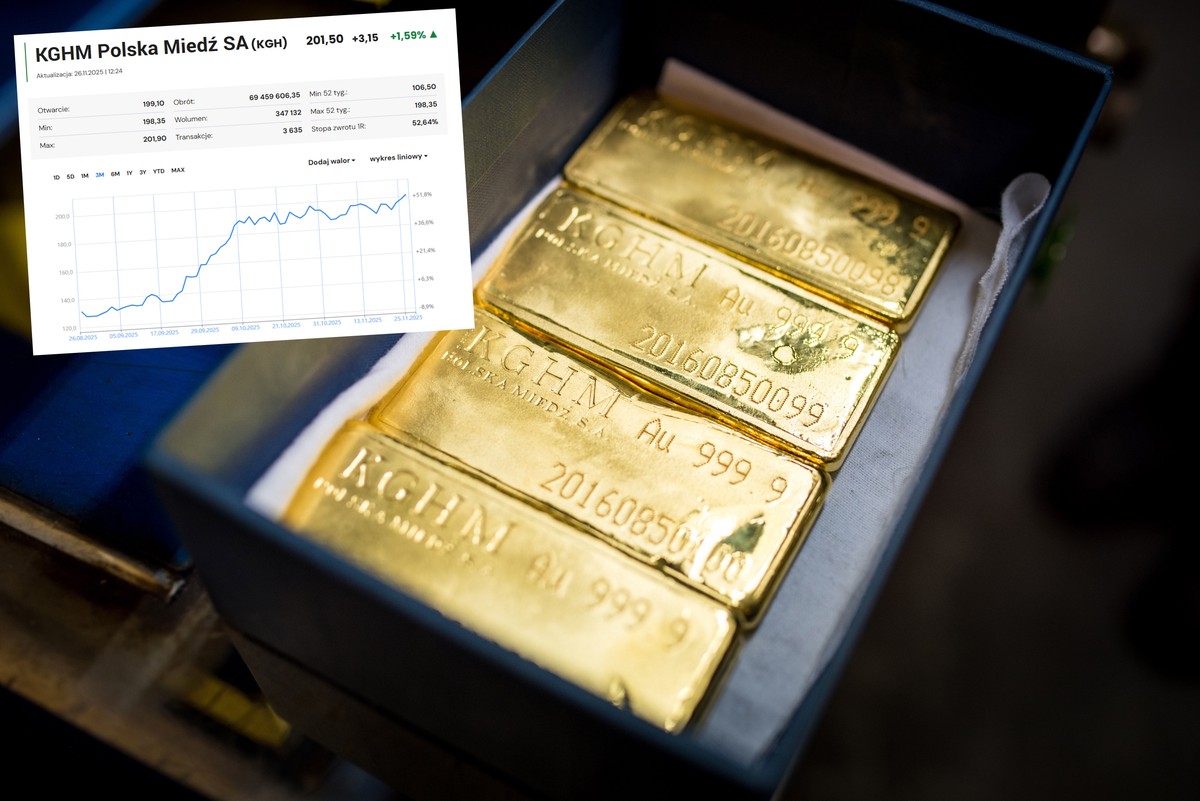
The first time KGHM shares exceeded PLN 200 was on November 13 this year. Then, during the day, they even reached the rate of PLN 203.50, but then turned back down, ending the session at PLN 196.50. Later, it was not possible to break the round threshold of PLN 200 until Wednesday, November 26.
This month, the prices of the copper plant are increasing by 2.3%, and by 72% since the beginning of the year. On Wednesday, the price increased by 1.6% and at the maximum point of the day it reached PLN 201.90. The quotations, i.e. the lack of retreat from record levels, show that this may not be the last word of investors that day.
At this price, the company's value was PLN 40.4 billion. Dino Polska, which occupies eighth place in the stock exchange hierarchy, is only PLN 1.1 billion behind, but to leapfrog this retail chain would require an increase of another 3.1%.
The median of the last three valuations in recommendations issued for the company is PLN 213.40, and in addition, the technical indicator RSI(14) is approaching the market overbought levels (63.95 with the level of 70 considered to be the market overbought level), which may raise doubts about the potential for further increases. But the value of KGHM shares is directly increased by the prices of copper, silver and gold, which directly translate into the company's profits.
Copper prices in London rose by 1.3% on Wednesday. up to 11 thousand hole. per tonsilver by 1.8 percent up to $52 per ounce, and gold by 0.7%. up to 4.2 thousand hole. per ounce.
Theoretically, the strengthening exchange rate against the Polish zloty is not favorable for KGHM (this year the zloty has strengthened by 11.4%, although it lost 0.6% last month), because in Polish plants, which weigh most heavily in the group's results, costs are settled in Polish zloty and revenues are usually settled in dollars. But the currency effect is outweighed by increases in gold and silver prices, and copper itself.
The profits of the KGHM Group in the third quarter increased by 80%. year to yearreaching PLN 433 million net. Many investors took advantage of their publication to sell shares, but based on the quotations of recent days, it can be said that it was a mistake.
Unit cash cost of production of payable copper at the KGHM plants in Poland amounted in three quarters of this year. $6,922 per tonne, while in Canada and the USA it was USD 2,293, and in the Sierra Gorda mine in Chile – USD 2,160. – according to KGHM data included in the report for the third quarter. During the year, the costs of Chilean copper dropped by 46% and Canadian-American copper by 38%. thanks to the gold contained in the ore. In Canada and Chile, the ore is rich in gold, not silver as in Poland, and the income from its sale reduces the cost of copper mining.
And additionally, since the price of copper exceeds PLN 11,000. hole. per tonne, this means that margins are increasing significantly. While the increase in gold and silver rates is the result of war uncertainty in the world, where does the increase in copper prices come from?
Increased copper consumption
According to British government estimates, copper consumption in the country is expected to almost double by 2035, and the need to build strategic reserves is mentioned, Reuters reported. And the additional demand is what makes producers very happy.
Moreover, there have been reports of a potential withdrawal of funds from a large investment in Pakistan by the Canadian Barrick Mining Corp, which in the future may delay increasing supply. Although the company denied these reports, the investment was worth USD 7 billion. one of the largest undeveloped copper deposits in the world may be threatened by an insurgency in the western province of Baluchistan.
This province has recently been a frequent target of attacks by separatists and jihadists. Production was supposed to start in 2028, but in the current situation this is not certain. Reuters recently reported that Barrick was considering selling these assets, as well as its assets in Africa, but the company denied this.