The SBU detained young Ukrainians. The Russians tempted them with money


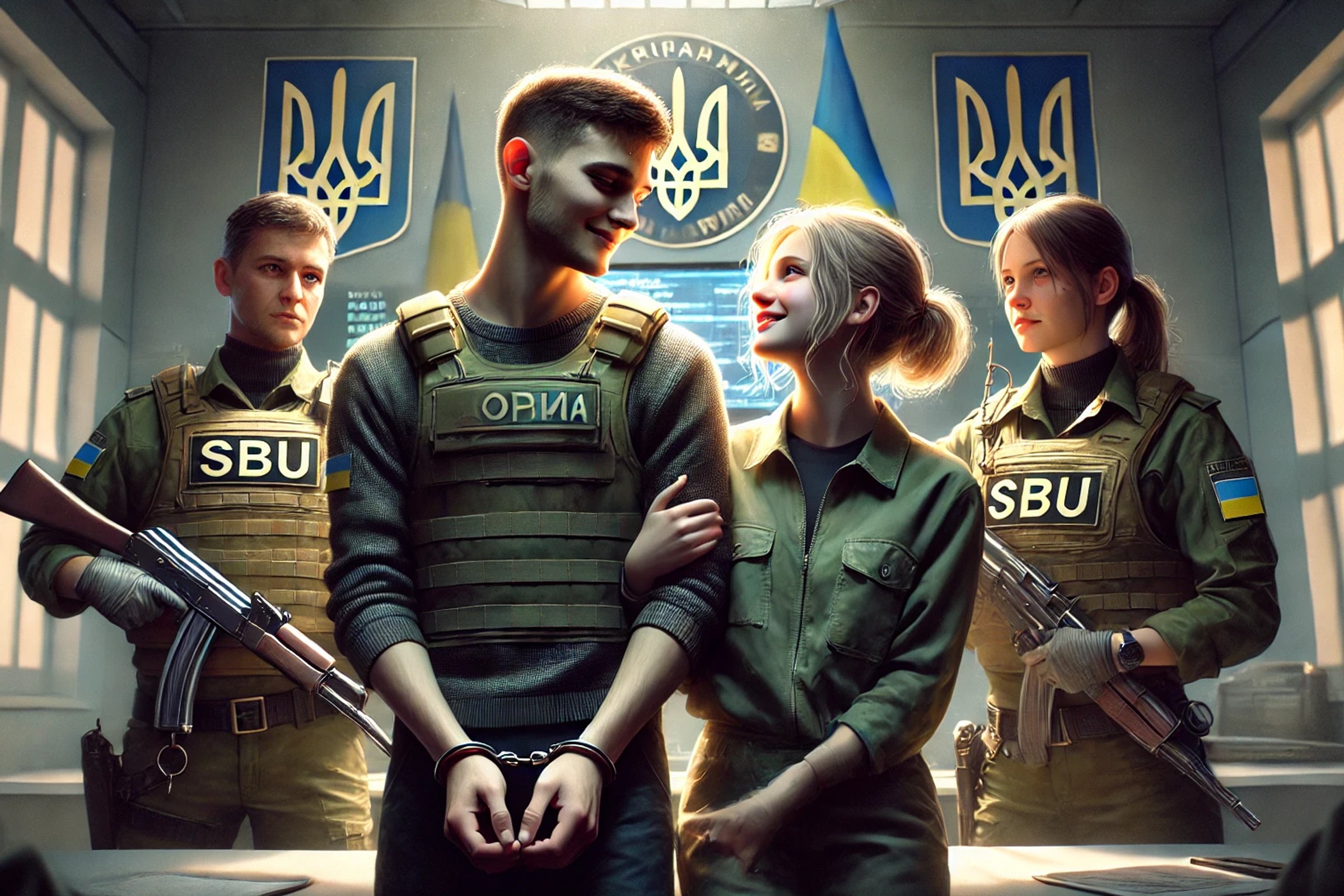
Olena (19) and Bohdan (22) smile happily as they enter the room. They are handcuffed and escorted by armed officers of the Security Service of Ukraine (SBU). The couple sees each other for the first time in a month; both are in custody pending trial for high treason.
Olena is a blonde with delicate, childish facial features, and Bohdan is an athletic young man. They both admit that they cooperated with Russia in the hope that instead of spending the rest of their lives behind bars, they would receive a 15-year prison sentence. We didn't learn their names.
The SBU accused Olena and Bohdan of using cameras to observe weapons shipments from the West and a police station, and of preparing to provide the Russians with the location of air defense systems in Kiev and the northern regions of Chernihiv. They were both caught by SBU agents.
Bohdan and Olena are not the only ones. Since February 2022, the SBU has examined over 24,000. cases concerning crimes against the national security of Ukraine and over 4,100 cases of high treason, of which over 2,300 are currently being considered by the courts, the SBU press service informed us.
Crimes and misdemeanors
— It all started when we found an advertisement on Telegram called “Work in Kiev”. The ad promised easy money. We started doing this because we really needed cash, like most people in Ukraine these days, says Olena.
— We wanted to live together, but we were in debt, we worked a lot, we argued often because we still had no money, adds Bohdan.
First, Olena and Bohdan were asked to explore local supermarkets, take photos of shelves and price tags, and check store operating schedules. However, over time, the tasks changed. They were ordered to set up cameras next to a police station and then on a railway line used to transport Western weapons to Ukraine. Then there was the final task – installing spy cameras to locate air defense sites in the Kiev region.
Bohdan admits that after the first two tasks he realized that they were working for Russia, but he preferred to “think positively”. He also feared what Russia might do to them if they stopped cooperating. “Those guys wouldn't let you back out that easily,” Olena agrees.
Typically, Russians promise recruits in Ukraine different amounts, depending on the complexity of the task, says an SBU official speaking anonymously. Tasks can range from taking photos of military factories, railways, electrical infrastructure and oil refineries to help Russians locate targets and guide missiles and drones, to setting fire to recruitment offices, police stations and military vehicles.
After four years of brutal war, traitors are motivated by money rather than ideology. There are few Russian allies left in the territory controlled by Ukraine, so Russia is looking for agents among poor and desperate people who need cash, say several SBU representatives.
Olena and Bohdan admit that they helped Russia for money. She worked as a cook in a fast food restaurant, sometimes for 12-16 hours a day for a small salary, and he did temporary work. — The remuneration from the Russians may range from several hundred to several thousand hryvnias, with no guarantee that it will actually be paid, says an SBU official. — Olena and Bohdan received between 400 and 3,000 hryvnias (8–62 euros) per mission.
However, even the money paid by Moscow was not enough for them to survive.
The Kremlin's game
The SBU claims that Russia is devoting a lot of resources to destabilizing Ukraine from the inside. The Ukrainian State Bureau of Investigation, the country's equivalent of the Polish Central Bureau of Investigation, has registered 1,500 criminal cases of high treason against Ukrainian officials, judges, military personnel and law enforcement officers since 2022.
There is also the issue of Ukrainians living under Russian occupation, where the fight for survival may put them on the wrong side of Ukrainian law.
— I am in no way justifying real collaborators. But many people tried for collaboration are simply people trying to survive under Russian occupation, says Hanna Rassamachina, head of the Department of War and Justice at the NGO Media Initiative for Human Rights. — Every person who remained in the occupied territory, who is forced to look for work and means of living, of course has contact with the occupation authorities against his will, such a person cannot be 100 percent certain that she would not be accused of collaboration later.
While some more high-profile defendants may hire expensive lawyers to try to get them out of trouble and reduce their sentence, that's unlikely to happen in the case of Bohdan and Olena. — A professional lawyer is often enough to disprove an accusation. However, many of these people are unable to hire a professional lawyer. Ultimately, the courts accept all the prosecutor's arguments, adds Rassamachina.
This leads many defendants to enter into plea deals to lessen their sentences.
Olena and Bohdan have come to terms with the fact that they probably won't see each other for at least 15 years. They plan to meet again after serving their sentences.
Bohdan knows that he will be released from prison if he agrees to serve in the Ukrainian army, but he prefers to remain behind bars. – I talked about it with my fellow prisoners and, you know… People don't come back from there… And I don't want to waste my life in vain – he explains.