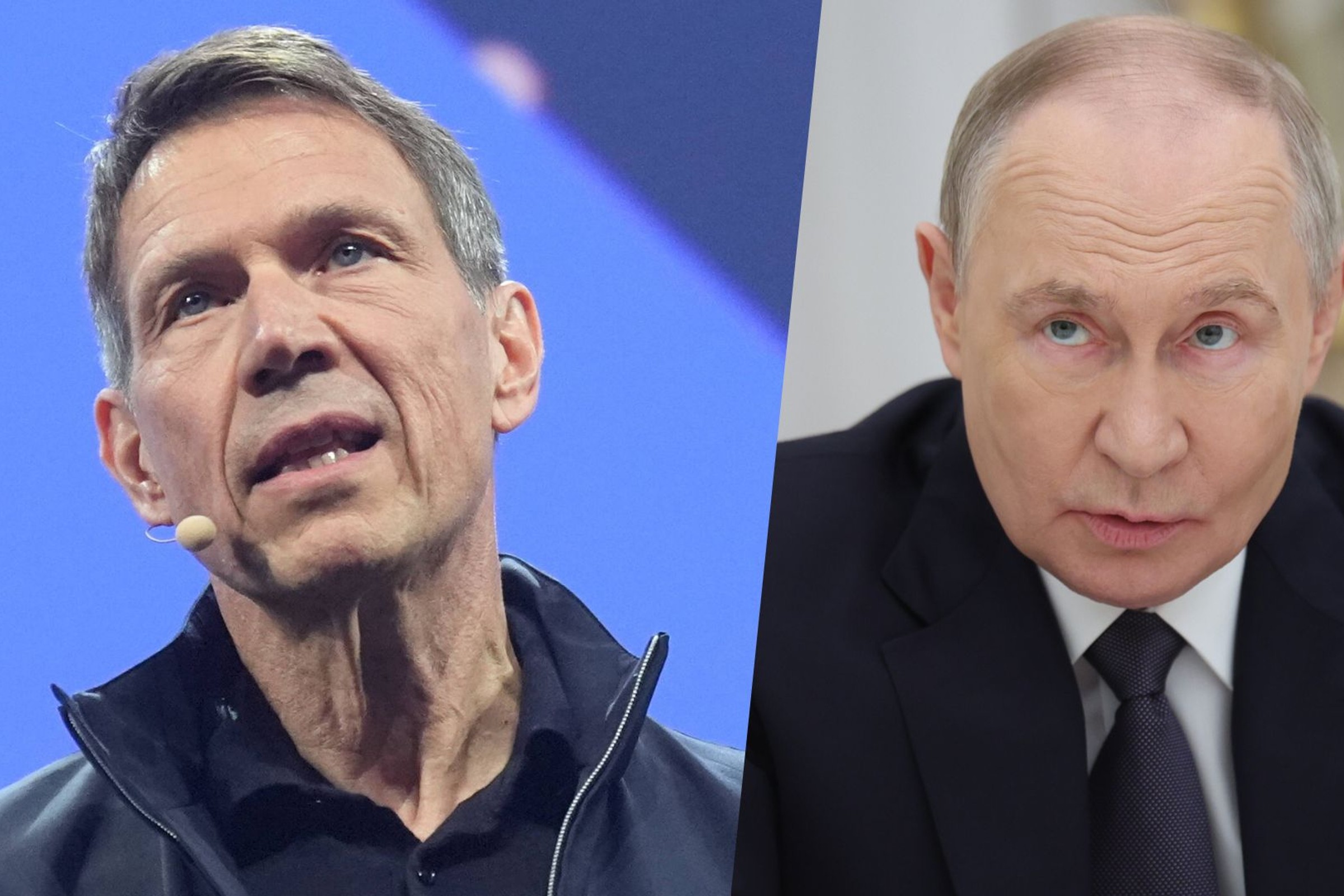
Speaking at the Berlin Security Conference on Wednesday, November 19, Obermann said Europe's current posture leaves a dangerous gap below the strategic threshold, pointing to what he described as “more than 500 tactical nuclear warheads” deployed by Russia along NATO's eastern flank and in Belarus.
“What do you think our response would be to a Russian tactical attack with limited effects?” he asked the audience, which included defense officials, military officers and defense industry executives.
“I don't have the answer to that – but I'm sure you know it,” he added.
Tactical nuclear weapons have a lower destructive power, typically between 1 and 50 kilotons, and are intended for use on the battlefield. Larger strategic weapons have a destructive power of over 100 kilotons and are designed to destroy entire cities.
Obermann argued that Germany, France, the UK and “other willing EU member states” should agree on a “common and phased nuclear deterrence program” that explicitly takes into account the tactical level – an issue traditionally sidelined in public debate by European leaders.
France and Britain have independent nuclear arsenals but there is no common European doctrine on how to deter or respond to a limited nuclear attack. France – according to estimates – has about 290 nuclear warheads and Great Britain about 225, but none of them are of a tactical nature.
Germany, in turn, participates in the NATO mission on the joint use of nuclear weapons, but does not have nuclear weapons of its own.
Russia has approximately 5,580 nuclear weapons of various types, which is the largest nuclear arsenal in the world.
The article continues below the video
Obermann warned that Europe risks failing to understand Moscow's strategy if it focuses solely on high-level strategic forces while ignoring Russia's large tactical stockpiles. In his opinion, a credible response would send a “strong deterrent signal.”
His appeal could spark debate in European capitals, where nuclear policy remains a politically sensitive and largely isolated issue at national level. He also highlights Russia's war in Ukraine — and Moscow's repeated nuclear threats [w tym testy rakiet zdolnych przenosić ładunki nuklearne, jak Buriewiestnik] — are forcing European officials and defense industry leaders to confront issues that were once considered politically untouchable.
The growing threat from Russia — German Defense Minister Boris Pistorius warned last weekend that Moscow could attack the NATO member as early as 2028 — and concerns that the United States under Donald Trump is no longer a reliable security partner are prompting European countries to seriously consider nuclear options. Earlier this year Poland declaredthat it would consider gaining access to nuclear weapons.
Obermann's statement came at a time when European governments are increasing spending, modernizing their armed forces and considering long-term security guarantees from the US.
I’m Ashley Davis as an editor, I’m committed to upholding the highest standards of integrity and accuracy in every piece we publish. My work is driven by curiosity, a passion for truth, and a belief that journalism plays a crucial role in shaping public discourse. I strive to tell stories that not only inform but also inspire action and conversation.