Novice drivers restricted to less powerful cars: cars falling within the bill's recommendation

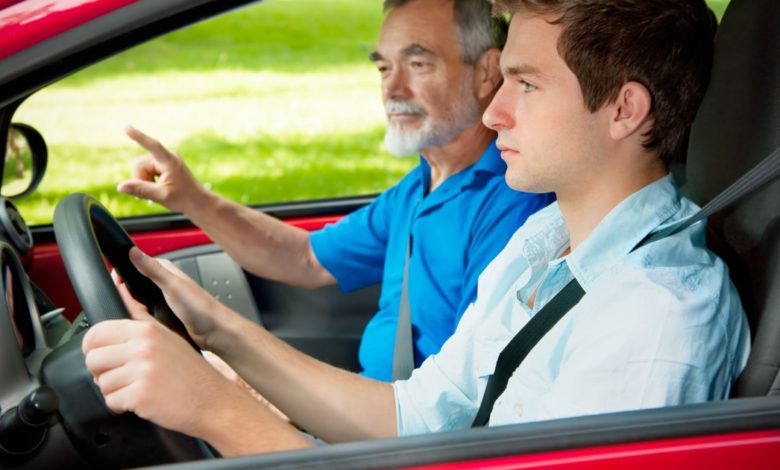
Drivers who have had their category B permit for less than two years will be restricted from driving less powerful cars. A draft law now supported by the Government requires a power to mass ratio not to exceed 0.075 kW/kg. The measure aims to reduce serious accidents caused by very young and inexperienced drivers.
PHOTO: Shutterstock
The project was initiated following several road tragedies, including the case of Vlad Pascu, the young man who, in August 2023, got behind the wheel while drugged and caused a fatal accident near May 2. He received a 10-year prison sentence for the tragedy in which two young people lost their lives and two others were injured.
What the project provides
In the first two years after obtaining the permit, drivers will not be able to drive cars that exceed the limit of 0.075 kW/kg, with two exceptions, according to Profit.ro:
– If there is also a driver in the car with a category B license for at least 10 years, for the same category.
– If the vehicle is used strictly for professional purposes, based on an individual employment contract, during working hours, and the driver can prove that the use of the car is necessary for the performance of work duties.
Violation of these rules will be considered a misdemeanor, punishable with a class IV fine – between 9 and 20 fine points – and with the suspension of the license for 90 days.
Which cars respect the power to mass ratio
Popular models that fall under 0.075 kW/kg power-to-weight ratio include Dacia Logan and Sandero 1.0 SCe, Renault Clio 1.0 TCe, Volkswagen Polo 1.0 MPI and Golf 1.0 TSI, Ford Fiesta 1.1, Hyundai i20 1.2, Toyota Yaris 1.0 VVT-i, Skoda Fabia 1.0 MPI and Seat Ibiza 1.0 MPI. These are cars with engines considered to be safe for novice drivers.
The government supports the project, but asks for clarification
The government submitted a favorable point of view, but requests adjustments so that the law is applied consistently:
The government questions why the mere presence of an experienced driver in the vehicle would eliminate the risk for which the restriction was created.
Regarding the exception related to the professional use of the car, the Executive draws attention to the fact that the current wording excludes certain professional categories (for example, police officers, who do not have an employment contract, but a service relationship), but also entrepreneurs who use the vehicle in economic activities.
The Government also recommends that, in addition to mentioning the job duties, the driver must present clear proof of the need to use the car for professional purposes.
The project is to be debated in Parliament.