More and more Germans end up over-indebted after years of economic prosperity: 'It risks becoming a major problem'


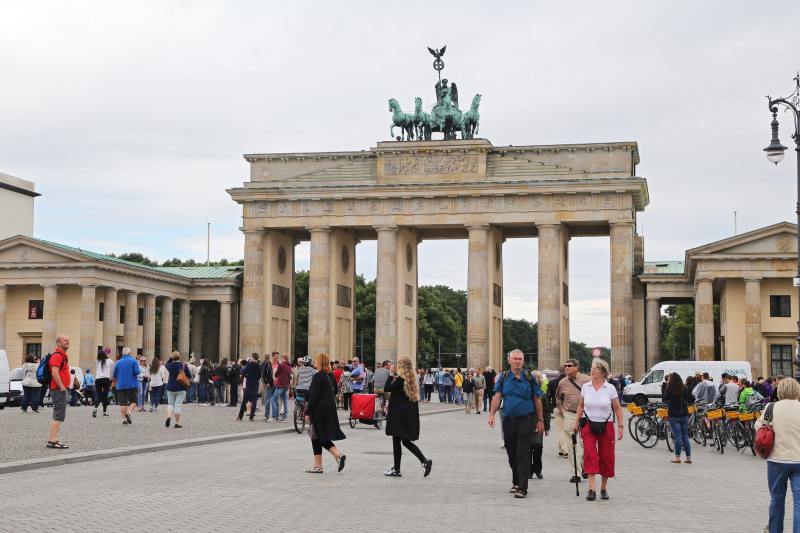
People walking around the Brandenburg Gate in Berlin, one of the most famous symbols of Germany, PHOTO: Salvatore Conte / Dreamstime.com
Over-indebtedness among German adults is rising again after years of decline, an effect of economic weakness and rising cost of living putting pressure on household finances, data published by credit agency Creditreform showed on Friday and cited by Reuters.
Some 5.67 million people over the age of 18 are now over-indebted in Germany, an increase of 111,000 compared to 2024. The 2% increase compared to last year raises the overall over-indebtedness rate of the German population from 8.09% to 8.16%.
Over-indebtedness is defined as the situation where total expenses exceed the income of a person or household.
“The trend reversal has arrived and it was expected,” Patrik-Ludwig Hantzsch, director of the economic research department at Creditreform, told Reuters. He says the situation is partly due to the decline in savings reserves, even though in recent years Germans have been cautious in their spending due to several crises.
Creditreform data shows that the rise is affecting almost all social groups, including middle-income households trying to maintain their standard of living through deferred consumption.
Young adults under 30 and seniors over 60 are particularly vulnerable – the former due to credit-financed spending and online purchases, the latter due to rising living costs and stagnant pensions.
Creditreform warned that the situation could worsen in 2026 as high interest rates, a weaker labor market and persistent inflation weigh on consumers.
“Overemployment risks becoming a major social problem again,” Hantzsch said.
Trouble continues for Europe's biggest economy
Official data released at the end of October show that Germany's Gross Domestic Product stagnated in the third quarter of the year.
The stagnant GDP was in line with forecasts, after Germany's economy contracted 0.3 percent in the previous quarter as weak global demand and import tariffs imposed by the United States hurt German exports.
The Federal Statistical Office in Berlin said Germany was spared a recession, defined as two consecutive quarters of economic decline, thanks to increased corporate investment, particularly in equipment.
“The US tariff shock and intense competition with China will continue to make it difficult for export-oriented industries,” Alexander Krueger, chief economist at Hauck Aufhaeuser Lampe, said late last month.
Germany expects tiny economic growth in 2025
Earlier last month, Germany's economy ministry revised its growth forecast for 2025 slightly upward to 0.2 percent, and forecast growth of 1.3 percent in 2026 and 1.4 percent in 2027.
Growth hopes were mainly fueled by German Chancellor Friedrich Merz's promise to substantially increase infrastructure and defense spending. But these measures are taking longer than expected to translate into concrete improvements.
“The German government's fiscal package is not expected to boost the economy until next year, but it will not be sustainable due to the lack of reforms,” said Joerg Kraemer, chief economist at Commerzbank.
Persistently high unemployment, which reached 3.02 million in August – the highest level in a decade – is an additional cause for concern.
The U.S. tariffs added to a long line of problems that have dogged Germany's economy in recent years, from a struggling economic recovery after the COVID-19 pandemic, a cut in energy imports from Russia, a construction crisis and weakness in the European auto sector.
All this meant that Germany's economy, dubbed for years the “economic engine of the EU”, contracted in 2024 for a second year in a row, a situation not seen since the early 2000s.
PHOTO article: Salvatore Conte / Dreamstime.com.