Russian-owned refinery confiscation law rejected by Bulgaria's president. “The scope has been unduly and dangerously widened”


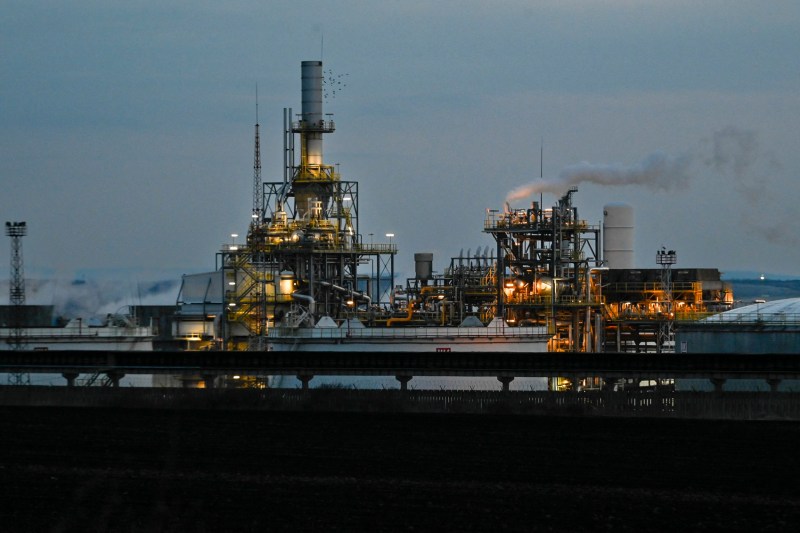
Bulgaria's only Russian-owned Lukoil Neftochim Burgas oil refinery near Burgas on the Black Sea coast on March 17, 2022. PHOTO: Nikolay DOYCHINOV / AFP / Profimedia
Bulgarian President Rumen Radev on Wednesday rejected legislative changes that would have allowed the government in Sofia to take control of the Lukoil oil refinery in Burgas and sell it to protect the plant from the impact of US sanctions on Russian oil, Reuters reports.
Radev sent the law back to parliament for further discussion, saying the changes provide no protection against future financial claims against the state, violate Bulgaria's constitution and pose a risk to public finances.
Parliament passed the legislative changes last Friday, expanding the powers of a special government-appointed commercial administrator who will be able to oversee the continued operation of Bulgaria's Lukoil refinery after November 21, when US sanctions take effect, and sell the company.
“The scope of the law has been unjustifiably and dangerously expanded,” Radev said in a statement, adding that safeguards meant to reduce the risk of future claims against the state had been removed without reason.
In Bulgaria, however, the president has a largely ceremonial role and the parliament can override his veto.
Last month, the US and Britain imposed sanctions on Lukoil and Rosneft, Russia's two biggest oil companies, over Moscow's war in Ukraine, a decision that poses a major threat to their operations that still stretch across Europe.
Bulgaria asked the US for exemption from sanctions
Bulgarian Energy Minister Jecho Stankov confirmed in parliament on Wednesday that Sofia requested an exemption from sanctions from the US Office of Foreign Assets Control (OFAC) on October 27, a few days after President Donald Trump's administration announced sanctions against Lukoil and Rosneft. The minister did not provide any further details on the matter.
Until Wednesday's announcement by Minister Stanko, Sofia authorities had not publicly announced the request for such an exemption. His statement also did not specify the period for which Bulgaria requested the exemption.
Stankov, however, said that one of the main tasks of the new state-appointed manager will be to organize permanent monitoring to prevent funds from subsidiaries from being diverted to sanctioned companies.
The US sanctions have raised concerns about fuel supplies ahead of winter in Bulgaria, where Lukoil operates the Burgas refinery, a key part of the company's overseas trading empire, and hundreds of gas stations.
Stankov also stated that the security of fuel supply for domestic consumers is guaranteed and that Bulgaria has in its warehouses six months of gasoline reserves, four months of diesel fuel reserves and two months of aviation fuel reserves.
He said the US sanctions will directly affect four Bulgarian companies – Lukoil Neftochim Burgas, Lukoil Bulgaria, Lukoil Aviation Bulgaria and Lukoil Bulgaria Bunker – following the suspension of banking services after November 21.