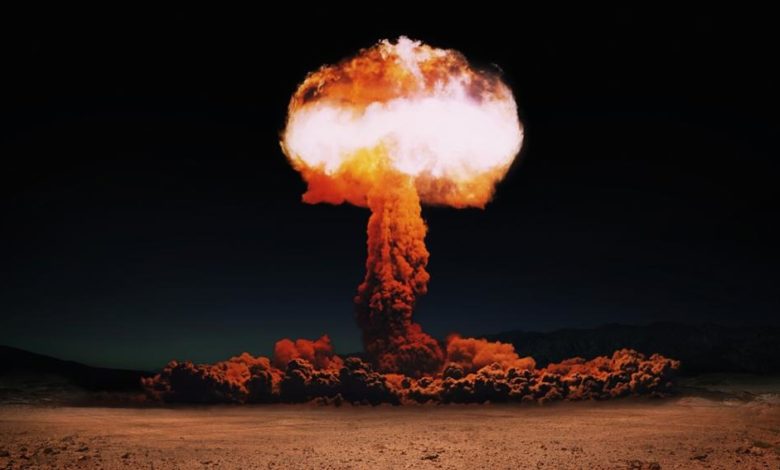
Today, there is no way to conduct a nuclear test in secret, Prof. told PAP. Andrzej Chmielewski, director of the Institute of Nuclear Chemistry and Technology, referring to the words of the head of the CIA about alleged secret tests by Russia and China.
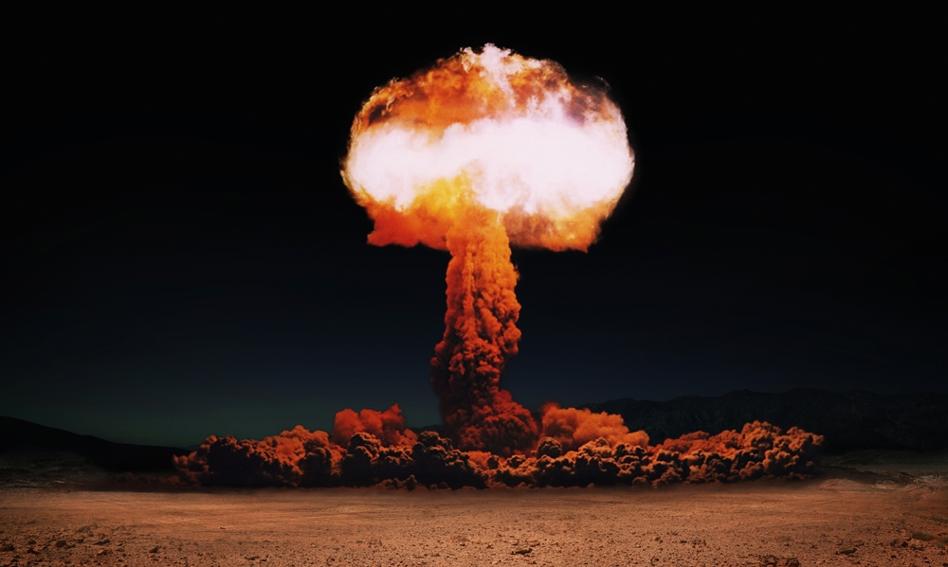
Director of the Central Intelligence Agency (CIA) John Ratcliffe stated on Monday that “President Donald Trump was right about Russia and China conducting secret nuclear tests”. His opinion was also supported by the chairman of the Senate Intelligence Committee, Tom Cotton.
– These claims seem to me to be nothing but drum-beating – said Prof. in an interview with PAP. Chmielewski. He explained that currently Nuclear tests were completely stopped – first above ground and then underground – because they had become unnecessary. Modern capabilities allow for very accurate simulation of such explosions.
As added by prof. Chmielewski, this is why restrictions were introduced on the export of supercomputers. Not to prevent banks from using them for their own calculations, but because they can be used to model nuclear weapons of mass destruction.
The expert pointed out that already in the construction of the first atomic bomb – codenamed “Trinity”, detonated in July 1945 – most of the parameters were determined experimentally, but were also supported by calculations performed on simple computers of that time.
Prof. Andrzej Chmielewski does not believe the claims that Russia and China secretly carry out nuclear test explosions. As he emphasized, there is currently absolutely no way for such activities to go unnoticed – they would be detected immediately.
– First of all, detection is carried out using seismic methods – the creation of a seismic wave cannot be avoided. Secondly, modern detection techniques in the atmosphere ensure 100% detection – he explained in an interview with PAP.
Possible nuclear tests require preparations and special infrastructure
The PAP interlocutor doubts that the latest statements could mean the start of nuclear test explosions. – Even assuming that conducting such a test would be necessary to investigate some technical issues – although it is difficult to say what – this would require the preparation of special training grounds equipped with appropriate stationary equipment – noted prof. Chmielewski. He added that such infrastructure, in addition to aerial and satellite observation, is necessary to conduct this type of tests, and its preparation is not possible overnight.
– I can't imagine that, as the Russians once did, a rocket would be used to launch such a test charge. I also don't think the bomb was dropped from a plane. Even the first tests in the New Mexico desert and subsequent tests on the Bikini Atoll (in the Marshall Islands archipelago in the Pacific, where the US carried out over 20 nuclear test explosions until 1958) were carried out using special towers in which the payload was placed – explained the expert.
The Comprehensive Nuclear-Test-Ban Treaty (CTBT) was signed in 1996. It established a global and complete ban on all nuclear test explosions in all environments.
Although the agreement was signed by 187 countries, it has not entered into force because it requires ratification by 44 countries listed in Annex 2 – including all countries with nuclear potential. Many of them, including the United States, China and Iran, are observing a moratorium on nuclear testing, however has not ratified the Treaty. In turn, India, Pakistan and North Korea have not signed it at all.
Although suspicions that both hostile nuclear powers could carry out such tests have been discussed for a long time, American officials have never confirmed these suspicions. On Thursday, Trump's nominee for commander of Strategic Command (STRATCOM), Vice Admiral Richard Corell, said in the Senate that the last nuclear test in the form of a nuclear explosion took place in 2017 and was carried out by North Korea, while China conducted its last test in 1996.
Despite Trump's announcement that the US would resume nuclear tests (the last one took place in 1992), on Sunday Energy Minister Chris Wright stated that there were no plans to carry out tests involving nuclear explosions.
– “I think the tests we're talking about now are systems tests,” Wright said. – These are not nuclear explosions. These are what we call non-critical explosions, he explained. He emphasized that such tests cover all elements of nuclear weapons. They make sure systems work and can cause a nuclear explosion. (PAP)
dec/bst/mhr/