Experts say the Kremlin is likely to recruit additional personnel that could be used to strengthen the armed forces without the need for a new wave of mobilizations, which could spark widespread public dissatisfaction.
— The new regulations may be aimed at people who are not ready to sign a contract with the Russian Ministry of Defense but are willing to serve for a short period, said lawyer Alexei Tabalov, head of the School of Conscripts, a non-governmental organization dealing with soldiers' rights.
Sergei Krivenko, director of the NGO Citizen. Army. Rights, said in an interview with The Moscow Times that Putin's regulations highlight recruitment problemsbecause too few contract soldiers report for duty to replace military losses. It turns out that in the current situation, reservists may be the last resort for Putin – but one question keeps experts awake at night.
Namely, it concerns the size of the reserves that Russia currently has. In 2015, Putin created a mobilization reserve, the Special Combat Army Reserve (BARS). People who have previously served in the army and have signed a special “reservist” agreement with the Russian Ministry of Defense can join the reserve.
These people, known as reservists, lead civilian lives and receive a modest monthly salary of up to 10,000 rubles ($123 or PLN 451). Although they are not considered contract soldiers, reservists are required to regularly participate in military training to maintain and update their combat skills. During these trainings, employers of reservists receive compensation for the absence of their employees.
The total number of reservists is not made public. Active recruitment to the reserve began in 2021, shortly before Russia invaded Ukraine. According to information provided by the Meduza website, at that time the number of reservists increased from several thousand to 100,000.
In the first months of the war, many reservists volunteered to fight as part of the so-called BARS battalions, and then signed military contracts with the Russian Ministry of Defense.
As three volunteer soldiers told The Moscow Times at the time, joining BARS was also a way for those who did not meet the Russian Ministry of Defense's recruitment criteria to take part in combat, as these battalions were more flexible in terms of age and health requirements.
Last month, MP Alexei Zhuravlev, first vice-chairman of the State Duma Defense Committee, said in an interview with Russian television RTVI that there are approximately 2 million people in Russia's reserves. But experts questioned this information.
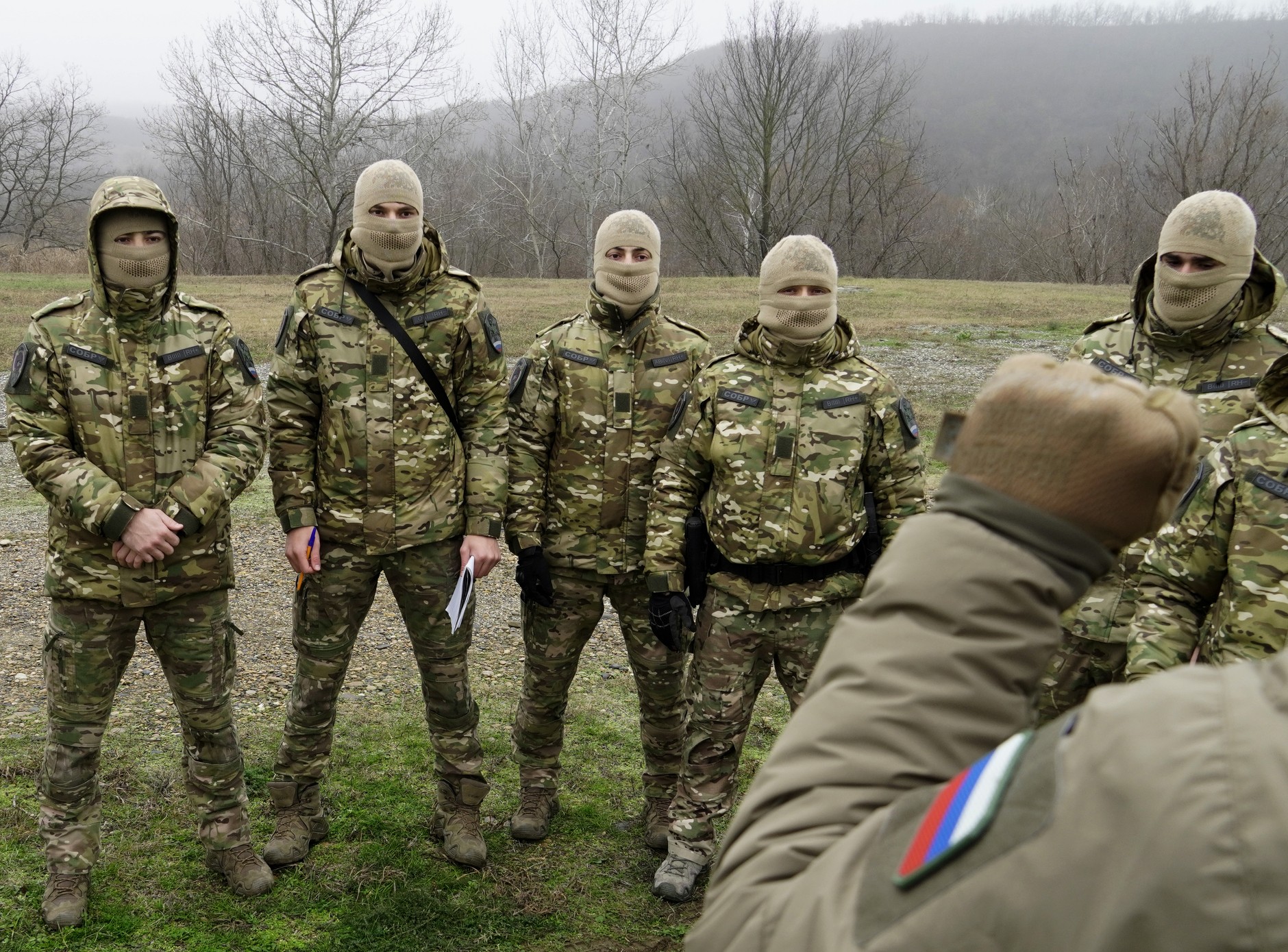
Russian volunteers undergo training (illustrative photo)Vladimir Aleksandrov/Anadolu Agency via Getty Images / Contributor / Getty Images
— The number of reservists is probably relatively small, military analyst Alexei Alshansky told The Moscow Times. According to the expert, many of those who were in the military reserve have already gone to the front and signed contracts with the Russian Ministry of Defense.
— Even in 2022, there were too few BARS members to talk about any real reserves for the Russian army, he said. “If there were enough of them, [władze] they wouldn't have to go out on the streets and chase people down [podczas mobilizacji w 2022 r.]”.
He added that the current large-scale recruitment campaign for contract soldiers also indicates that the number of reservists is low.
What changes with the new law?
The bill, which was quickly passed by parliament in three readings in one day, states that reservists “may be sent for special training to ensure the protection of critical facilities and other necessary infrastructure.”
Sources in Wiorstek's service in the presidential administration and the State Duma said that the document was adopted in a hurry on the orders of the Kremlin. According to the document, the procedure for conducting these special trainings is to be established by the Russian government.
The Russian Ministry of Defense said the bill only applies to reservists and does not envisage sending them to the front or serving outside the country. “There is no question of any mobilization,” the ministry said.
According to Alszański, from a military point of view, there is no point in sending such reservists to the front, since better trained contract soldiers are stationed there.
However, Putin has already broken his promises, including the pledge not to use conscripts in war and to send only “professional soldiers” to the front.
What will the reservists do?
Vladimir Chymlansky, an official at the Russian General Staff, said the reservists would deal with critical infrastructure, including energy and transportation infrastructure. Reservists can perform such tasks “only in their region” and primarily to “fight drones,” he added.
Since this summer, Russian energy and transport infrastructure, as well as oil refineries, have been the target of continuous Ukrainian drone attacks. At least 15 regions in Russia have already started recruiting reservists to protect these facilities. The authorities emphasize that these recruits will not be sent to the front.
In addition to retaining their regular wages for the days and weeks of military service, reservists in the Bryansk region, bordering Ukraine, receive a monthly salary of PLN 40,000. up to 99 thousand rubles ($490–1,200 or from over PLN 1,796 to almost PLN 4,399), depending on the military rank. In the Perm region, located far from the border with Ukraine, the monthly salary of reservists ranges from 4,000 to 7,000 rubles ($50-85 or PLN 183-312).
A source from one of Russia's largest oil and gas companies told Wiorstka that the company's security team “does not have high expectations” of the reservists.
“Even 10 additional people with rifles would be helpful. However, in principle, only a real air defense army can protect us – and it is unlikely that we will be able to count on it,” said Wiorstka's source.