The product that ensured profit year after year leaves the vegetable growers with their hands on their hearts in 2025. “It was the culture that saved our work year”


Autumn doesn't really smell like profit for the vegetable growers who for years in a row have earned well with a product consumed in the cold season by Romanians. “It was the crop that saved our work year,” says a young vegetable grower.
Mountains of cabbage in the markets all over the country, be they wholesale or retail, and sales at a minimum in recent years, says a well-known vegetable producer from Olt. Ionuț Crăciun, from Ghimpețeni, recorded, in the first year of his return from Ireland, a more than satisfactory profit with garlic, melons and cabbage. It was five years ago. In the following years he became known for the three products he sells, overwhelmingly, without resorting to intermediaries. All these years he cultivated about two ha of cabbage/year and things went very well.
In 2025, he increased the area cultivated with cabbage to five hectares, and the sale, this year, is a disaster. “It's the weakest year, by far. At wholesale and in fairs it sells for 0.5 lei/kg. Five years ago, when I came back, I think I sold at least 1.3 lei/kg. And the following years were good”, stated Ionuț Crăciun, for “Adevărul”. Of the five hectares cultivated with cabbage, he managed to harvest and sell only a fifth. “I still have over 100 tons at home”said the farmer bitterly.
Last fall, he managed to sell, in less than two weeks, the last of October, 75-80 tons of cabbage only at the market in the municipality of Slatina, a market where end consumers come. Now the sale started in the middle of October and the quantity sold is half. “Last year it was 2 lei, even 2.5 lei/kg. And this year we are selling for 1 leu now. Actually not now, for a while. And at the fair, 50 money was also given, at the weekly fairs in the localities”added the farmer.
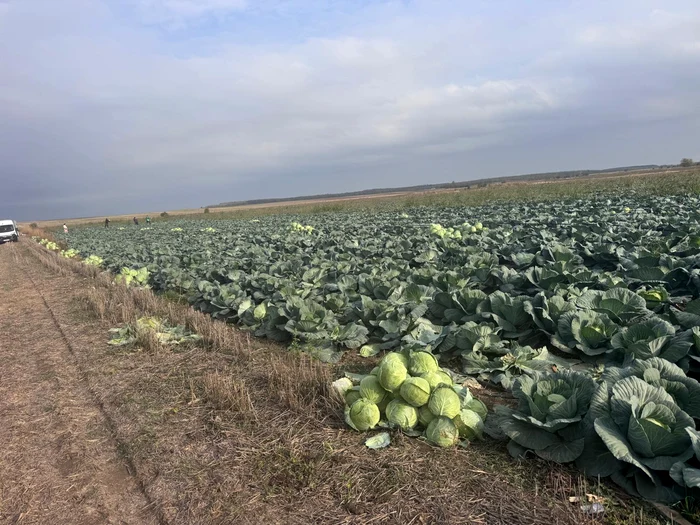
Ionuț Crăciun cultivated cabbage on 5 hectares PHOTO: personal archive
For the establishment of a hectare of cabbage culture, without harvesting, the expenses are approximately 35,000 lei, the farmer said, and this money will be difficult to recover this year.
Ionuț Crăciun grows two types of cabbage, Românească de Buzău and Bucharest, both of which have their loyal customers. Buzău cabbage, which many prefer for pickles, has lower productivity but is more sought after on the market. Or at least it was, because in the fall of 2025 nothing seems to be going according to the old patterns anymore.
Manufacturers ended up being competed by middlemen even at home. Traders come in pin village cars and sell door-to-door, often cheaper than producers, with buyers often finding they've been ripped off at the scale.
“Samsaris start with chicken season and end with cabbage. I sell melons, vegetables, everything, cheaper in the village. When we started selling cabbage, for 2 lei – 2.5 lei, they were selling around the village for 1.5 lei, which was the wholesale price, the first time the cabbage came out in Lunguleți, because that is where they get it from. They steal from you on the scale, but that's what you see after and take them from where they are not. It happens to grapes and everything. That's why we demand strict regulations on the market, to sell everything taxed, because they would no longer be able to afford to do that,” says the farmer.
On the other hand, buyer behavior has also changed. Cabbage was sold, years ago, in large quantities starting from Saint Dumitru, when people were preparing to pickle. Today you can no longer consider a certain period more suitable, the farmer found, because these behaviors no longer exist. “I tried to defend myself against that as well, and gradually cultivated so that I could have it for a longer period of time. That wasn't enough either.” Ionuț Crăciun pointed out. Moreover, when several customers in the same area bought larger quantities, it also offered them home delivery.
“I'd rather do promotions for customers than give them to middlemen for nothing”
The year 2025 was a challenging one no matter what culture it was, at least for the farm of the young man from Ghimpețeni. With the exception of early spring tomatoes, the prices sold were below expectations. Even the watermelons, for which Ionuț Crăciun is famous, were sold at a low price, Romanian producers coming to the market, due to the spring frost, after the imports had already filled the stores.
The pumpkins for baking, which he cultivated this year just to test the market, on a relatively small area, had buyers, everything was sold, but since it is not a very large quantity, the impact on the total result is not significant either.
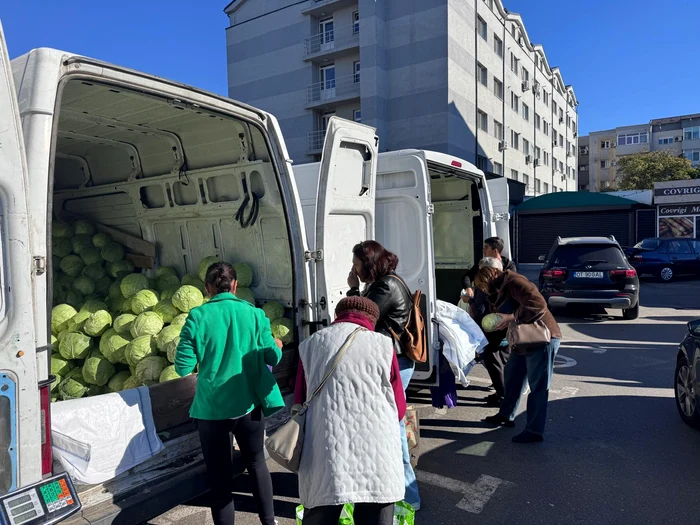
Slatina was, for five years, a good outlet PHOTO: personal archive
“This year nothing went well. Since we started, with tomatoes. At first, the heating ones worked, I put them on later and they worked fine. I also caught a little with 10 lei, but after that, nothing. I didn't get a price for cucumbers, tomatoes, anything. I also had spring and summer cabbage. Let me give it for 50 paise, it costs me 30 paise per kilogram to harvest it, because no one comes to harvest it, I'm talking about intermediaries, they go to Lungulețu and buy from there, ready-made. So this year will be tough. And let me explain why. What we took from tomatoes and cucumbers we put into melons. I would put more tomatoes or whatever, and I would put the money from the sale into the cabbage. And in the end, this was about the money we had left. Now we are in the red. Last year I think we had a profit of approximately 100 thousand lei. This year, I think minus 200 thousand. That's the truth. We have credit. We made credit so we could go from year to year. I didn't make money out of nothing.” the farmer also specified.
Cabbage is now harvested from the Ghimpețeni farm, as well as tomatoes from the solariums. Tomatoes are sold at the market for no more than 5-6 lei/kg, a low price for the date on the calendar, but buyers are not flocking anyway, consumption dropping significantly.
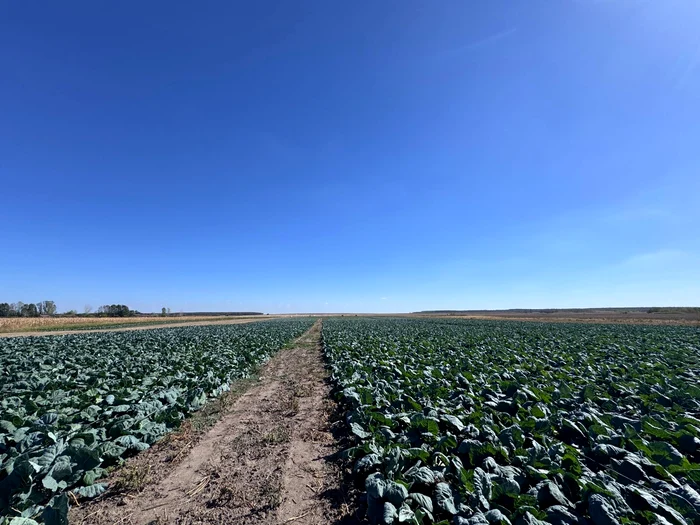
Ionuț Crăciun cultivated cabbage in several stages PHOTO: personal archive
Costs, on the other hand, have increased, because on cold nights farmers are forced to turn on the heating systems.
A bigger market, says Ionuț Crăciun, he has not yet identified, although he is part of a cooperative that recently made a fruit-vegetable warehouse and tried to negotiate with large store chains. However, there are already ongoing contracts, so hopes, from this point of view, are more for 2026.
Although he sold at low prices, the farmer says that he still did not give in to give his work for nothing to the middlemen, preferring to please the already loyal buyers.
“In the summer, when we had cucumbers and they were 1 leu/kg, I said to do promotions. It's better to give them for nothing to a person to enjoy, than to give them to them to make money. For one kilogram bought, I gave them one more, or for 2 kg of tomatoes bought, I also gave them one cucumber. We had special offers”. Crăciun elaborated.
One processing line, the long-term solution
This year, Ionuț Crăciun cultivated an area of 10 hectares in the field – green and yellow watermelons, cabbage, garlic and pumpkins for baking and on another 6,500 square meters of vegetables in solariums. For Harvest Day, he experimented with a product for which he is now studying the possibility of developing a processing line: pickled vegetables. The experience in Ireland showed him, moreover, that a good farmer cannot afford to lose anything.
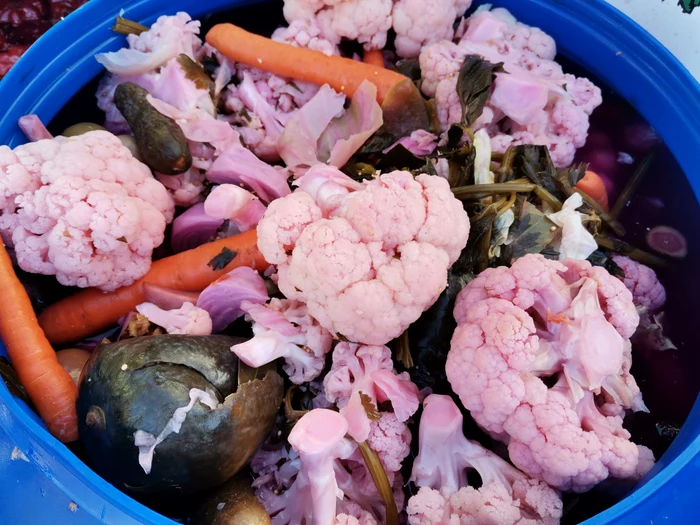
Ionuț Crăciun is thinking of investing in a processing line for cans PHOTO: AM
In the strawberry farm where he worked, for example, quality I fruits were sold in the supermarket, quality II fruits were packed and delivered to local stores for making jams, and those that did not fit into either option were minimally processed, being sold cut and frozen.
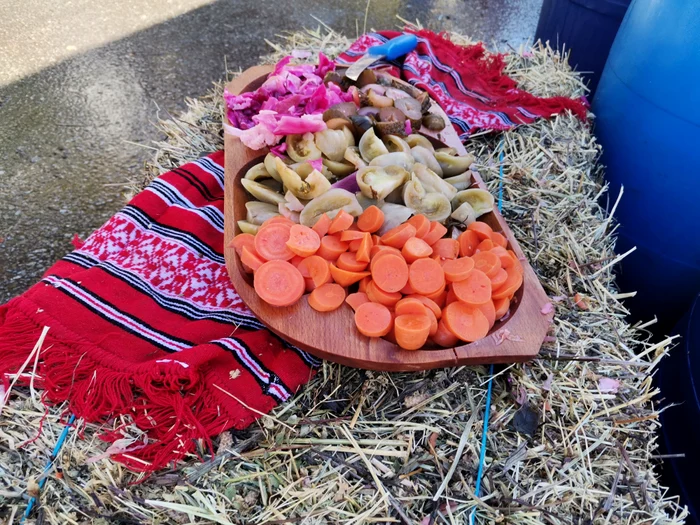
The pickled vegetables at Crăciun farm were in great demand on Harvest Day PHOTO: Alina Mitran
He would like to be able to do the same with his products in the future, because there are times when selling fresh vegetables does not go very well, or there are very large quantities and cannot be sold in a timely manner, so it could be a good option to prepare preserves. He does not have the money for such a processing line, but he hopes to launch funding lines from European funds. For tomatoes, when the price dropped below 1 leu/kg, he already did so, preparing broth.
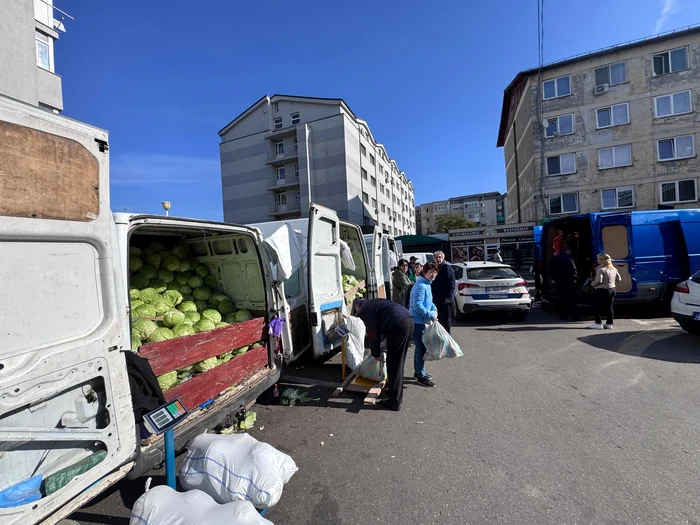
Cabbage is sold at a lower price than five years ago, says the farmer PHOTO: personal archive
“I hope to solve these things in time. But we have another problem, which no longer belongs to us: taxation. That's the biggest problem. If they would tax everything… I understood that they are middlemen and they should live very well too. It helps us by buying goods from us, it helps the manufacturer, but it should be taxed to the blood. When he buys goods from me, he buys cabbage for 1.50 lei and sells it at the market, let him compete with me. And I give it for 1.50 lei. Doesn't he have an addition? Does he not register this merchandise? It should be with trade markup, they have to put in an extra 50 bucks, right? Or 70 bucks. Then, if they would buy it for 1 lei, 70 money are the costs, the transport with commercial surcharge, they must sell it to you for at least 2 lei. Then it would also raise me, as a producer, higher. Most of them also have a manufacturer's certificate, but those can be checked to see that they are not. There is no way they can produce 100 tons of tomatoes per year on 10 acres of land as much as they sell”the farmer also said.