Will Europe swallow toxic waste? TNT is to be produced not only in Poland

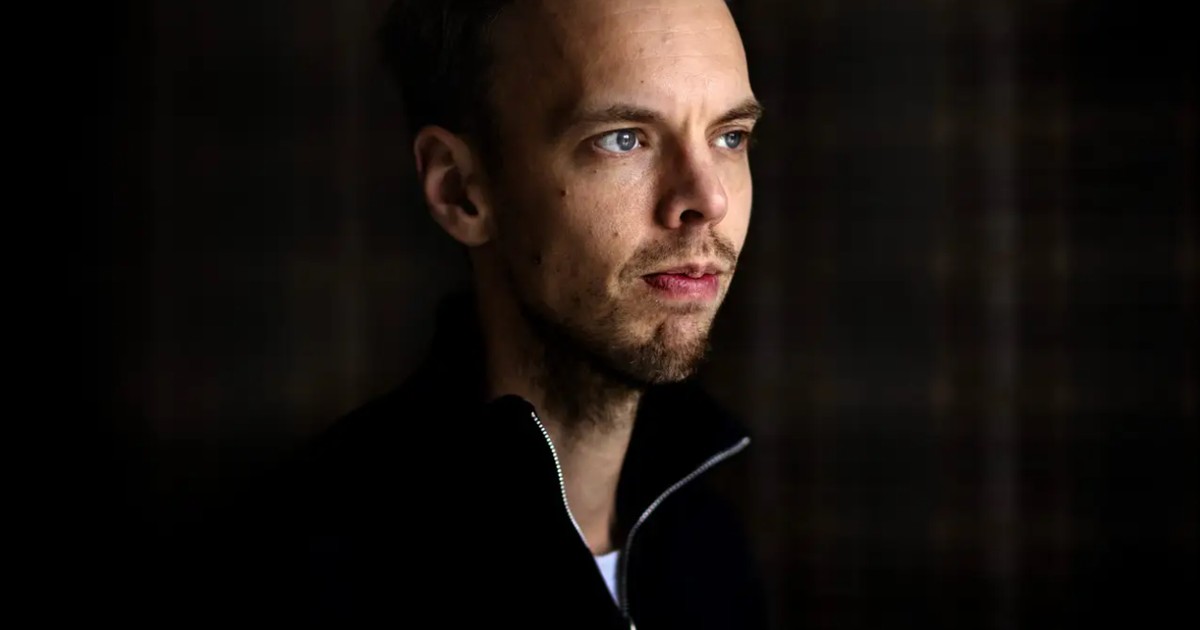
A few minutes west of the Swedish town of Nora, there is a quiet patch of forest behind a lakeside holiday cottage complex, where the morning fog lifts just long enough to catch the sun's gleam.
It is there that Joakim Sjöblom plans to build a new factory for one of the most dangerous processes in the arms industry – the production of trinitrotoluene (TNT), or simply TNT, for NATO.
— My daughter turned one month old today, the startup's CEO told Business Insider in mid-October. — And this was one of the key reasons why I decided to do it: I can contribute to ensuring that my children do not experience conflict in adulthood, he added.
Read also in BUSINESS INSIDER
The site of the planned factory has access to an old railway line; soon the 24-meter-tall trees will give way to chemical tanks, reactors and a pump tower protruding above the forest line, if Sjöblom has his way.
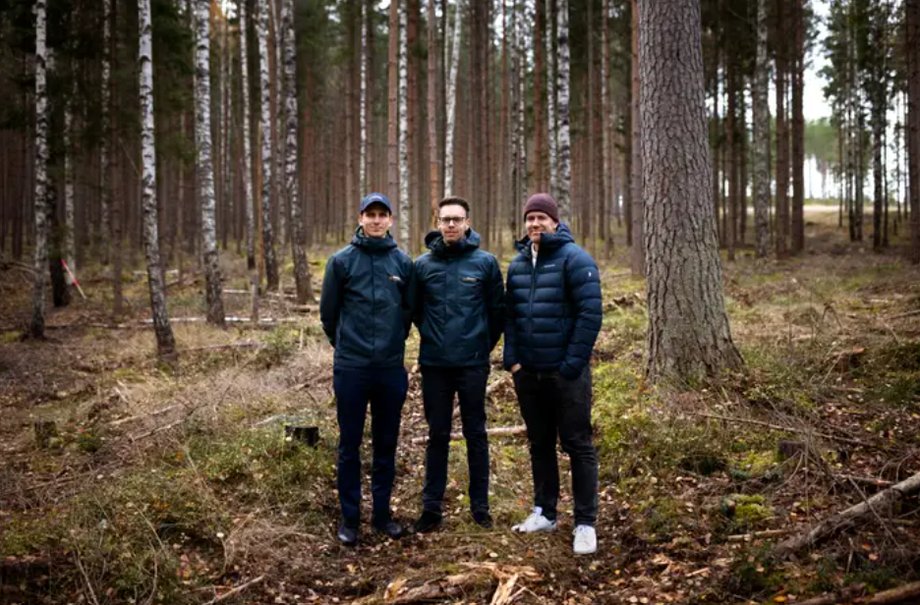
Carl Duforce, Joakim Sjöblom and Sebastian Reismer coordinate the work of approximately 50 consultants and contractors in preparation for construction
|
Åsa Sjöström for BI
TNT production is highly hazardous and generates toxic byproducts. Sjöblom's group is waiting for a court ruling before it can obtain construction permits for the semi-automated factory, after which intends to raise approximately USD 90 million.
The fintech entrepreneur shifted his focus to the defense industry last year and now aspires to be one of the first modern founders in Europe to produce and sell TNT.
If an army needs ammunition larger than a bullet, it probably needs TNT. Introduced into the arms trade in 1902, these compounds are still the world reference in terms of explosive power in weapons – from mortar shells, through hand grenades, to bombs.
In Europe only Poland
Nothing like this is produced on the North American continent, and there is currently only one factory in Europe producing TNT compliant with NATO standards – in Poland. India and China are among the world's largest suppliers, which means weapons makers rely heavily on Asia when demand exceeds the capacity of the Polish plant – a critical bottleneck in a major war.
“There was a political decision to move production back home,” Sjöblom said of the general mood in Europe. — If an incident occurs where we have to close the borders, we should be able to maintain production. We should not have import dependence for critical raw materials, he adds.
Sjöblom founded Sweden Ballistics AB, or Swebal, in 2024 after selling his fintech company, Minna Technologies, to Mastercard the same year. This is also the year that Sweden also joined NATO.
This year, Swebal applied for an environmental permit for production with an annual capacity of 4,500 metric tons of TNT – enough to produce approximately 450,000 artillery shells, which NATO urgently wants to mass produce.
The Swedish company expects to break ground early next year and start production by 2028.
The start-up's main advantage, says Sjöblom, is its European supply chain. Swebal plans to acquire 100 percent. raw materials from Sweden and the Baltic Sea region.
See also: Will France bring misfortune to Europe? The specter of a crisis spiral hangs over the continent
Finances are not the biggest problem
Lukas Bauer, an expert on energy materials like TNT at Ludwig-Maximilian University in Munich, told Business Insider that it's usually quite easy to find the substances needed to produce TNT.
“All these chemicals are relatively cheap and can be obtained in large quantities,” said Bauer, who is not involved in the Swebal project, adding that TNT production usually costs less than $20. per kilogram.
Raw material sources are usually not a major concern. The process of producing TNT in accordance with NATO standards it is highly toxicand while the final product is usually quite stable, its production involves greater risk of accidental detonation. This is part of the reason why the West was eager to move production to Asia after the Cold War.
Producing TNT in Europe is also more expensive than in Asia, but this is in line with the new requirements of the European Union towards arms manufacturers. Last year, the bloc set a target of 60 percent by 2030. obtain its defense purchases from its own market.
Due to this policy change, Sjöblom and his co-founder, engineer Carl Duforce, are one of several new Western players entering the TNT market.
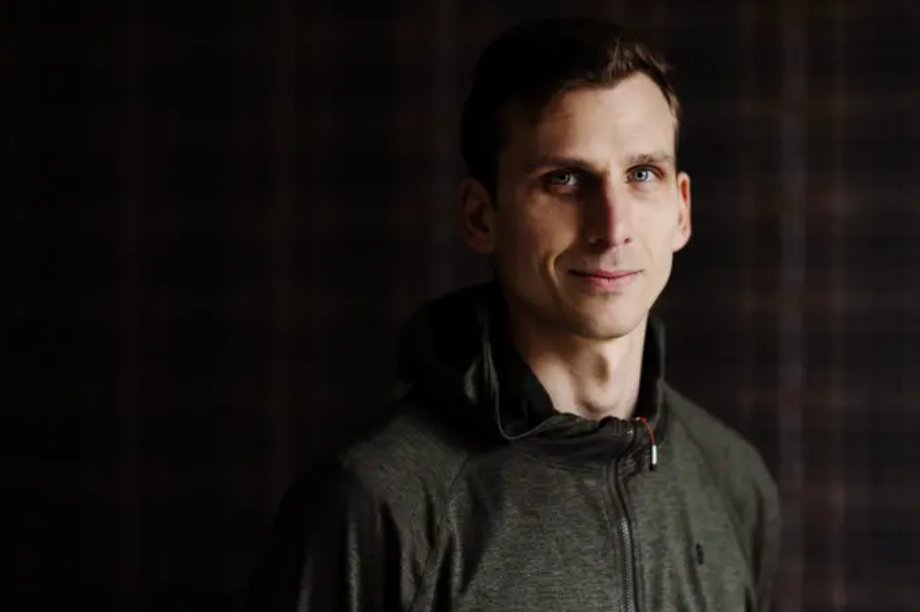
Carl Duforce, an engineer and Sjöblom's neighbor, moved to Nora to help with community involvement
|
Åsa Sjöström for BI
The Finnish government announced in January that it is building a TNT production plant, which is expected to be completed by 2028. Work is also underway to resume production at the Czech-Greek TNT plant near Athens.
On the other side of the Atlantic, the U.S. Army has contracted Repkon USA to build a new facility in Kentucky with a November 2028 deadline.
The increase in demand is fueling a sense of urgency in the West to dramatically increase munitions production. NATO warned in June that Russia produces roughly four times as many artillery shells as the entire Western alliance, despite an economy 25 times smaller.
Sjöblom said the TNT market currently does not even come close to meeting Western needs, and he is confident that Swebal's annual production capacity — 4,500 tons — will be in strong demand for at least 10 years.
— If all these ongoing projects come to fruition, we will not even have half of what Russia is capable of producing – he estimated.
Forest, earth embankment and electric fence
Swebal is now waiting for final approval from the Swedish environmental court, which the company expects to receive in December.
In Sweden, regulatory requirements for this type of plants are strict, even with the country's current support for defense expansion. Swebal spent nearly two years on 14 site surveys to obtain environmental approval, checking, among other things, the occurrence of protected animal species, archaeological remains and other factors that could exclude this area for development.
The Swebal plant, including the parking lot, would occupy approximately three acres, but the company also has an option to purchase approximately 60 acres of surrounding forest as spare land. — We are purchasing a much larger acreage, basically so that in the future we will not have neighbors close to the facility – said Sebastian Reismer, the company's construction manager.
The company's permit allows it to store up to 25 tons of TNT at the plant at any one time, and the company must prepare emergency procedures in the event of an explosion. The surrounding forest can help mitigate the shock wave and shrapnel in the event of an accidental explosion, as well as muffle the noise associated with factory operations.
“That's why we're here,” Duforce, co-founder and COO of Swebal, said of the forest near Nora. — We are approximately 700 meters to a kilometer from the nearest civilian facility, such as a house or a main road, he adds.
The plant itself was designed to contain about a dozen acid tanks connected to a 27-meter tower used to concentrate the raw material. In the factory core, these chemicals will be pumped and converted into TNT inside a facility measuring approximately 400 square meters, surrounded by a thick earth embankment approximately 6 meters high.
Swebal plans to secure the area with electric fencing and razor wire, surveillance cameras and a 24-hour security team.
A dangerous, toxic process
Sjöblom, Duforce and Reismer are currently Swebal's only employees, but the startup plans to employ about 50 full-time Swedes once the factory is completed. Currently, he cooperates with several dozen consultants and contractors preparing the site for construction.
Swebal estimates that it will need approximately EUR 80-90 million to build the TNT factory. The company announced in June that it had raised $3.5 million. from investors such as Thomas von Koch, former managing partner of EQT Partners.
Sjöblom said his team will pursue a “significantly larger” round of financing once it receives final approvals. Although he admitted that demand for TNT is high, he also emphasized that he was undertaking a risky venture.
— Our willingness to take risks as a start-up is huge because we have nothing to lose Sjöblom said.
The production of TNT involves repeatedly mixing toluene with concentrated sulfuric and nitric acids, which are corrosive and can emit toxic fumes. This process generates a lot of heat which, if not controlled, can lead to detonation.
For these reasons Swebal plans to have only two rooms in the factory where people will stay regularly — a laboratory for final product tests and a reinforced control room.
“Our vision is to make this process fully automated,” Sjöblom said of the production process.
There is also the issue of waste. Purification of TNT to NATO standards creates a byproduct called redwater, which Bauer, an explosives expert, described as “toxic, carcinogenic, mutagenic effluent.”
In the past, companies dumped redwater into waterways, he said, but now it is usually stored in tanks to be safely burned later.
Sjöblom said Swebal will transport the redwater to a third-party waste management company located a 45-minute drive from the factory site.
“We will not conduct any on-site treatment,” he said regarding sewage.
Not in my backyard?
Carl Duforc from Swebal has been living in nearby Nora since February to talk to residents. Some people are not thrilled with the prospect of a new TNT factory close to their holiday homes.
Expected to soon be the region's second-largest employer, Swebal already sponsors local tennis and padel clubs.
The region is also familiar with the arms industry. The new plant is being built along the Swedish “military belt”. On the other side of the lake from the planned factory there is an old dynamite factory from the times of Alfred Nobel.
The Swebal plant will rely on about nine trucks a day to deliver raw material, so it needs to build a road to and from the site.
Sjöblom said the prospect of increased traffic had unnerved some local residents, but he believed Europe needed to build an arsenal to deter Russia.
“People don't like that there will be trucks, they don't like that the trees will be cut down, and, you know, there won't be as many squirrels anymore,” he said, walking along an abandoned railway line in the shade of a tall forest. — Well, if war breaks out, maybe there will be no trees left. There will be no more squirrels – he adds.
The above text is a translation from the American edition of Business Insider