Russia has fallen into its own trap. American commander: disaster awaits

Okay. 25 Russian shock troops — consisting of five to 10 men, many wearing civilian clothes — crept into the ruins and massacred civilians. This cruelty, but not victory.
Captured Russian prisoners revealed a new tactic: they were ordered to enter the city and avoid contact with Ukrainian defenders. These small groups of infiltrators were ordered to hide in the city until they linked up with other Russian units so that the forces could then attack Ukrainian positions.
Is this the plan? Not really. Ukraine locates and surrounds subsequent groups of infiltrators. The Ukrainian air force and French AASM Hammer glide bombs enter the action. As Russians seek shelter in destroyed apartment buildings, smart bombs fly through multiple floors, destroying sniper nests and drone control points.
There is no doubt that the fighting in Pokrovsk is fierce and terrifying. But let's not forget that It took Russia four bloody years to get from Donetsk to Pokrovsk. This is a distance that a tourist could cover in one day in peacetime. Donetsk was a real slaughterhouse for Russia. The fight for Pokrovsk will be equally costly.
As in every battle, the situation is fluid. Russian infiltrators entered central districts, turning streets into sniper alleys and basements into points of resistance. The fight continues, door to door and floor to floor.
President Volodymyr Zelensky calls the situation in Pokrovsk “difficult but under control.” The noose is tightening, but it is strangling Russia with a rope woven from its own illusions.
The article continues below the video
The Russians claim that Pokrovsk's communication and supply lines have been severed. Not really. Both sides are struggling with deadly logistics drone zonewhich extends over a 20 km strip on both sides of the zero line.
To the west, Ukrainian communication and supply lines are scattered and provide more than adequate logistics on the battlefield, while logistical complications paralyze the Russian horde.
Motorcycles, civilian vehicles and wheelbarrows used to transport Russian supplies are destroyed by Ukrainian infantry fighting vehicles (IFVs). Artillery destroys Russian fuel convoys, sets fire to ammunition depots, and destroys warehouses full of food, water, and desperately needed winter uniforms.
Dead end
Kremlin troops from the south and east are nibbling at the outskirts of Myrnohrad and hoping to cross the E50, but Ukrainian reinforcements – the 7th Rapid Reaction Corps and secret special forces – locate, isolate and destroy Russian units before they can receive supplies or reinforcements.
Moscow's losses in the Pokrovsk operational area alone are conservatively estimated at 70 thousand during Putin's glorious “summer offensive”. That's 70 thousand. victims in a desperate attempt to capture the city, which has long ceased to be a logistical lifeline and has become a dead end.
Everyday life is filled with air and land fights. Ukrainian counterattacks – FPV (first person view) drones and anti-battery fire – rain down, destroying exposed Russian guns before they can fire and escape. While infiltration attempts by the Kremlin are sometimes successful, the same cannot be said for conventional attack attempts.
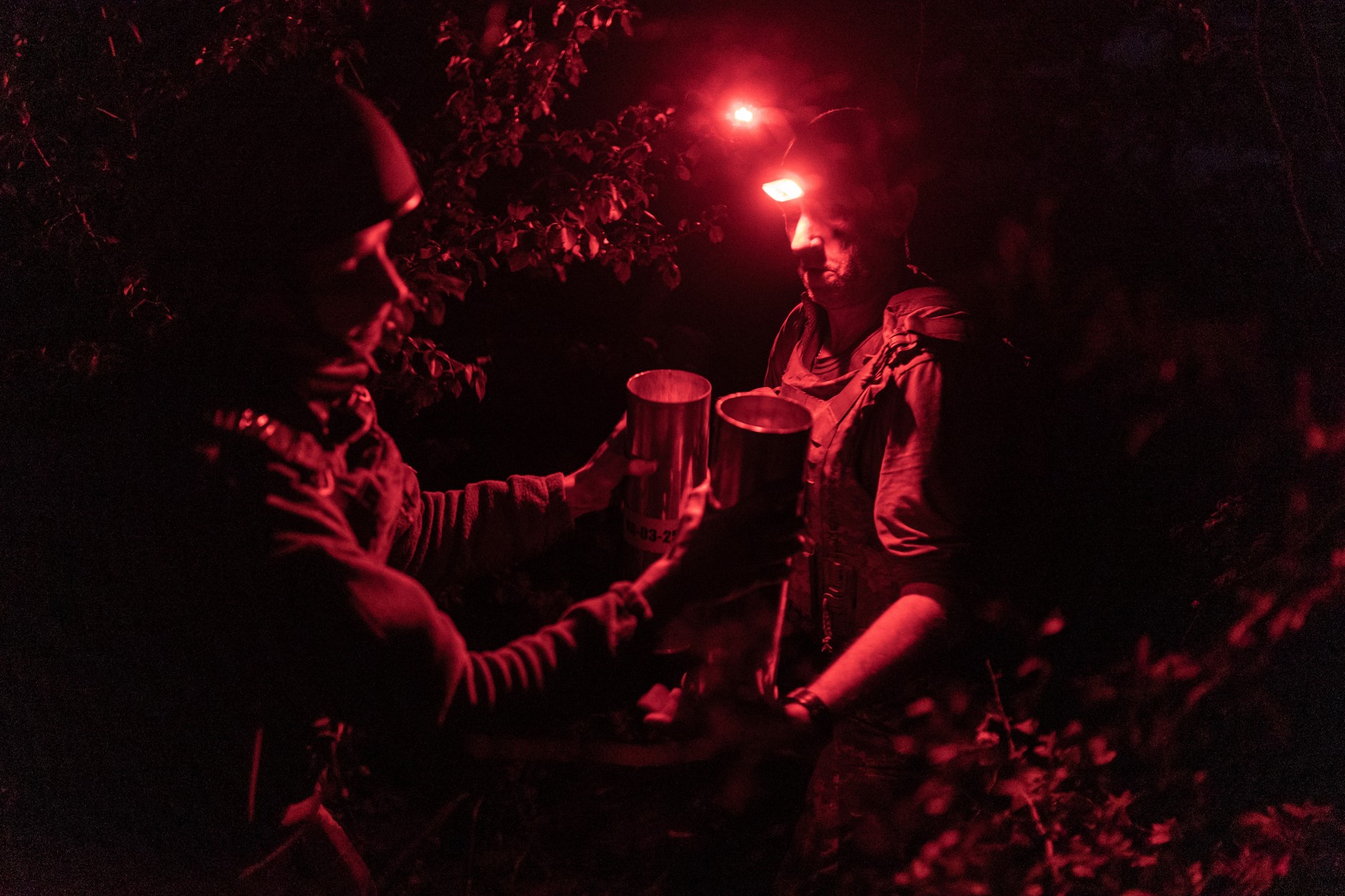
Ukrainian soldiers in the Pokrovsk region, September 11, 2025.Diego Herrera Carcedo / AFP
As Russia amass tanks and armored fighting vehicles to deliver motorized rifle units, Ukraine's superior intelligence keeps defenders alert and waiting. The recent – and typical – attack by Kremlin forces took place in broad daylight, with tanks and armored personnel carriers positioned one behind the other in an attack vector perpendicular to the zero line – which was a recipe for destruction.
In less than 40 minutes, Ukrainian FPV and artillery destroyed four Russian tanks and six infantry fighting vehicles, reducing them to burning wrecks. These were not lucky hits. They were the result of an adaptive war that turned Russian assembly points into slaughterhouses.
Moscow's response? An unrestricted avalanche of FAB-3000 glide bombs, KABs, and thermobaric missiles – hundreds of missiles fired daily, devastating downtown Pokrovsk and the few civilians remaining of the city's pre-invasion population of 60,000.
What has Russia gained?
This question can be answered by specifying the losses suffered by Russia. There are Russian losses on the entire front 1.2 thousand-1.5 thousand people per day. That's three full battalions of infantry killed, wounded or captured every day, seven days a week. This year approx. 350 thousand. This number does not include over 70,000. Russian soldiers known to have deserted.
Russian losses sometimes reach 2,000. people per day. That's an entire infantry brigade destroyed in 24 hours. No army in history has ever won (or even survived) a conflict while suffering losses at this level.
Is this just Ukrainian propaganda? Kremlin documents state that Russia is losing 1.1 thousand dollars a day. up to 1.6 thousand soldiers. In September, Russian infantry losses increased by 30 percent. compared to August.
In the Pokrovsk-Donetsk basin, eight to 12 tanks, armored personnel carriers, infantry fighting vehicles and 15-20 trucks are burned every day. That's 250-350 vehicles per month. Only in Pokrovsk. Russia's mechanized fist is being crushed by drone swarms.
The same scenario is playing out in Pokrovsk as in Bakhmut. Russia lost tens of thousands of soldiers to capture the “strategic city”. And she finally achieved it – when there was nothing left in Bakhmut but a lunar landscape. Victory? Again, not really.
West of Bakhmut, the key area around the city of Chasiv Yar still remains in Ukrainian hands, which clearly prevents Russia from making further advances. Application? Russia is bleeding on meters, Ukraine is adapting on kilometers.
Not so strategic anymore
As in Bachmut, there will be no victory in Pokrovsk — just a Russian vampire feeding on its own veins, with thousands, even tens of thousands, of unrecovered Russian corpses littering the insignificant battlefield.
Like Bakhmut, Pokrovsk was irresistible kryptonite for Putin's generals, and at the heart of their desires is delusion. The so-called strategic importance Pokrovsk is a mirage spread by Putin bots and keyboard commandos from open intelligence sources.
Once – 24 months ago – it was an important logistics hub. During the defense of Avdiivka, ammunition, beans and bandages were sent from here to the east.
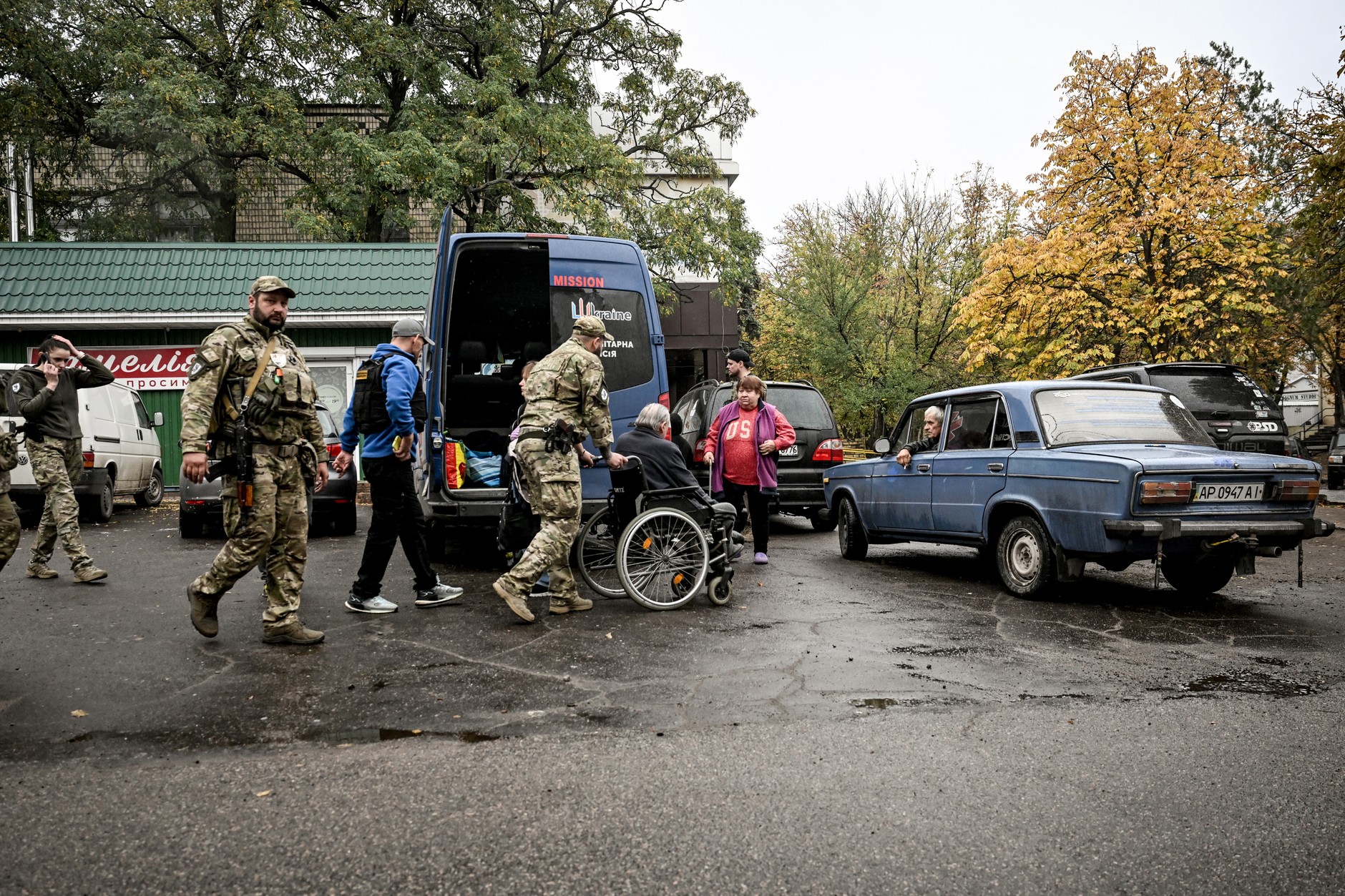
Evacuation of Pokrovsk residents, October 10, 2025.Dmytro Smolenko / AFP
Two years ago Pokrovsk was there the main artery, an important supply center for the Ukrainian army. Not anymore. Self-proclaimed experts sometimes fail to understand that the tactical and strategic value of a military objective is defined not only by cartography, but also by circumstances prevailing on the battlefieldthat surrounds him.
Pokrovsk used to be important, but now it is not. Ukraine redirected its logistical forces west. The city is now a final station rather than an intermediate point. It is a dilapidated, end-of-the-road outpost that maintains its importance through circumstance, not topography.
But Putin has not captured a single Ukrainian city since seizing Velyka Novosilka last winter. Ukrainian attacks on Putin's refineries caused kilometer-long queues at Russian gas stations. Putin knows he needs victory, no matter the cost in blood and treasure.
Area of death
The capture of Pokrovsk, like Bakhmut before it, will not change the situation in the eastern conflict zone. This city is not and has never been a key point of Ukrainian defense.
We can call Pokrovsk what it is today – deadly 3D urban battlefield. An area of death, similar to Bakhmut, which greatly favors the Ukrainian defenders. You can be sure that Russia will send tens of thousands of soldiers to the city, and most of them will die in the rubble. Just like in Bachmut.
As this battle unfolds, Ukraine will dictate the time, place and pace of the fighting. It will be Ukraine, not Russia, that will decide how many resources Kiev will devote to defending what remains of Pokrovsk.
Russia made a mistake againengaging in a classic “battle of attrition”. With a constant casualty ratio of 5:1, these battles deplete Russia's human resources, vehicles, fuel, ammunition and morale.
A glance at the map shows what Russia will “gain” from taking Pokrovsk. As with Bakhmut, Russian options for advancing beyond the city are as unclear as they are pointless. Open areas, rolling fields, little or no cover – home to drone attacks, withering anti-battery fire and minefields.
Pokrovsky's loudest prophets – those who tweet about failure without having tasted the dust – miss this point. Ukraine does not defend red lines on the map. He defends the space between them, the three-dimensional death zones where Russian dreams die.
What in Pokrovsk?
Russia is facing a disaster again. Putin's generals, promoted like mafia bosses rather than tacticians, are slowly beginning to understand that in the war of the 21st century, the open terrain of Ukraine is not a space for maneuvers – it is a killing field.
Ukrainian technology has transformed open space into unlimited “fortresses” roamed by hundreds or even thousands of Ukrainian FPVs, smart bombs and HIMARS artillery systems that do not miss their targets.
The cost of this farce – tens of thousands of Russian widows, a mechanized burial ground – and Russia gains another burned city. Pokrovsk will prove again that the Kremlin can only destroy the places it touches. Putin and his hordes bring only death and misery, not liberation or freedom – “Russkiy mir” in a grand style.
Meanwhile, Ukraine is perfecting its advantage: drone swarmsthat change the rules of land combat, and deep strikes that burn the refineries that fuel Moscow's imperial ambitions. For Russia and Putin, the meaninglessness is not just tactical, but existential.
Ukraine will not lose this war, and Putin will not survive if he loses it. Russians know, even if they don't say it out loud, that this war was Putin's idea. He told them it would be a 72-hour piece of cake, and millions paid for his arrogance. Putin knows that his fate, like that of all war-mongering dictators, hangs in the balance.
By January 12 next year, Putin's adventure in Ukraine will reach its peak a grim milestone. Russian invaders will attempt to subjugate Ukraine for 1,418 days – longer than the Soviet Union fought Nazi Germany during World War II.
Here's a fact: the Russian army once won a world war in less time than it took Putin to capture an area the size of the US state of Ohio. An area constituting less than 19 percent total area of Ukraine.
Putin knows that the narrative is changing from “special military operation” to a quagmire. He keeps fighting because he knows that this one the inevitable failure will consume him. Moscow's war machine continues to operate, but every missile asks the same question: why?
Pokrovsk will not break Ukraine – but it will bury another Russian illusion.