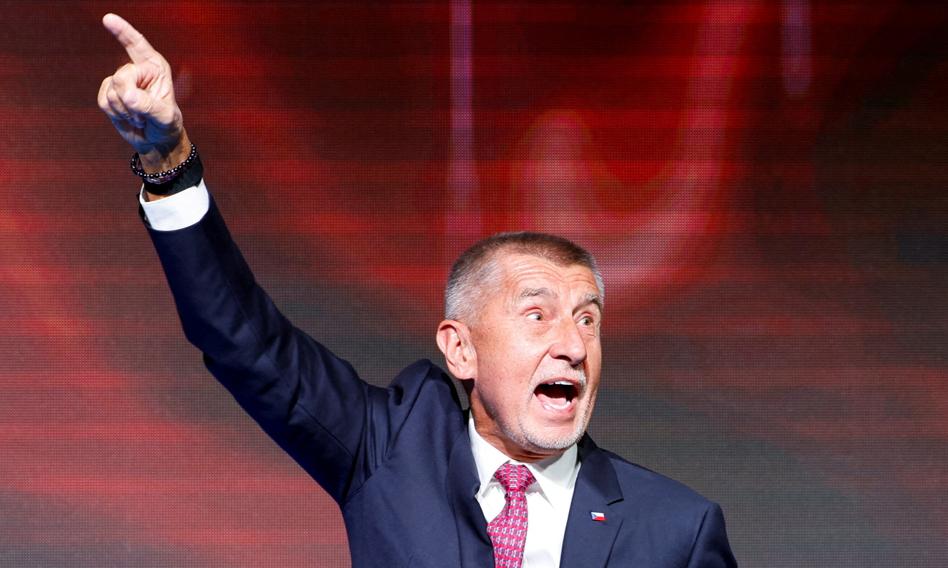
The three parties signed a coalition agreement. Babisz will become Prime Minister of the Czech Republic

2025-10-29 10:48, updated 2025-10-29 10:59
publication
2025-10-29 10:48
update
2025-10-29 10:59
Prime Minister-designate Andrej Babisz, leader of the ANO movement, announced on Wednesday that he had agreed on the content of the coalition agreement with the Freedom and Direct Democracy (SPD) and Motorists parties and that it would be signed on November 3. According to Babisz, the new government should be formed by mid-December.
Babis, who was entrusted by President Petr Pavel with the mission of forming a government on Monday, is to present the coalition agreement and the main points of the future cabinet's program to the head of state by the end of the week. In a recording shared on X on Wednesday, Babisz announced that the contract had been agreed, but two problems remained to be solved in the program declaration. He did not specify what issues were involved.
The populist ANO movement, whose leader is Babisz – former Czech Prime Minister and one of the country's richest citizens, won the elections to the lower house of parliament on October 3 and 4. He began negotiations on the formation of a new government with the radical right-wing, anti-EU and anti-immigration SPD and the Eurosceptic, right-wing Zmotoryzowani group. Other groups that got into the Chamber of Deputies rejected the possibility of post-election cooperation with ANO during the election campaign. The new coalition will have 108 MPs in the 200-seat chamber.
The coalition agreement will most likely include a provision granting SPD leader Tomio Okamura the position of chairman of the Chamber of Deputies, the division of the remaining positions in the Chamber's management and the division of ministerial portfolios. Babisz announced that on Wednesday he would talk with partners about the new rules of procedure and the appointment of committees and vice-chairmen of the Chamber.
The statements made so far by politicians of the future government coalition show that the program will not include any provisions questioning the Czech Republic's membership in the European Union and the North Atlantic Alliance. The introduction of the institution of referendum into the legal order proposed by the SPD assumes that this form of direct democracy will not apply to foreign affairs. It is possible that the program declaration will include: limiting military aid to Ukraine, restrictive migration policy and relaxing climate goals. The program is also intended to reduce the tax burden and restore the obligation to use the uniform control file for entrepreneurs known from Poland.
From Prague Piotr Górecki (PAP)
ptg/ akl/