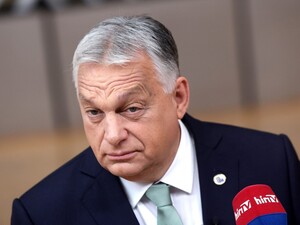
Budapest plans to join forces, first of all, with the Czech Republic, where the Action of Dissatisfied Citizens (ANO) party led by Andrej Babis won the parliamentary elections on October 4, as well as with Slovak Prime Minister Robert Fico, who takes a pro-Russian position on a number of issues.
According to Balazs Orban, resistance to the EU policy in this format has already been tested in the format of the Visegrad Four, which, in addition to Hungary, the Czech Republic and Slovakia, included Poland, when the Eurosceptic Law and Justice party was in power there. This “worked very well during the migration crisis, so we were able to resist,” the prime minister’s adviser told reporters. As Politico writes, the association actually disintegrated after the start of the full-scale Russian invasion of Ukraine, due to the fact that Poland does not share the anti-Ukrainian position of other countries.
The idea itself could significantly hinder the EU’s efforts to provide financial and military support to Ukraine, the authors of the material believe. Leaders of the countries of the proposed alliance can coordinate positions before meetings of EU leaders, including holding preliminary consultations before summits. However, the creation of an effective political association is still far away, the article notes. This is due, among other things, to the fact that Babis has not yet formed a government after his recent election victory.
In addition, Viktor Orban, in power for the past 15 years, faces a re-election fight next year. Opposition leader Peter Magyar's Tisza party is now more popular among Hungarians than Orban's Fidesz, according to a Politico poll.