The land of the Dacian fortresses, awakened by the whistling of the sledgehammer in 1917. Georg Hocevar restored a piece of the railway in the mountains

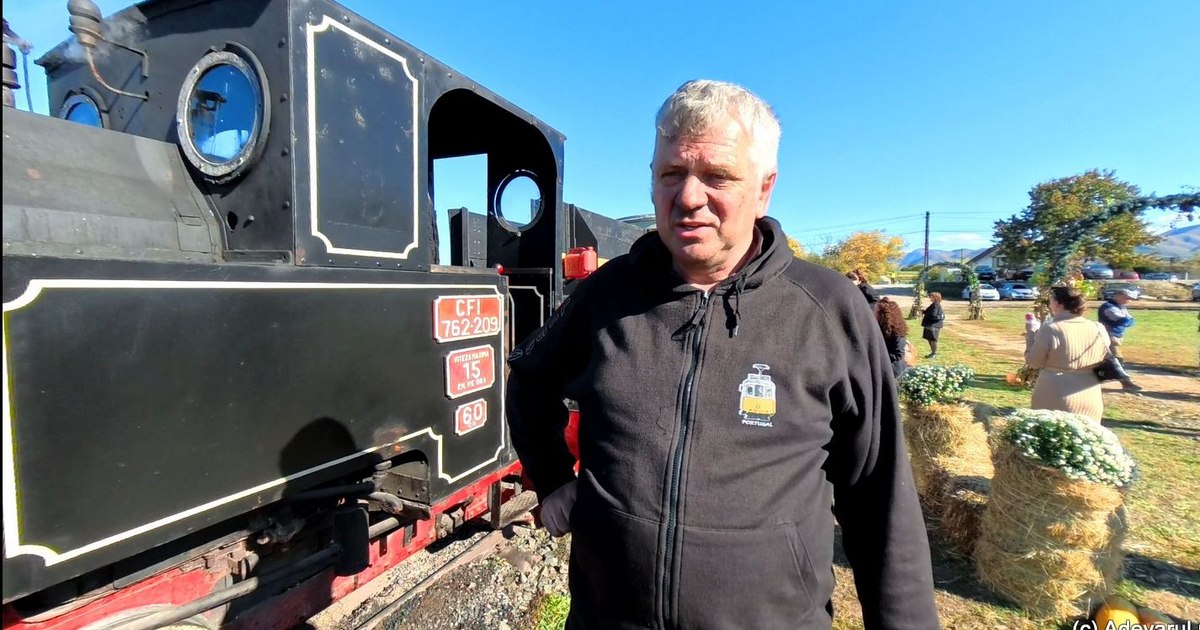
Established in Romania two decades ago, the Austrian Georg Hocevar managed to bring back to life several railway routes that seemed destined to disappear forever. The most recent of them crosses a small part of the Grădisti valley, at the foot of the land of the Dacian fortresses.
Georg Hocevar. Photo: Daniel Guță. TRUTH
Grădisti Valley, between Orăștie and Sarmizegetusa Regia, has been an attractive place for tourists over time, thanks to the most important Dacian fortresses in Romania, which guard it on the mountains and in its forests.
For three decades, during one of the most prolific eras of archaeological research in the land of the Dacian fortresses, its route of approximately 40 kilometers, from Orăștie to the foothills of the Dacian capital, was traversed by a forest railway. The narrow line was used intensively by locals and for the transport of wood extracted from the vast forests of the Orăștiea Mountains, but also by archaeologists and students revealing the secrets of the Dacian settlements.
The railway was built shortly after World War II to speed up the rate at which the centuries-old forests were being exploited. The locomotives, at first with steam, pulled platforms loaded with logs, between the few stations on the route, strung between the steep slopes bordering the gorge, between Costești and Grădiștea de Munte. Sometimes, locals and hikers recalled, travelers faced the wilderness in its purest state. The bears were “awakened” by the hissing of the train, and sometimes they ran after its cars.
Over time, floods wreaked havoc on the Grădisti valley, and the railway and its ramifications were not spared. They were eventually decommissioned and replaced by dirt roads and, later, a modern road.
The memory of the Mokanits, revived by an Austrian
A steam locomotive, built in Munich at the beginning of the 20th century, reminded the locals of the time when they covered the road to Orăștie by rail.
Mocănița occasionally transports tourists on the only remaining section of the railway in the Land of Dacian Fortresses. In the past, the route of the mocanits on Valea Grădisti and its ramifications stretched over a length of almost 60 kilometers. A year ago, the Austrian Georg Hocevar, settled in Romania for about two decades, recreated a small part of its spectacular route, from scratch.
Together with his collaborators, Georg Hocevar restored the embankment for almost 1.5 kilometers, put the narrow gauge railway back on it and brought back the old locomotives and wagons.
On various occasions, and especially on holidays, the trains return to the route that forms a circuit with a single station, to Sereca, a village located about 10 kilometers from Orăștie.
The most spectacular part of the route, between Costești and the area at the foot of the Sarmizegetusa Regia fortress, has little chance of being restored, despite the repeated promises of the authorities in recent decades.
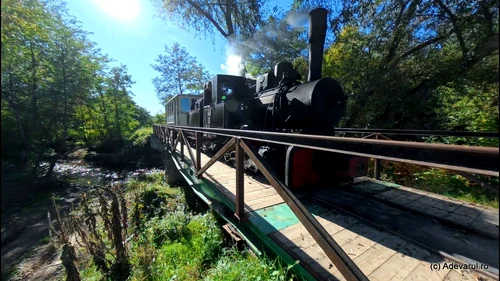
Image 1/11:
Mocanita from Valea Grădisti Photo Daniel Guță THE TRUTH (9) jpg
“We brought a locomotive built in 1917 to the Krauss factory in Munich, where even today Taurus and Vectron locomotives are produced, which run on normal gauge lines. The locomotive came to us in 2007 from Austria, and then we made it functional. Until 2013, it was used in Moldova, but since a large number of tourists started coming there, it had to we are taking a bigger locomotive for Moldova. We used this locomotive until now between Abrud and Câmpeni, and recently we brought it from Câmpeni to Sereca. During the winter, it will be withdrawn to our workshop in Crișcior, and in the spring and on other occasions we will bring it here again. On this route, however, we keep three diesel locomotives from 1957, and for traction on the line we also have one a horse brought from Poland, named Milos, who will also pull wagons. We hope that this tourist attraction will be useful and appreciated by tourists visiting Hunedoara county”, says Georg Hocevar.
The Austrian, passionate about locomotives (steam locomotives that ran on narrow, mining, industrial and forestry railways), renovated the Crișcior-Brad railway, about 10 kilometers long, which, in 2007, was declared a historical monument, on his initiative. As in the case of the railway in the Land of Dacian Fortresses, he tried to return it to tourism through occasional runs, usually organized during holidays and vacations. In the last year, he says, he has noticed a drastic decrease in the number of tourists who spend their holidays in Romania and are attracted to such activities.
“The reduction in the number of tourists is mainly caused by the economic situation, but also by the cancellation of holiday vouchers for budget holders. Together with the most important towns in Romania – Vișeu de Sus, Sovata and Moldovița – I can tell you that there was a decrease of approximately 40 percent in tourism this year. We are trying, but considering that Romania is the only country in the European Union where the state or local authorities do not subsidize with absolutely nothing this tourist attraction, it will be very difficult, in the future, to keep these locomotives in operation”, add this one.
Dacian fortresses railway, closed since 1978
The forestry railway in the Land of Dacian Fortresses was built in the early years of communism, to connect Orăștia – where a forestry enterprise (IFET) operated – to the isolated settlements on Valea Grădisti in Hunedoara, located at the foot of the Dacian fortresses of Costești, Blidaru, Fețele Albe, Sarmizegetusa Regia and other places rich in ancient vestiges.
In the first decades of communism, the secular forests of the Land of Dacian Fortresses were intensively exploited. The trees extracted from the hard-to-reach places in the valleys of Grădisti and its tributaries in the Șureanu Mountains (Orăștiei Mountains) were transported to Orăștie on a railway of more than 40 kilometers, to the foot of the Dacian capital Sarmizegetusa Regia, and on its ramifications, which totaled another 20 kilometers.
In 1978, the floods on the Grădisti Valley destroyed the embankment of the forestry railway. The 60 kilometers of the transport network in the Orăștiei Mountains were decommissioned in the 80s, and the Orăștie–Sarmizegetusa Regia road and forest roads took the place of the old railway.
Many of the forest railways in the Ardeal and Banat regions were built starting from the end of the 19th century, when private companies were supported by the Austro-Hungarian state to establish them, for the transport of passengers, but especially for the logging, mines and factories that littered these lands.
Over time, their usefulness declined and the narrow gauge railway lines were decommissioned. In a few cases they could be preserved and turned into tourist routes or continued to be used to transport wood.