REPORT among the faithful who stayed all day at the gates of the National Cathedral: “How were the invitations made? I didn't know how to ask my priest” / “It's not too expensive for the soul”

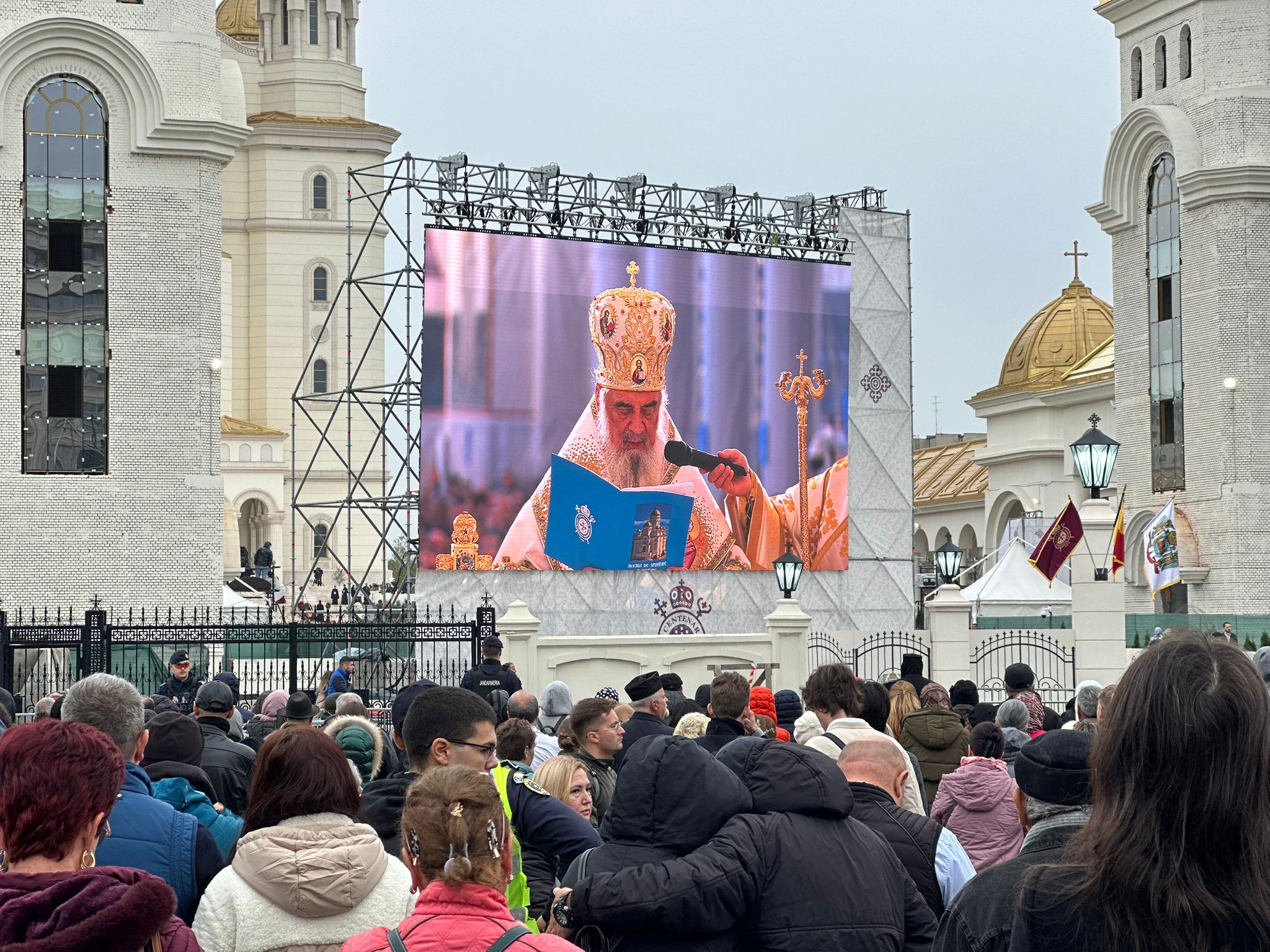
After more than 15 years of work, the National Cathedral was consecrated on Sunday, October 26, 2025, in a service led by Patriarch Daniel and Ecumenical Patriarch Bartolomeu I. Approximately 25,000 people came from the morning to attend the service from outside, which was attended by, among many officials, President Nicușor Dan, Prime Minister Ilie Bolojan and the president of the Republic Moldova, Maia Sandu.
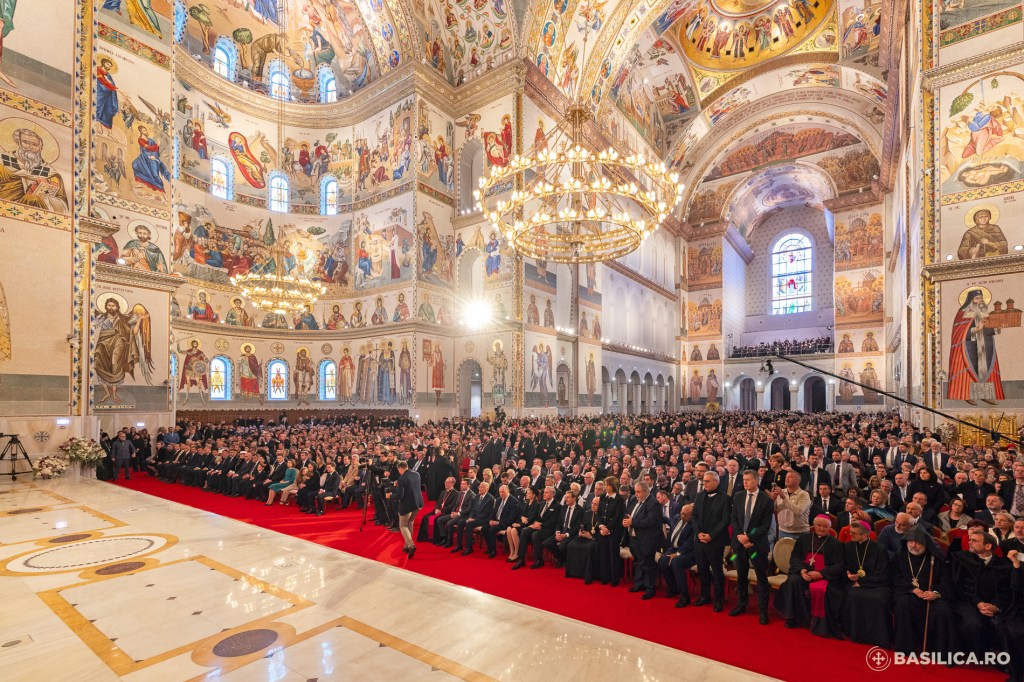
Only 2,500 guests – hierarchs, representatives of the clergy and dignitaries – had access, on Sunday morning, to the largest Orthodox cathedral in the world, which also entered the Book of Records.
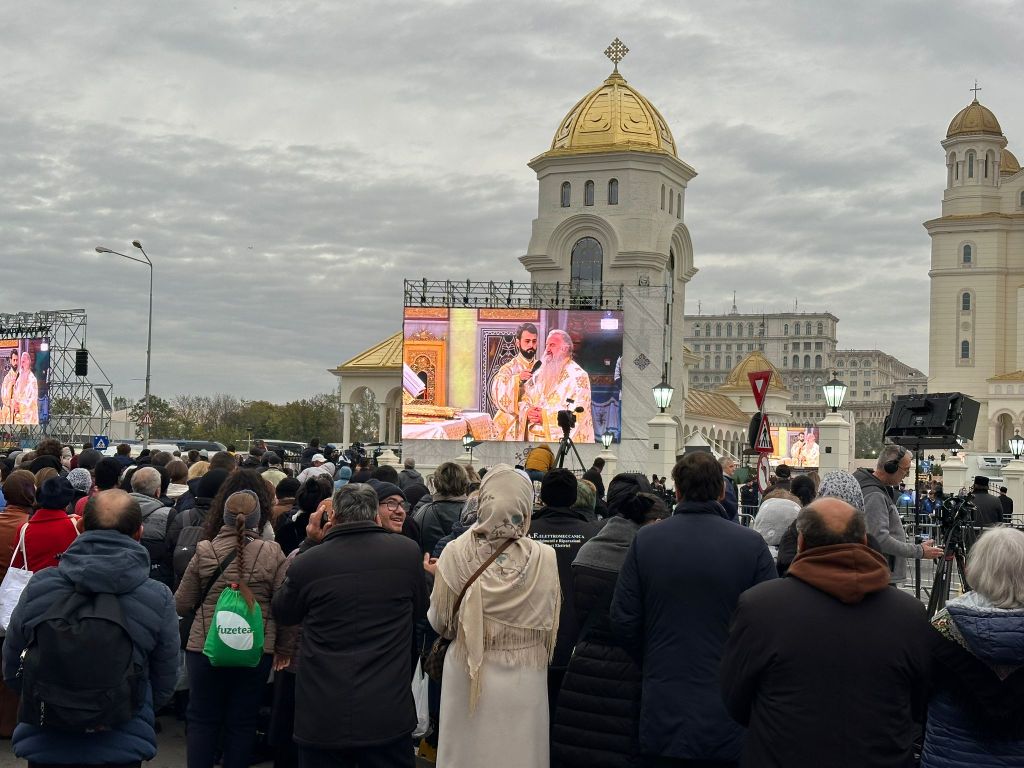
Another 8,000 people, organized by dioceses from all over the country, attended the service from the courtyard, watching the ceremony on two huge screens.
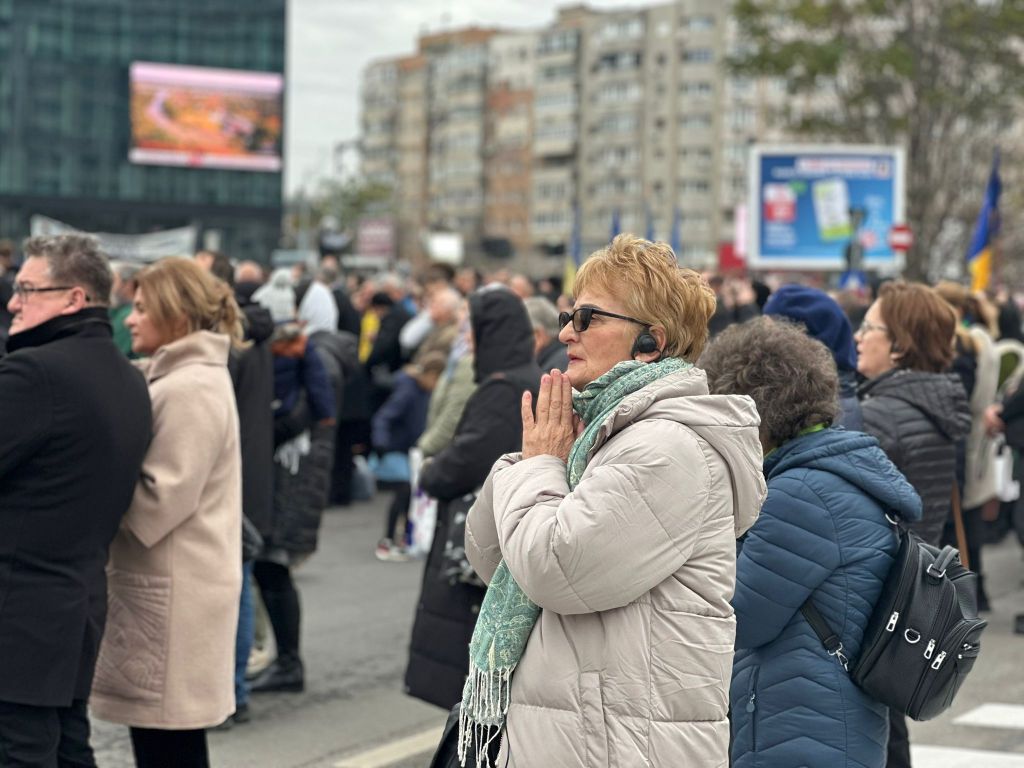
But most, around 25,000, as estimated by the Patriarchate, stayed in the street, outside the fences, where they watched the ceremony that lasted more than five hours.
In 2018, people stepped on each other's feet
Apart from a few isolated cases, the event was uneventful compared to the 2018 shrine consecration, when more than 50,000 people tried to get as close as possible to the Cathedral, and many were trampled in the crowd.
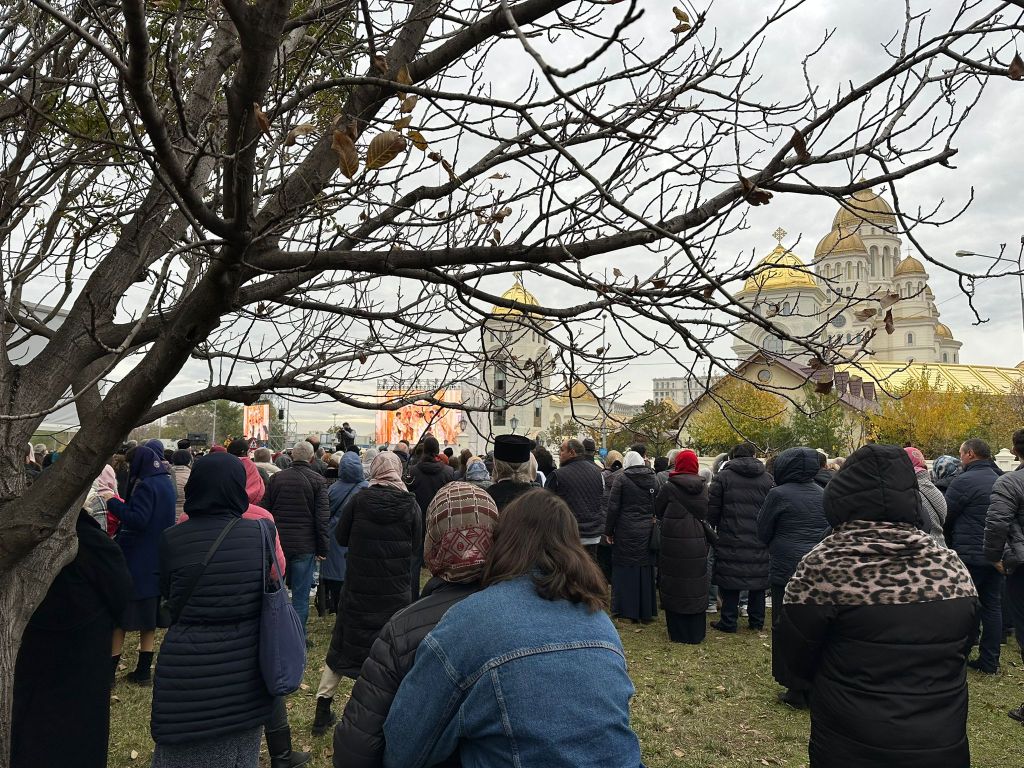
This time, the organization was noticeably stricter: the access areas were well defined, the flow of people was controlled by dozens of gendarmes and volunteers, and the service was broadcast on two large screens, in the courtyard and outside.
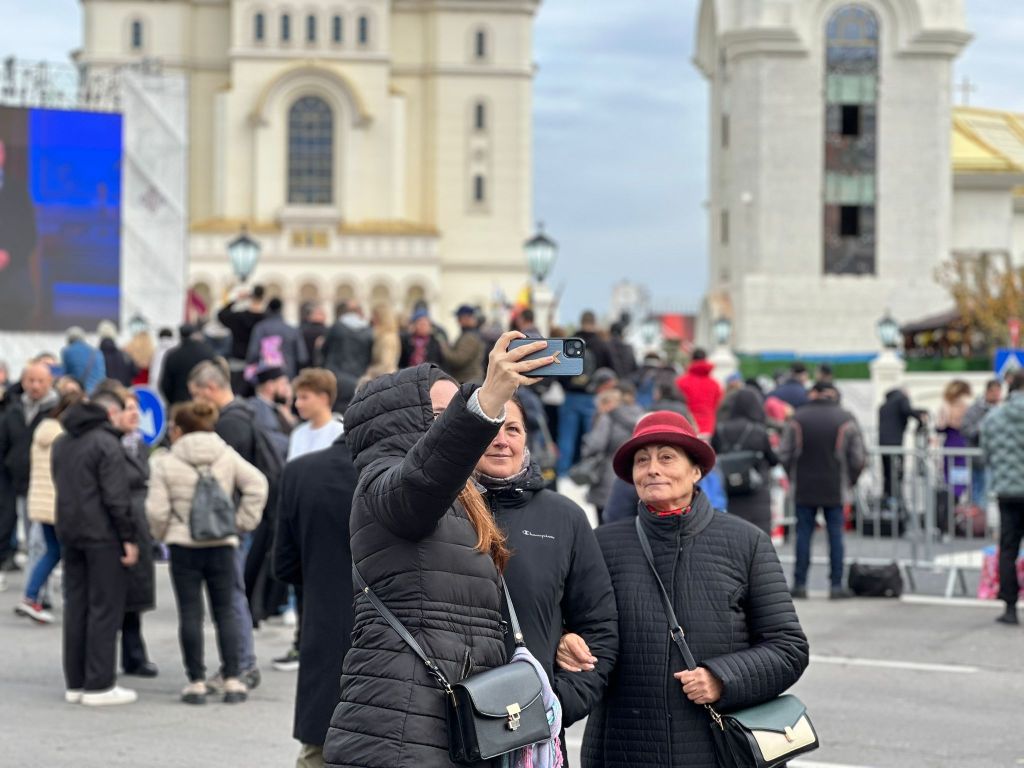
The first groups arrived in the dead of night, around 6:30, when the sky was still orange from sunrise and the cold air made people bundle up their clothes. In front of the National Cathedral there was already a slight bustle, people asking where the entrance was, volunteers explaining the route and gendarmes controlling the flow to the access gates.
“I didn't know how to ask my priest”
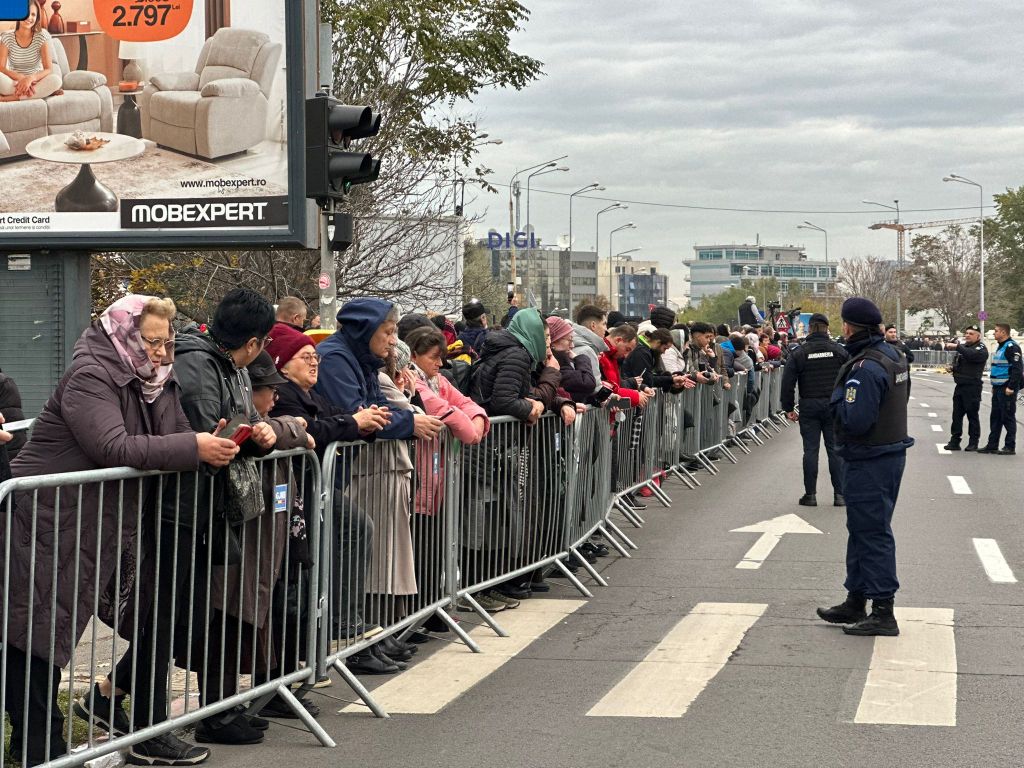
The area was well demarcated, with metal fences and dozens of gendarmes lining the boulevard. Entry was by printed invitation only, with name and diocese clearly stated. Those who only had it on the phone could not enter.
“How were the invitations made? That I didn't know how to ask my priest…” says a disappointed woman left outside the fence.
More than 600 volunteers from the Cathedral Chapel and the Youth in Action group helped the pilgrims find the entrance and will remain in the area in the coming days.
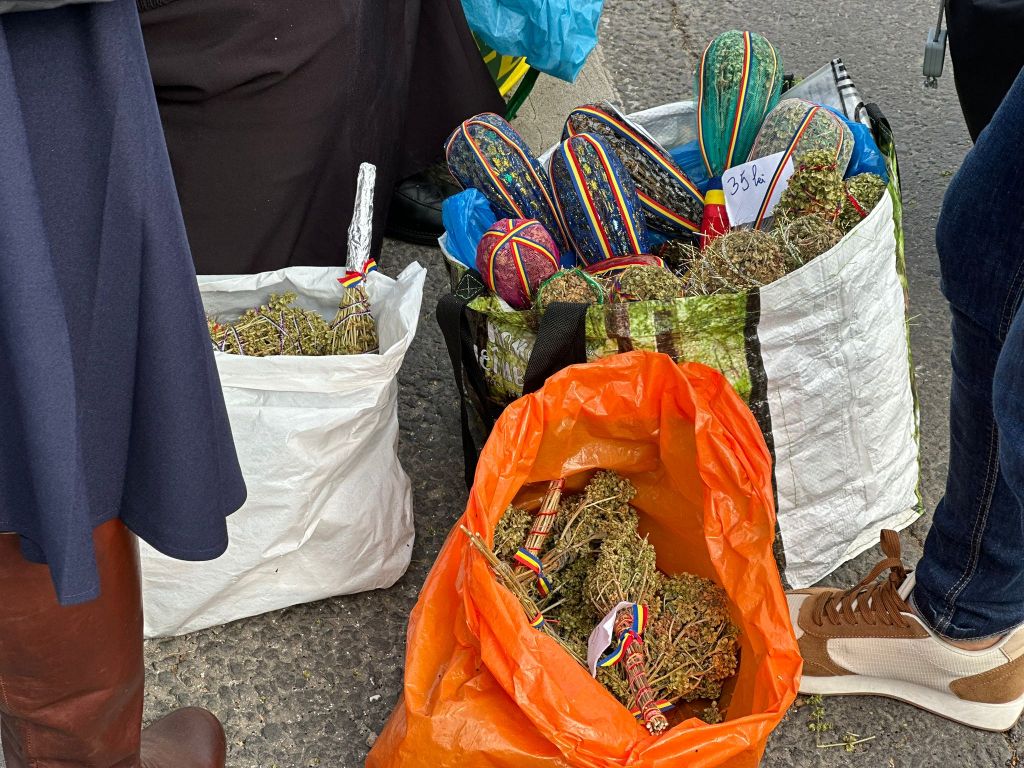
Some brought folding chairs, others sat on blankets spread on the grass or directly on the asphalt. From place to place, a mother sold tricolor flags for 9 lei and large bouquets of basil tied with ribbon for 35 lei.
“For the soul, it's not too expensive”
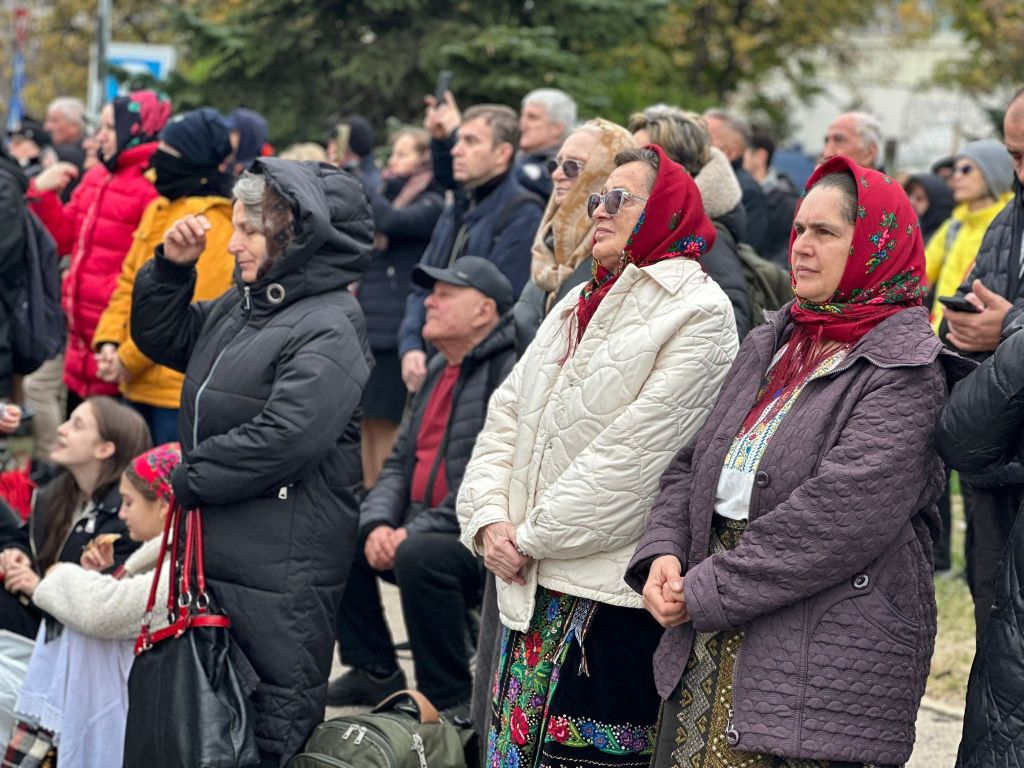
Mrs. Marcela Trișan, 69 years old, retired, made the trip from Cluj with a group organized by the church she attends. He arrived in Bucharest the day before and was going to stay until the next day, together with other believers.
“Part of the group is inside and part of us is outside. After that we gather and go to other monasteries. Tomorrow we go to mass in Dealul Mitropoliia and leave for home,” she says.
For Mrs. Trișan, the National Cathedral is “a place of communion between Romanians”. “I don't think it's like the People's House, just a big building. I think it's more of a place where people can find each other, as it was seen today, that people came from all over the country.”
Asked what she thinks about the high costs, of more than 270 million euros, the woman simply says: “Other constructions have been made. The word of the father: stadiums, which still cost a lot. And those are for part of the people, and these are for part of the people. For my soul, I don't think it's too expensive. If people manage to come, sit back and change their perception of the world a little and we become better, I don't think it's a lot.”
She prays “only for health. May God give me health and wisdom,” she says, before adding that she hopes the new cathedral will “bring people together and send them a good signal.”
“We deserve such a cathedral”
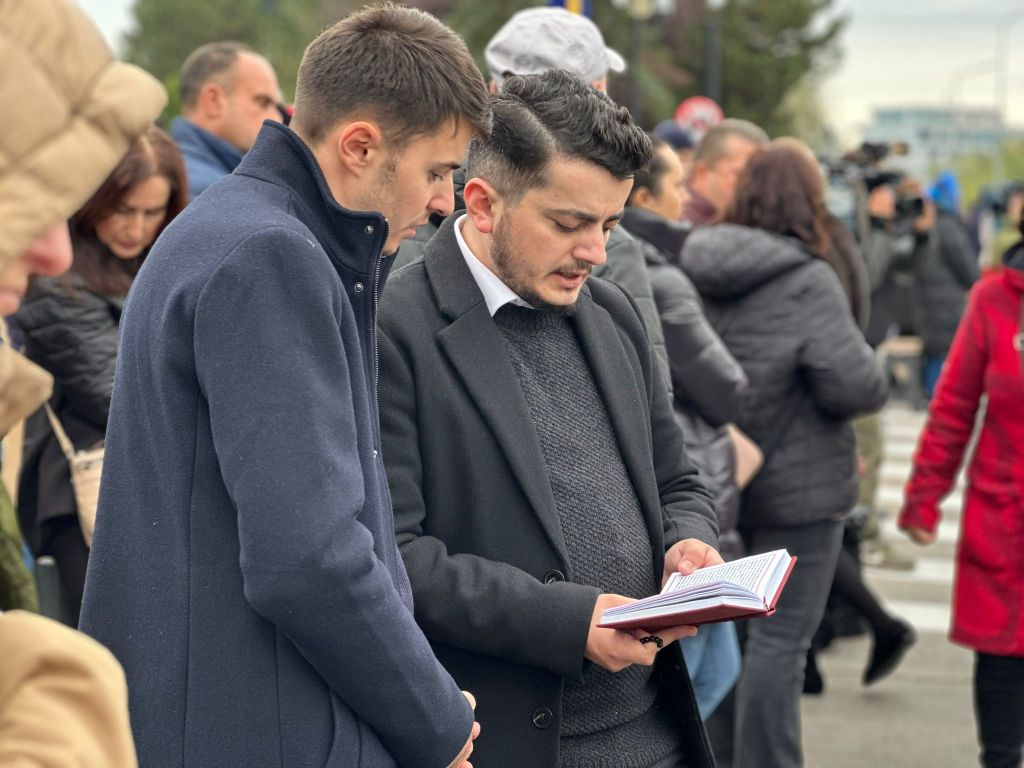
Further ahead, two young people from Cluj, Florin and Marian, both 24 years old, Theology students, were staring at the big screens in the square. They came on their own, not with an organized group, and got their accommodation ahead of time.
“It's very successful, it's extraordinary. It's the culmination of several years of efforts,” says Florin. Asked what such a construction means to him, he adds: “We deserve such a cathedral. The Christian-Orthodox people also deserve something. In the idea that the Romanian people, the Romanian language was formed with the help of the Church. In the porch of the church. It does not seem excessive to me to build cathedrals and churches, as a sign of gratitude.”
Marian completes it with an example from home: “In Cluj, at the Metropolis of Cluj, there is a palliative care center for terminally ill patients. It's a very nice initiative, made so that people who are suffering don't die alone. They are built, administered and maintained by the Metropolis of Cluj, without the involvement of the authorities.”
The two talk openly about faith, their generation and their personal journey. Florin says that for him “God's mercy” is what gives him hope for the future: “That's why I chose to do Theology. I saw a better life and God's care for me.”
“We need a symbol”
On the side of the boulevard, Aurelian, 44, from Bucharest, said that the moment was “truly historic”: “After all this time, the Romanian people needed a cathedral. And now we see, in all the countries of the world, that we, and the Romanian nation, needed one, precisely to find ourselves and to find God.”
“She is welcome to the people”
More secluded, close to the fences that closed the access to the Cathedral, Stelian, 75 years old, from Bucharest, looked at the big screen in front of him, where the service was being broadcast, and said simply that he enjoys the construction: “It is an imposing building and it is welcome for the people and for Christians.”
Asked about the costs, he adds: “It's a very significant amount, but other quite large amounts are spent and you don't see the results. Here, at least, it's something big. Years from now, people will remember this and go here, the faithful, not necessarily all.”
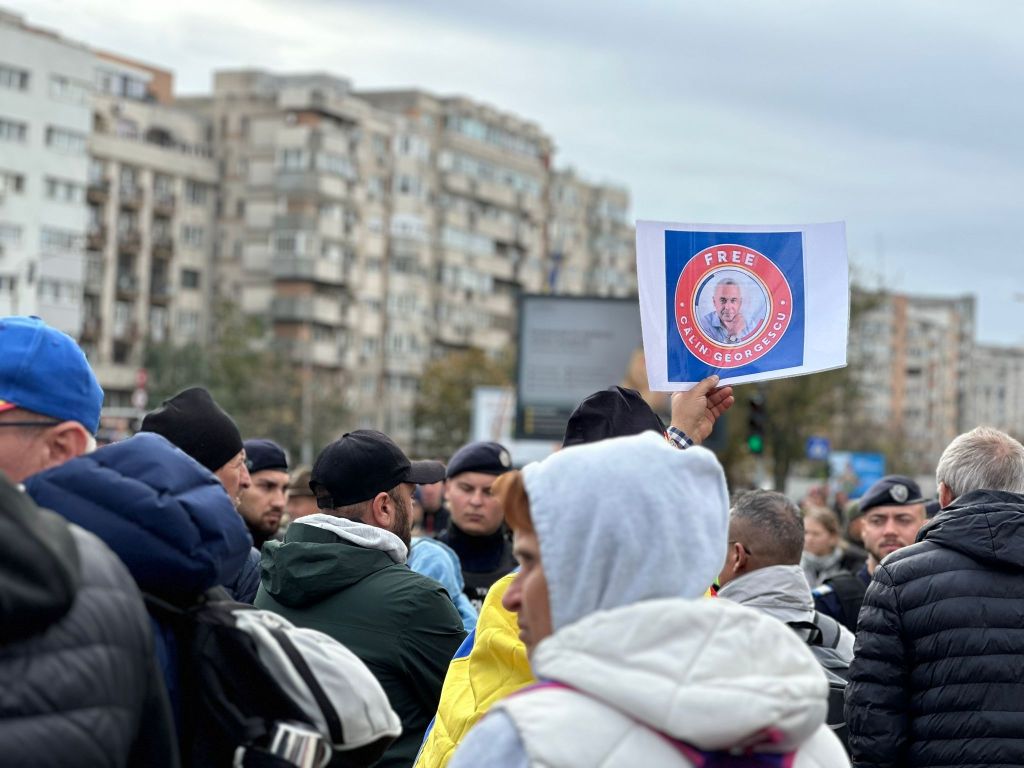
At the end of the service, a group of people with placards “Free Călin Georgescu” gathered near the fences at the entrance to the Marriott hotel, where the officials were retreating. When Marcel Ciolacu and Victor Ponta appeared, they were booed with cries of “Resign!” and “You destroyed the country!”, a stark contrast to the silence that had reigned throughout the event.
The interior of the Cathedral, reserved for VIPs
The faithful organized by dioceses from all over the country were able to enter the courtyard, with the invitations printed as an entry ticket. There they were divided into two perimeters.
The interior, however, was reserved for guests, politicians, former politicians or people from civil society.
Most entered the Cathedral on foot, bypassing the crowd of people, through a dedicated corridor. The most important were brought by car directly to the steps of the Cathedral. Nicușor Dan, accompanied by his family, Prime Minister Ilie Bolojan, but also “grouped” politicians, such as Marcel Ciolacu and Paul Stănescu, or diplomats such as the Apostolic Nuncio, who in Romania is dean of the Diplomatic Corps.
Among those brought to the staircase were former presidents Traian Băsescu and Emil Constantinescu, as well as the Custodians of the Romanian Crown, accompanied by Prince Radu, who were greeted by the applause of those in the front rows.
Although the mass began at seven o'clock, guests continued to arrive until around ten o'clock, shortly before Patriarch Daniel and Patriarch Bartholomew arrived. The two hierarchs were welcomed by the council of priests. After they officiated the religious service, the public was presented with the document certifying the sanctification, signed by both spiritual leaders.
The National Cathedral, open to the public until October 31
Immediately after Patriarch Daniel and Patriarch Bartholomew left the National Cathedral, the guests began to leave, each carrying a white bag inscribed with the coat of arms of the Romanian Patriarchate.
“Today we are in a historic day, both for the Romanian Orthodox Church and for the entire Romanian people. We rejoiced together, with thousands and tens of thousands of believers who came to this consecration service of the painting of the National Cathedral. We are convinced that this historical moment that we experienced today will remain in the hearts and minds of many of those who participated with us in this consecration service”, he declared the parent Adrian Agachi, the spokesman of the Romanian Patriarchate, at the end of the service.
He emphasized that the people who will visit the National Cathedral until the 31st will be able to worship the relics of Saint Andrew, considered the protector of Romania.