Historic change in the EU. This is how a “European CIA” can be created


Over the past year, many capitals have placed intelligence officers in their representations in Brussels. The European Union's internal intelligence unit has started briefings for top officials. The block is also considering the idea of creating stronger CIA-style powers — which was long considered unthinkable.
The push to deepen intelligence cooperation gained significant momentum after the Trump administration abruptly halted intelligence sharing with Kiev in March last year.
Trump “deserves the Nobel Peace Prize for bringing European services closer together,” says one Western intelligence official who asked not to be named.
POLITICO spoke to seven intelligence and security officials who described how the breakdown of transatlantic trust is prompting European intelligence agencies to cooperate faster and more closely.
This is all part of a broader review of practices. European intelligence services have also begun to scrutinize more closely how they share information with their American counterparts. Dutch military and civilian intelligence services told local newspaper De Volkskrant on Saturday that they had stopped sharing some information with their American counterparts, citing political interference and human rights concerns.
Officials fear that transatlantic forums, including the NATO defense alliance, will become less reliable platforms for sharing intelligence. — There is a sense that in the coming months the United States may be less committed to sharing the intelligence it has – both within and outside NATO – says Antonio Missiroli, former NATO Deputy Secretary General for New Security Challenges.
The article continues below the video
Lack of EU trust
The security services continue to grapple with trust issues that have been going on for decades. New reports that Hungarian intelligence officials disguised as diplomats tried to infiltrate EU institutions show how governments across the EU remain closely watched.
To deal with the lack of trust, some leading intelligence agencies are pushing for the creation of groups of trusted countries rather than having matters run through Brussels.
Unlike tight intelligence alliances such as the Five Eyes Alliance, European Union member states have long struggled to establish strong intelligence-sharing partnerships. National security remains in the hands of the capitals, and Brussels only plays a coordinating role.
One way European services have traditionally communicated with each other has been through a secret network known as the Club of Bern, set up almost 50 years ago in the Swiss city that gives it its name. The association has no headquarters or secretariat and meets only twice a year.
In recent years, the group has coordinated its meetings to roughly coincide with the rotating presidency of the Council of the European Union. However, the club is not a mirror image of the EU. Malta never joined, Bulgaria only recently signed the deal and Austria was suspended for a time over concerns it was too lenient towards Moscow before being readmitted in 2022. Non-EU countries such as Switzerland, Norway and the UK are also members of the club.
— The club is an information exchange structure, somewhat similar to Europol. It was designed for exchanging a specific type of information for a specific purpose – says Philip Davies, director of the Center for Intelligence and Security Studies at Brunel University in London. – However, it is quite limited and the information that is exchanged is potentially quite irrelevant as it is not connected to secure systems and [istnieją] national reservations.
Changing Brussels' thinking
The European Union's main intelligence players – France, the Netherlands, Germany and, by 2019, the UK – saw no point in sharing confidential information with all EU countries, fearing it could end up in the wrong hands.
Eastern European services such as Bulgarian were believed to be full of Russian spies — notes Missiroli. One Bulgarian security official argues that this is no longer true because the old guard has mostly retired.
However, although the Club of Bern offered some form of cooperation, EU officials in Brussels remained largely in the dark. “The problem with talking about European intelligence sharing is that European intelligence sharing is not the same as EU intelligence sharing,” says Davies.
Recent geopolitical changes have forced the European Union to rethink its approach. Former Finnish president Sauli Niinisto last year called for the EU to create a CIA-style agency, coordinated from Brussels, in a landmark preparedness report drawn up at the request of Commission President Ursula von der Leyen.
Niinisto introduced the concept of “a fully developed intelligence cooperation service at EU levelwhich can serve both strategic and operational needs,” while adding that an “anti-sabotage network” is needed to protect infrastructure.
If there is such a thing as a common EU intelligence agency, the closest equivalent is an internal one Situation Center (INTCEN) European Union in the European External Action Service (EEAS). The Center carries out analyzes based on data that is voluntarily provided by EU countries. Spies from national agencies are seconded to the center, which helps build relationships with national intelligence agencies.
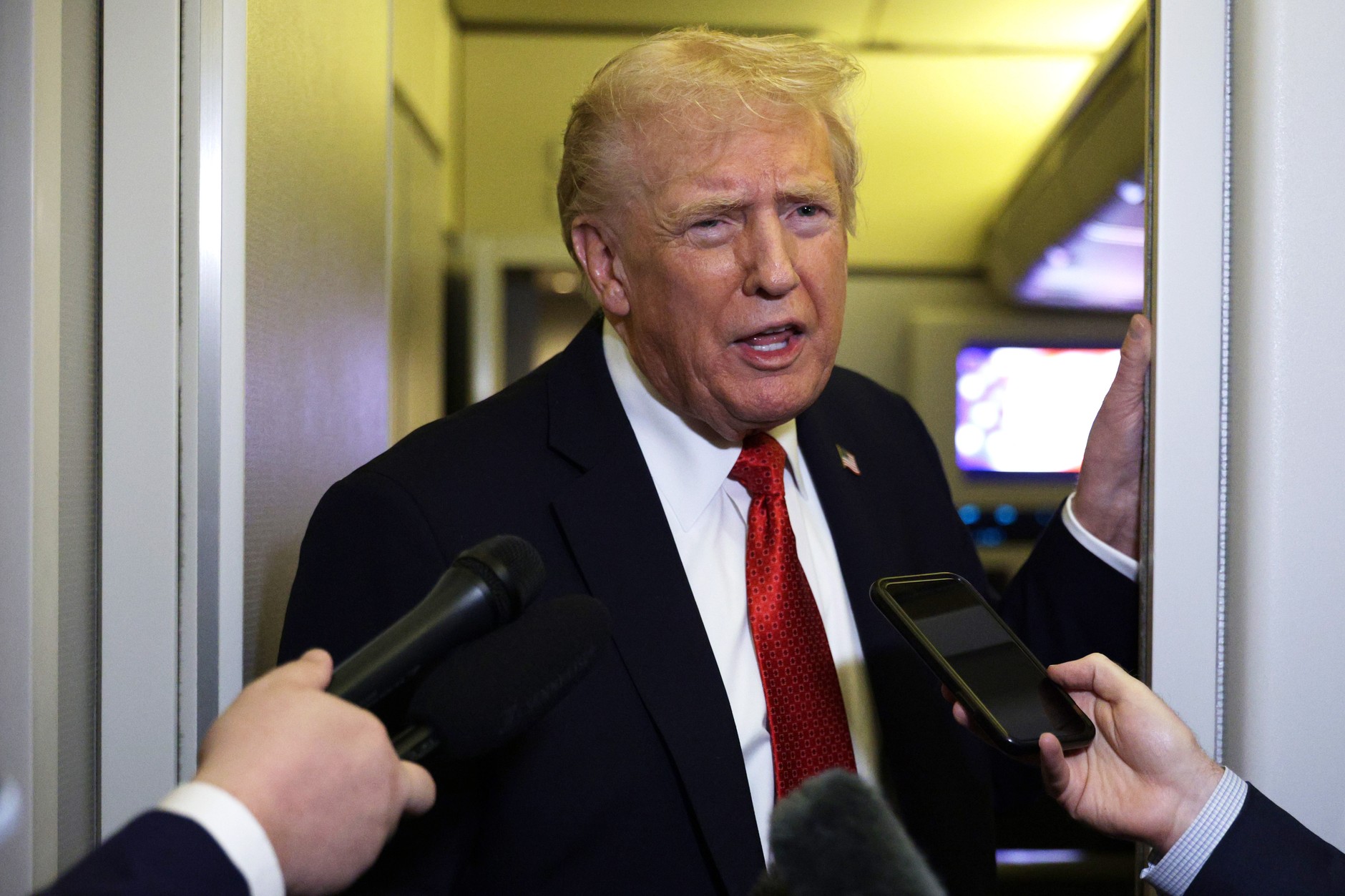
US President Donald Trump, October 19, 2025 (stock photo)Alex Wong / Staff / Getty Images
Independent capabilities, ties with the US
Croatian intelligence chief Daniel Markić took the helm of INTCEN in September 2024 with a mission to strengthen information sharing with the agency and provide direct intelligence to EU leaders such as Ursula von der Leyen and the Union's High Representative for Foreign Affairs and Security Policy Kaja Kallas.
Together with its military counterpart, the EU Military Staff Intelligence Directorate, the two services form the Single Intelligence Analysis Service (SIAC), which produces joint intelligence assessments for EU decision-makers. In April, SIAC organized its annual meeting in Brussels, this time attended by top officials from European agencies together with Kallas.
The heads of intelligence services present at the meeting emphasized the growing need for Europe to build own, independent intelligence capabilities. But some feared that overemphasizing the need for autonomy could further weaken ties with the US, creating gaps that the EU is trying to avoid.
Brussels is slowly but surely building its own intelligence community. For example, most permanent representations of EU Member States in Brussels are currently operational intelligence liaison officers.
The Belgian Security Service (VSSE), whose official role is to oversee espionage activities around EU institutions in Brussels, also briefed members of the European Parliament on tactics used to coerce lawmakers into foreign espionage.
However, as one European intelligence source tells POLITICO, although cooperation between EU countries is now “the best in modern history”, agencies still work primarily for their national governments.
Fight for the future
This is the main obstacle. According to Robert Gorelick, retired CIA chief of mission in Italy, “the reason there cannot be an EU-wide intelligence service is because there are too many diversity in the way national agencies operate“. – There are too many countries – 27 – to have such confidence in the exchange of information – adds the expert.
Some countries are leaning towards creating smaller ad hoc groups. After the United States halted intelligence sharing with Ukraine in March, a coalition of countries led by France and Britain met in Paris and agreed to expand Kiev's access to European intelligence, surveillance technology and satellite data.
The Netherlands is considering closer cooperation with other European services such as the UK, Poland, France, Germany and Scandinavian countries – including the exchange of raw data. “It has been significantly expanded,” says Erik Akerboom, head of the Dutch Civil Intelligence Service, in an interview with De Volkskrant.
However, there is still ahead of us There is a long way to go to build sufficient trust between 27 EU members with different national priorities. In October, it was revealed that Hungarian intelligence officials disguised as diplomats tried to infiltrate EU institutions when Oliver Varhelyi (now European Commissioner) was Hungary's ambassador to the EU, and put Viktor Orban's cronies in key positions.
Niinisto, who wrote the EU's preparedness report last year, said in an interview with POLITICO this month that a full-fledged EU intelligence agency is still “a question for the future.”
“When we talk about preparedness, we come to the word trust, because without trust we can't cooperate much,” he says.