Trump doesn't want prisoners of war. Survivors of Caribbean drug boat attack to be sent to Colombia and Ecuador


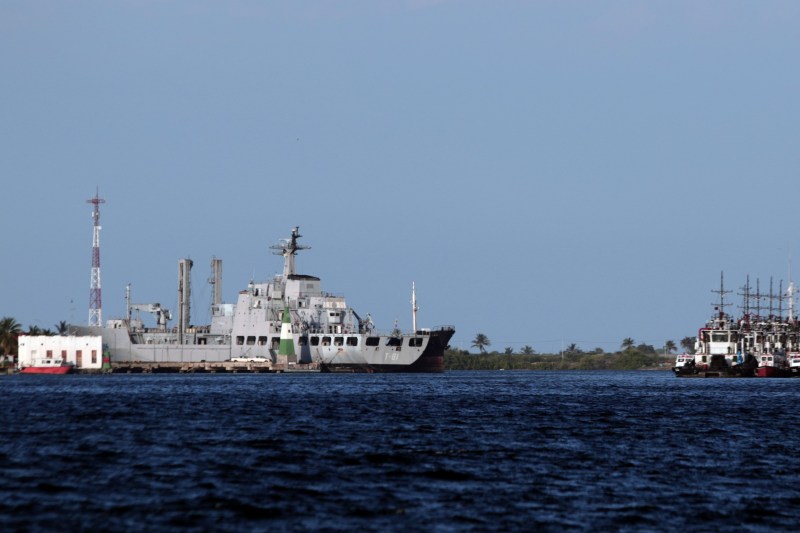
August 16, 2025, Puerto Cabello, Carabobo State, Venezuela: August 17, 2025. Venezuela is keeping a warship on alert, Minister Diosdado Cabello announced, after the presence of US Navy ships was confirmed in the Caribbean Sea in the area of Puerto Cabello, Carabobo State. Photo: Juan Carlos Hernandez / Zuma Press / Profimedia
President Donald Trump's administration plans to send the two survivors of Thursday's attack in the Caribbean abroad rather than detaining them long-term in a military facility, four US officials and a source familiar with the situation told Reuters.
The source, who spoke on condition of anonymity as did US officials, said the survivors were to be sent to Colombia and Ecuador.
The US military on Thursday launched a helicopter rescue operation for survivors after an attack on their suspected drug-trafficking semi-submersible, sources told Reuters on Friday. As a result of the attack, the other two crew members were killed.
The US military transported the survivors aboard a US Navy warship in the Caribbean, where they were held until at least Friday evening. It was unclear as of Saturday morning if they had already been transferred from the ship.
U.S. officials, who spoke on condition of anonymity, expect the survivors to eventually be sent back to their home countries.
The decision to send them home means the US military will avoid the complicated legal issues surrounding the military detention of drug-trafficking suspects whose alleged crimes do not fall squarely within the laws of war, legal experts say.
Trump is coordinating a military deployment to the Caribbean with about 6,500 troops
Speaking on Friday, Trump told reporters that the attack targeted “a drug transport submarine, built specifically to move massive amounts of narcotics.” He did not comment on how many people were killed or how many survived the attack.
So far, the Pentagon has not provided details about the operation and did not immediately respond to a request for comment. The White House has not yet reacted.
The Trump administration has said previous attacks have killed 27 people, raising concerns among legal experts and Democratic lawmakers who question whether the actions comply with the laws of war.
The attacks come amid a massive deployment of US forces to the Caribbean, which includes guided-missile destroyers, F-35 jets, a nuclear submarine and about 6,500 troops, amid escalating tensions between the Trump administration and the Venezuelan government.
On Wednesday, Trump revealed that he had authorized the Central Intelligence Agency (CIA) to conduct covert operations in Venezuela, fueling speculation in Caracas that the United States is trying to oust President Nicolas Maduro from power.
Maduro has denied any links to drug trafficking and denounced the attacks on the boats as a pretext for regime change, presenting them as violations of sovereignty and international law.
In a letter sent to the UN Security Council this week, seen by Reuters, Venezuela's UN ambassador, Samuel Moncada, called for a ruling declaring US strikes off the Venezuelan coast illegal and issuing a declaration of support for Venezuela's sovereignty.