Indispensable in any household, the water has increased quite a lot in the last period, the invoice being able to exceed 200 lei per month in the case of a family consisting of three persons. The specialists have issued a number of tips that can help the population save, thus paying less at the end of the month.
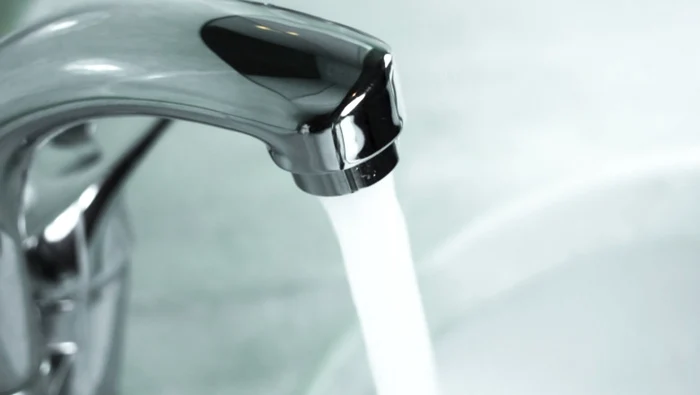
Drinking water has increased quite a lot in the last period. Photo archive
The price of one cube meter of drinking water varies considerably according to the county and the service operator, being influenced by the local rates, but also by their adjustment policies. For example, in Ilfov, the fare is 8.25 lei/cubic meters (excluding VAT), in Brasov is 8.29 lei/cubic meters (with VAT), in the turd of 7.73 lei/cubic meters (excluding VAT), and in Bucharest 6.16 lei/cubic (with VAT).
These costs are added to the sewerage, applied to about 85% of the consumption of drinking water, the rates being almost equal to those of the tap water, which considerably increases the invoices.
Consuming water in numbers
The main consumers in the household are in the bathroom and kitchen, at a single manual washing of the vessels can be consumed about 50 liters of water, while in the case of the bath can be consumed between 150 and 200 liters.
Only for a washing on the hands and teeth can be consumed between 5 and 15 liters of water, while at a 5 -minute shower, at least 60 liters are consumed, and at a washing of the laundry, depending on the chosen program, you can consume between 40 and 70 liters.
More serious is when cracks appear in the water network or the tap does not close perfectly, generating losses that can reach 10 even 20 liters per hour, depending on the crack size.
The water meter is the measuring instrument that records the water consumption. It is installed on the water branch and based on the periodic reading of the index, the consumption invoice is issued. The periodic reading of the meter index ensures the consumption monitoring, signaling possible hidden water losses, by recording a higher water consumption compared to the average and in the absence of activities that require high water consumption.
How can you save water
Inside the house:
• Wash the fruits and vegetables using a bowl of water, instead of watering them under water. Later you can use this water for watering the plants in the house;
• When you wash the vessels manually, you can reduce the amount of water used for rinsing if you rinse them in a larger container of water;
• Use shower heads or taps with water disperse devices. These devices for the shower ends help to obtain a sensation similar to a strong jet, consuming less water;
• Check the shower hose. If it is stung, the useful flow can decrease to 50%, the rest leaking through cracks;
• Close the tap when you wash your hands or teeth, or while shampooing. Use water only for the rinse;
• Use the washing machine when loaded with laundry to the maximum capacity. You will save both water and electricity. If you enter a smaller amount of clothes, select the right washing program;
• Insert in the water tank of the toilet vessel a little food coloring. If it flows into the toilet vessel without drawing the water, it means that there is a drain and it is advisable to repair the broken piece.
In the yard and garden:
• Remember to check the courtyard in the yard, the irrigation system or the hoses used at the garden wet;
• Protect the courtyards in the yard to prevent their freezing and deterioration;
• Position the irrigation system so that only the garden, trees, plants or grass can only wet;
• Use a container to collect the rainwater that you can use for watering and flowers;
• Water the plants only when necessary. Many plants are offering when they receive excess water. It is advisable to wet the plants during the morning, when the water does not evaporate as quickly as the rest of the day and gets to be used by plants;
• Put a protective layer (eg sawdust) around plants and trees. It slows down water evaporation;
• Check the installations (taps, pipes, connections, hoses) to detect possible water loss. Even repairing a tap that dripping very little, saving in a month an appreciable amount of water.
Other practical tips
- Collect condensation from the air conditioners: the water resulting from the condensation of the air conditioners is demineralized and ideal for watering, cleaning the floor or use in the car (for example, for the windshield).
- Collect the rainwater: Install tanks for collecting rainwater and use it for watering the garden, cleaning the yard or even for washing the toilet.
- Reuse the water: the use of the remaining water after washing the fruits and vegetables to water the plants or cleaning is an excellent saving way. Also, the water in the washing machine or bathtub can be used to wash the toilet. Even small amounts of water can be used efficiently.
- Avoid unnecessary water leakage: While waiting to flow hot water from the tap, collect cold water in a bucket and use it for plants, cleaning or washing.
- Use intelligent irrigation systems: Automatic and intelligent irrigation systems measure soil humidity and only water.
- Change the way you wash the car: Instead of using a hose, wash the car with a bucket and sponge. Thus, you can save up to 150 liters of water at each wash. Another option is to go to a car wash using recycled water. Also consider reducing the frequency with which you wash your car.
- Use energy efficient appliances: Choose high energy and water consumption appliances. These may require a larger initial investment, but in the long term, it generates significant savings.