Moscow has improved its missiles to “trick” Ukrainian anti-aircraft defense by sophisticated maneuvers


Moscow has adapted its ballistic missiles to successfully avoid Ukraine's anti-aircraft defense systems, including American Patriot batteries, it suggests Russia's latest air attacks, according to Ukrainian and Western officials.
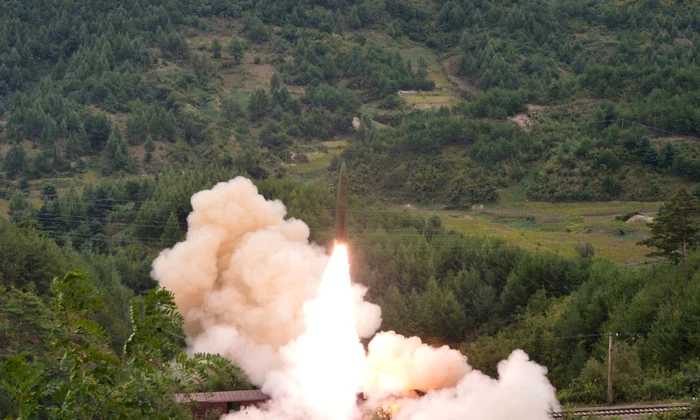
Moscow has adapted its ballistic missiles. Photo: EPA-EFE
The bombing of this summer, which targeted Ukrainian drone factories, show improvements in Iskander-M and Kinjal rockets, designed to execute complicated trajectories and terminal maneuvers, avoiding Patriot interceptions. Experts believe that software changes, rather than hardware, would be the main manager for increased efficiency, the Financial Times reports.
The interception rate decreased dramatically, from 37% in August to only 6% in September, despite a smaller number of launches. In a recent attack, all four Iskander-M missiles launched avoided anti-aircraft defense and touched their targets.
Four drone factories in Kiev and surroundings were badly damaged this summer, some projectiles also affecting the offices of the EU and British Council delegation. Rocket adjustments were possible by analyzing interception data and software changes, allowing quick maneuvers in the terminal stage and decreasing the efficiency of Patriot systems.
Patriotic, mobile systems have been affected by repeated attacks, some being damaged or redistributed, which reduces the stratified architecture of Ukraine's defense. The staff trained on these systems was also targeted, including Lieutenant-Colonel Denis Sakun, chief engineer of an anti-aircraft missile unit, killed in December as he tried to save the Patriot equipment.
Analysts point out that Patriot systems now have to defend themselves against sophisticated Russian rockets, while facing the threats of Russian missiles, in some cases.