The government of Germany wants to make the inhabitants break the priscuits: “it will not be easy”

The future government of Germany hopes to revitalize the internal consumption to relaunch the growth that has been stagnant lately in an economy that, supported by exports, has been for decades the “economic engine” of the European Union, reports Reuters on Monday.
Friedrich Merz, the future conservative chancellor who will govern with central-left-smells (SPD), announced policies such as tax reductions and minimum wage increase.
He hopes that these measures will increase the purchasing power and support the internal demand.
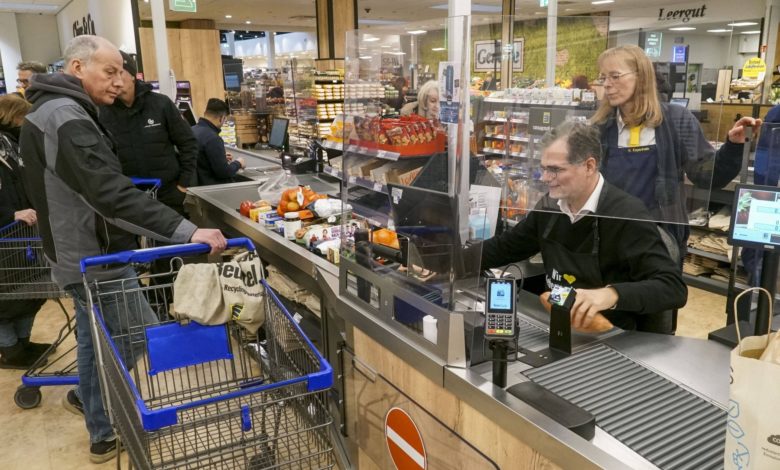
But economists, retail groups and consumer behavior experts question whether they will be sufficient to convince the Germans – already among the largest savings in the world – to break the priscuits and to spend.
“I doubt we will really see a accentuated revival of consumption this year,” said Carsten Brzeski, global director for Macroeconomics at ING, for Reuters.
Concerns that Germany's economy will contract for the third year in a row
Analysts recall that, as they are struggling for a long time with decreased competitiveness, Germany's efforts to reduce its export addiction preceded commercial chaos triggered by Donald Trump's administration.
Despite these efforts, the internal consumption stagnated in Germany in 2023, and the saving rate of households reached 20%last year, against the background of political uncertainty – above the EU average.
In order to avoid a third consecutive year of economic contraction in 2025, economists agree that stimulating consumption in the largest economy of Europe is essential.
“Looking at things very simple, you can say: OK, the demand for our export goods decreases, so we have to focus more on the internal demand, that is, on investments and consumption,” said Cyrus from Rubia, chief economist at Hamburg Commercial Bank AG, for Reuters.
The German Association of retailers (HDE) recalled in a statement that Friedrich Merz's coalition agreed to reduce income tax for medium and low incomes, which could stimulate consumption. “However, we do not expect a significant recovery,” HDE stressed.
What measures did the future government prepare
The German government will exempt the extra hours to tax and will provide tax benefits to those who work after the retirement age. The minimum wage is expected to increase to 15 euros per hour, and the VAT applied to food in restaurants will be reduced to 7%, from 19% as it is today.
However, Deutsche Bank said that these “various tax gifts” will only offer a limited, short -term remedy.
Since announcing the measures, Merz's coalition has begun to argue regarding the content of the agreement, the future chancellor warning that the tax reductions will only take place if there will be enough space in the budget.
In addition, these measures may require time to change household habits, says Solomon Fiedler, an economist at Berenberg.
“It seems that German consumers need a rather psychological impulse: a political reform or progress in public policies,” adds Brzeski.
Despite a wave of loans announced by Merz after the elections to support different projects, the optimism of consumers generally has remained generally unchanged, and a labor market in cooling determined to be more reserved.
Consumption suffers in Germany and for another reason
In addition to the restraint to spend, German consumers are increasingly aware of their impact on the environment.
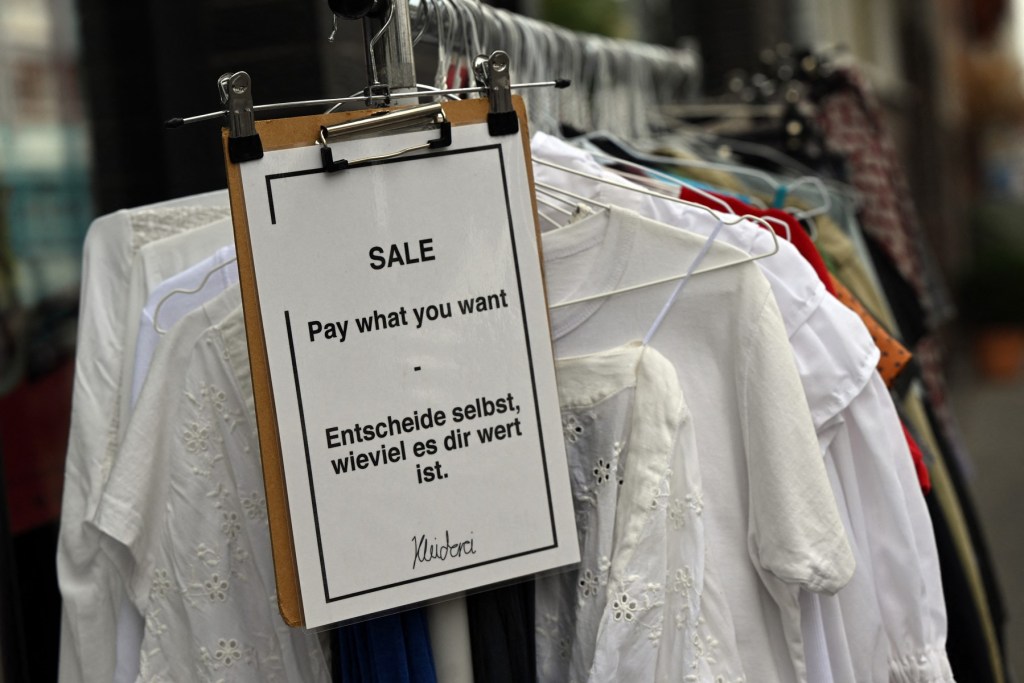
In the heart of Berlin is Kleideri, a labyrinth of shelves with clothes for almost all decades and styles imaginable, which customers can borrow in exchange for a monthly tax-as in a “clothing library”.
“Our model means slowing consumption and creating a real community,” said Lena Schroeder, Kleider's director, for Reuters, mentioning that the chain now has five physical stores in Germany. “When customers visit us, they can touch and feel clothes, making more conscious decisions about what they borrow,” she added.
Kleiderra only includes clothes already worn in his collection of 60,000 pieces, repairing them to maintain their quality.
As the fast -fashioned fashion brands such as Shein and Temu extend, influences from social networks promote a more responsible consumption towards the environment.
The project “Let's make the German consumers spend again”
“The advertisements on TV or radio always want to buy more … But in fact, we do not need all this,” says Lisa Monaco, the founder of the blog Nachhaltig4future. “We already have an excess of everything – it's not good for anyone,” she points out.
“The influencers became the new guards of consumers' attention, especially for young generations,” said Barbara Engels, senior economist at the IW Institute. “Luxury has come out of fashion, values are the ones that matter now,” she said.
This trend seems to continue. Nearly 60% of the Germans reported that they consume sustainably to a certain extent, and 71% said they would like to do more in this regard, according to a 2023 study conducted by Development Lab.
“The project 'to make the German consumers spend again' will not be an easy one and will require patience and resilience,” concluded Brzeski.