“Keep your calm and cash at hand,” transmits the European Central Bank. The conclusions of the newest study of the institution


A new study by the European Central Bank shows that people should keep cash home to deal with crisis situations. Recent experiences confirm that cash remains an essential means of payment when digital methods become unavailable.
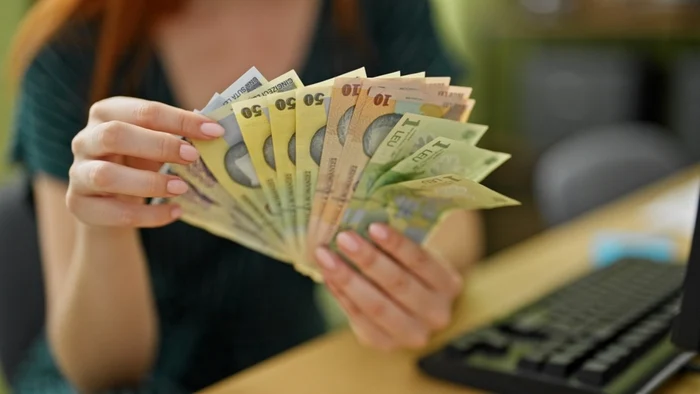
The ECB recommends that Europeans have cask money in case of crisis. Photo: Shutterstock
Cash cash, essential in times of crisis
A study published on Wednesday, September 24, by the European Central Bank (ECB) points out that families should always have a cash amount at home in order to pay the basic products in case of major crises.
The analysis took into account four recent events that affected Europe, including the Covid-19 Pandemic, Russia's invasion in Ukraine, but also major feathers in providing electricity, and shows that in each of these situations the demand for banknotes has increased significantly.
According to the researchers, the cash offers “a distinct psychological and practical utility” and must be viewed as a “spare wheel” of the payment system.
“The cash offers an essential redundancy – a” spare wheel ” – for the payment system. This redundancy is vital to any system, because no system is infallible”, It is shown in the report quoted by CNN.
Different recommendations depending on the country
Several European states have already issued official recommendations for keeping cash in households. In the Netherlands, Austria and Finland, the authorities ask citizens to have between 70 and 100 euros per person, sufficient to cover the essential needs for 72 hours. In Sweden, the population is advised to have money to pay food, medicines and fuel for at least a week.
“Calculate the total cost of these articles for your family for at least one week. Keep cash at home, in low value banknotes.” recommends the European Central Bank.
Recent examples
The crises of recent years have confirmed the essential role of banknotes.
In April, a massive current wedge in Spain and Portugal blocked the payment terminals, forcing the shops to accept exclusively cash. During the pandemic, Europeans accumulated cash on the background of uncertainties on income. The invasion of Ukraine has generated the same phenomenon, especially in the states near the conflict area.
“People have responded to the increased proximity to potential disturbances by accumulating portable liquidity”, notes the study authors.
Preparing for unforeseen situations
The European Commission has, in its turn, emphasized the importance of preparing the population for crisis situations. In a document issued in March, Brussels recommended the storage of basic foods and products for at least 72 hours, invoking the risks of war, sabotages and cyber attacks.
Sweden and Finland went even further, updating the survival brochures distributed to the citizens. These include instructions on storing water and sanitary products, cultivating edible foods at home and preparing for current interruptions or communications.
ECB conclusion
The authors of the study emphasize that banknotes should be viewed not only as a means of payment, but also as a safety guarantee in the face of uncertainties.
“Keep your calm and have cash at hand” It is the message that the ECB sends to European citizens in the face of future risks.