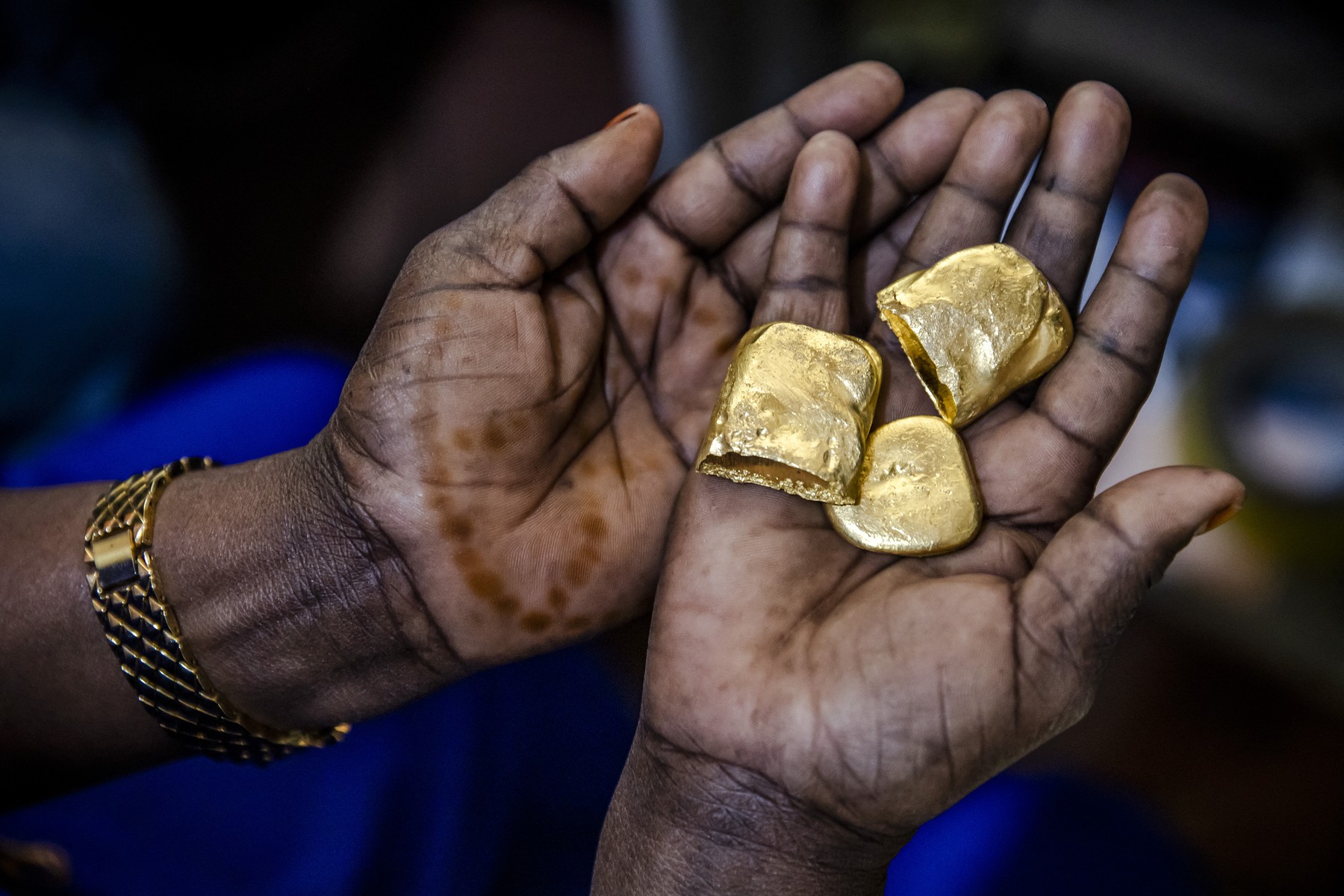
Gold peppers in the hands of a trader in Africa, photo: Luis Tato / AFP / Profimedia Images
An explosion of gold artisan mining in Ghana has led to mercury contamination at dangerous levels in local communities, with values in some areas 134 times higher than the quantities considered safe in the soil, found a study supported by the government, reports Reuters.
The report made by the Pure Earth Environmental Group, based in New York, and the Ghana Environmental Protection Authority is based on a year of sample, water, cultures and fish in six of the 13 mining regions of the African country.
The vertiginal growth of the price of gold worldwide has contributed to the rapid development of handmade mining mining, made up of small gold miners.
The Aurifer sector in Ghana exported 66.7 metric tons in the first eight months of this year, worth $ 6.3 billion, compared to about 53.8 tonnes for the whole year 2024.
Despite the efforts of the authorities in Ghana to separate the mining exploitation regulated by the illegal activities, the gold flows often overlap, which makes their pregnancy difficult.
The researchers have recorded levels of mercury in the soil at Konongo Zongo with an average of 56.4 parts per million (PPM), well above the 10 PPM safety threshold established by the World Health Organization. The maximum values in the locality reached 1,342 ppm during the research period.
“A serious danger to health”
In addition to mercury contamination, arsenic levels reached 10,060 ppm, ie over 4,000% above the limits recommended by WHO, the report shows.
The World Health Organization states that high exposure to arsenic can cause skin damage and renal failure and increases the risk of lung, bladder and skin cancer – by consuming water and contaminated foods.
“The cumulative exposure to this mixture of toxic metals by multiple ways-ingestion, inhalation and dermal contact-represents a serious health danger that requires immediate intervention,” the report presented to ecologists and government officials shows in an accra meeting on September 18 and made available to the Reuters Agency.
The consequences can already be obvious in some communities, says Anthony Enimil, a member of the Pediatric Society of Ghana, a lobbying group for children's health.
“We see more and more children from mining areas with kidney disease – some of them are now on dialysis,” said Enimil Monday. “The radiographs show the presence of mercury balls in their body after accidental ingestion,” he says.
A spokesman of the Ghana Government did not respond immediately to the comment request.
What do the gold mining in the African country say
Godwin Armah, Secretary General of the National Association of Little Miners in Ghana, said that mercury pollution from handmade mining will require time to be cleaned.
“We forbade the use of mercury in the amalgamation of gold and we now use Gold Kacha (the concentrator) as a safer alternative. We also intensify awareness campaigns,” he said, referring to a simple device used by artisan miners.
The toxic pollution, mostly from the irregular and scale gold mining, is widespread in all 13 mining regions, according to the ecologists, including the Lobby group of Roca Ghana, based in Accra.
The President of Ghana, John Dramani Mahama, promised a repression of the irregular mining and set up Ghana Gold Board to supervise the sector, although critics say that progress is slow, and Ghanaians organized protests asking for measures against illegal mining.