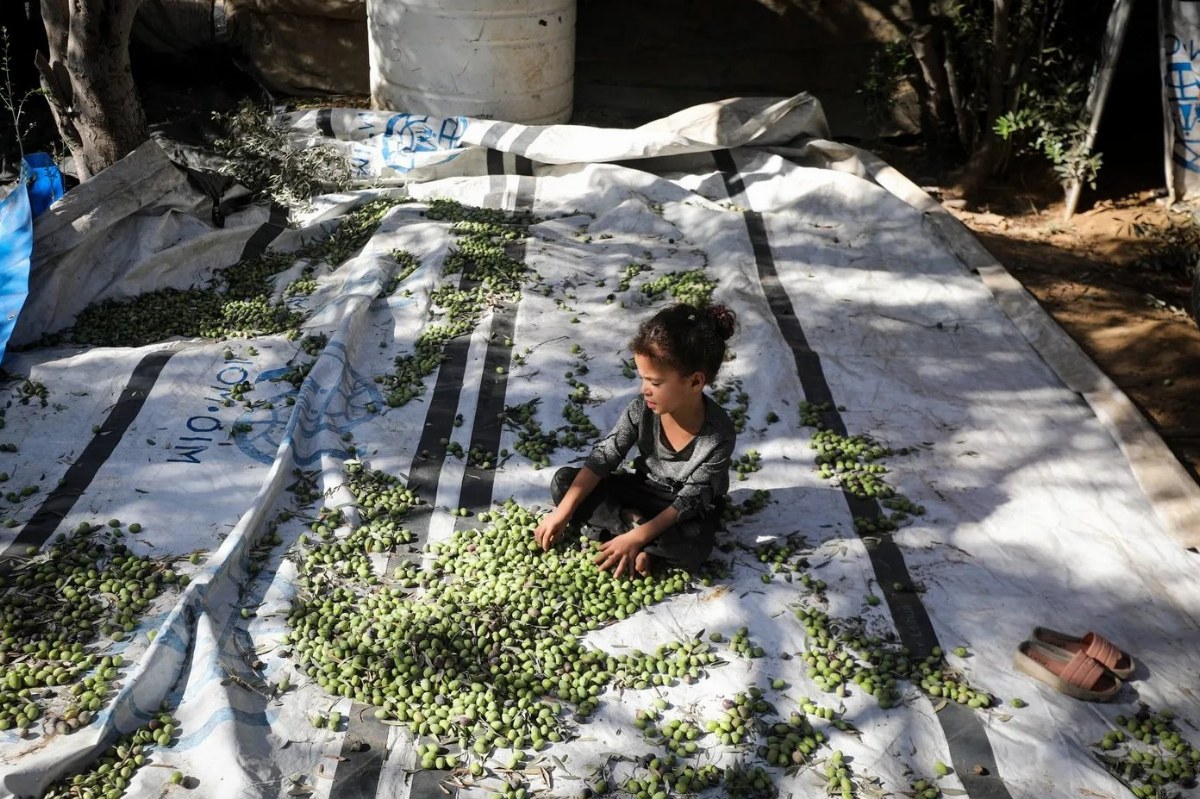
Agricultural authorities in Gaza have reported that only 150,000 out of the original 2 million olive trees are still standing following the recent conflict. Officials and local residents claim that the Israeli military has destroyed a large portion of the olive plantations.
Before the war, olives were a vital part of Gaza’s agriculture, providing enough oil for local consumption and even some surplus for export to Israel. The olive groves, which bordered the cities, served as a refuge for families in one of the most densely populated areas of the world.
Nearly a year after a ceasefire ended the major fighting, almost all of these groves have been leveled by bulldozers, according to reports. The remaining olive trees are projected to yield approximately 5,000 tons this season, significantly down from the usual 40,000 tons, resulting in only 700 tons of oil instead of 5,000 tons.
Only Two Barrels of Oil Left
The olive orchard owned by Haidar Abu Middain and his family spanned 220 acres, which would normally be laden with ripe fruit at this time of year. The 60-year-old shared his current struggles with Reuters.
In previous years, the entire clan would harvest between 1,100 and 1,500 tons of olives, selling some as fruit while processing the rest for oil, enough to fill up to 900 barrels of 16 liters each. Today, nearly half of the orchard lies beyond the “green line,” which is monitored by Israeli troops who restrict Palestinian access to two-thirds of the Gaza Strip. The accessible part of the orchard has been largely decimated by bulldozers.
Only about 20 to 30 trees remain standing, and Abu Middain estimates they will produce just two barrels of oil, insufficient even for his family’s needs. “The pre-war harvest was a blessing, enough to sustain our families,” he stated. “This harvest was sufficient to supply the entire central region with both oil and olives,” he added.
“Everything Was Destroyed by Bulldozers”
This time of year, markets in Gaza would normally be bustling with olives and barrels of freshly pressed oil. Currently, there is almost nothing available, and what little does reach the market is sold at a price nearly three times higher than before the war—around $500 per barrel, far beyond what families in Gaza can afford, according to Imad al-Ajrami, a buyer from the market in Deir al-Balah.
“Compared to the pre-war years, production is zero. Because there are no olives left, everything was destroyed by bulldozers, the olives have vanished,” remarked Fawaz Zidan, who has kept his press operational in Deir al-Balah.