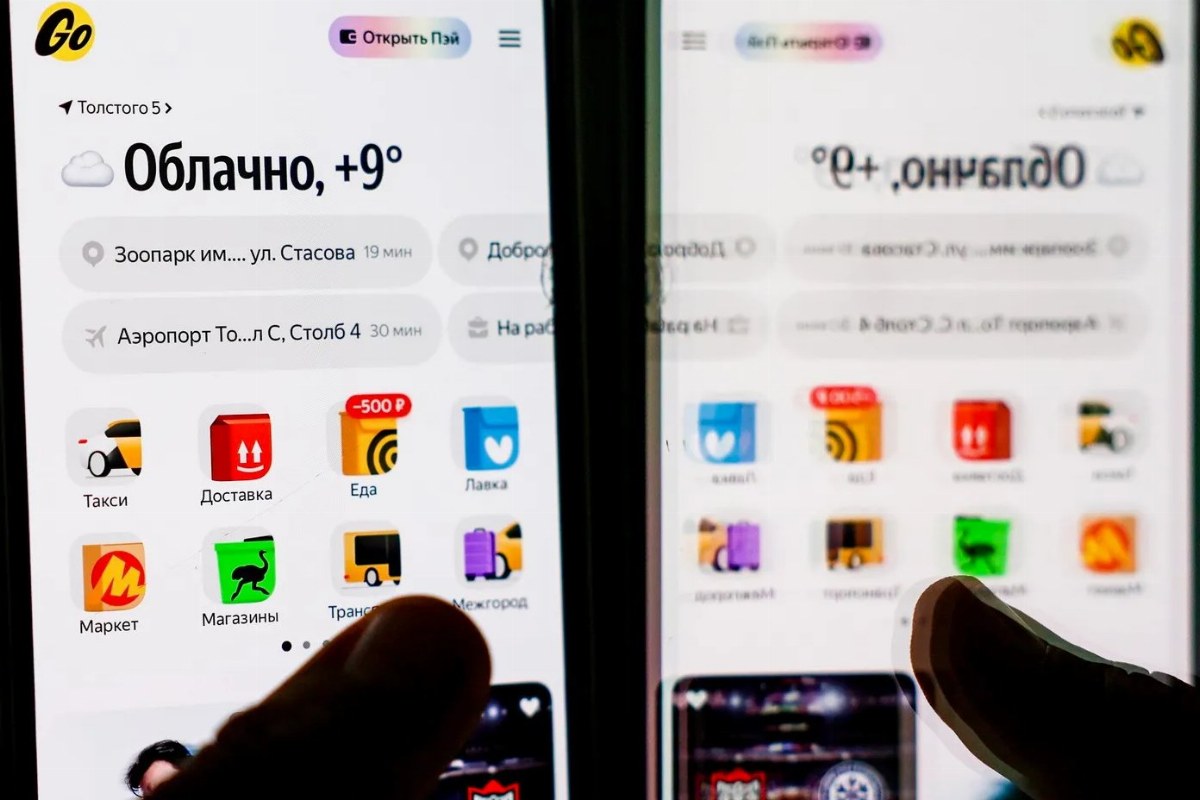
Recent Ukrainian strikes on Yandex data centers have reportedly led to a notable decline in Russian bot activity on social media platforms. However, not all analysts agree with this assessment.
According to reports, attacks by Ukraine have temporarily disabled at least three data centers that host a significant portion of Russia’s cloud services, resulting in a substantial drop in bot activity on American and European social networks, particularly on X, as detailed by the French newspaper Le Parisien.
Cloudflare, a technology and cybersecurity company, noted a dramatic reduction—over 99%—in bot activity sourced from Yandex’s infrastructure compared to the previous week. This decrease coincides with the timing of the attacks.
Effects on Pro-Trump and Pro-AfD Bot Activity
Reports from Germany indicate that support for the Alternative for Germany (AfD) party on social media has plummeted by 56%, a claim backed by a Czech politician who provided supporting graphs. Czech MEP Tomas Zdechovsky remarked that if confirmed, the data suggests that disruptions to Russian data centers have directly impacted online activity related to AfD.
In the United States, the drop in activity has sparked speculation about the implications for Russian influence operations online, with many users noting fewer pro-conservative responses to posts.
Timothy Snyder, a former Yale history professor now in exile in Canada, suggested that the evidence points to a significant reliance of pro-Trump and pro-AfD bot activity on Russian data centers.
Ukrainian President Acknowledges Reduced Bot Activity
Ukrainian President Volodymyr Zelensky stated that there has been a noticeable reduction in Russian bot activity following the drone strikes on Yandex-operated data centers. Speaking at the Security Forum in Warsaw on October 12, he noted that it had become “a little easier to breathe on many social platforms,” citing a decrease in hate speech and division due to the reduction of bots.
Details of the Strikes on Yandex Centers
Ukraine has indeed targeted three Yandex data centers, often referred to as the “Google of Russia,” significantly disrupting various services provided by the company, including ride-sharing, payment processing, food delivery, cloud computing, and chatbots. The most recent strike occurred on October 11, targeting a Yandex unit in Vladimir, approximately 180 kilometers east of Moscow, resulting in a complete suspension of operations.
Earlier drone attacks hit Yandex data centers in Sasovo, about 315 kilometers southeast of Moscow, on October 8, and another in Kaluga the following day.
NetBlocks, an independent internet monitoring organization, reported that Yandex showed no signs of recovery, suffering from prolonged connectivity disruptions indicative of extensive infrastructure damage.
Experts Caution Against Overinterpretation of Data
Despite the optimism, many technology experts have warned that the apparent effects on social media bots may have been misinterpreted, relying heavily on anecdotal evidence and requiring further analysis, as reported by Radio Free Europe/Radio Liberty. The sudden drop in bot traffic attributed to Yandex is largely influenced by Yandex’s indexing bots—automated programs scanning websites for search indexing—rather than accounts disseminating misinformation on X and other social platforms.
Experts managing the X account @antibot4navalny, which tracks government-sponsored online propaganda, echoed this sentiment, stating that data from Cloudflare indicates this week’s bot traffic volume is similar to that of previous weeks. They cautioned that more data is needed to accurately determine the strikes’ specific impact on Yandex’s operations.