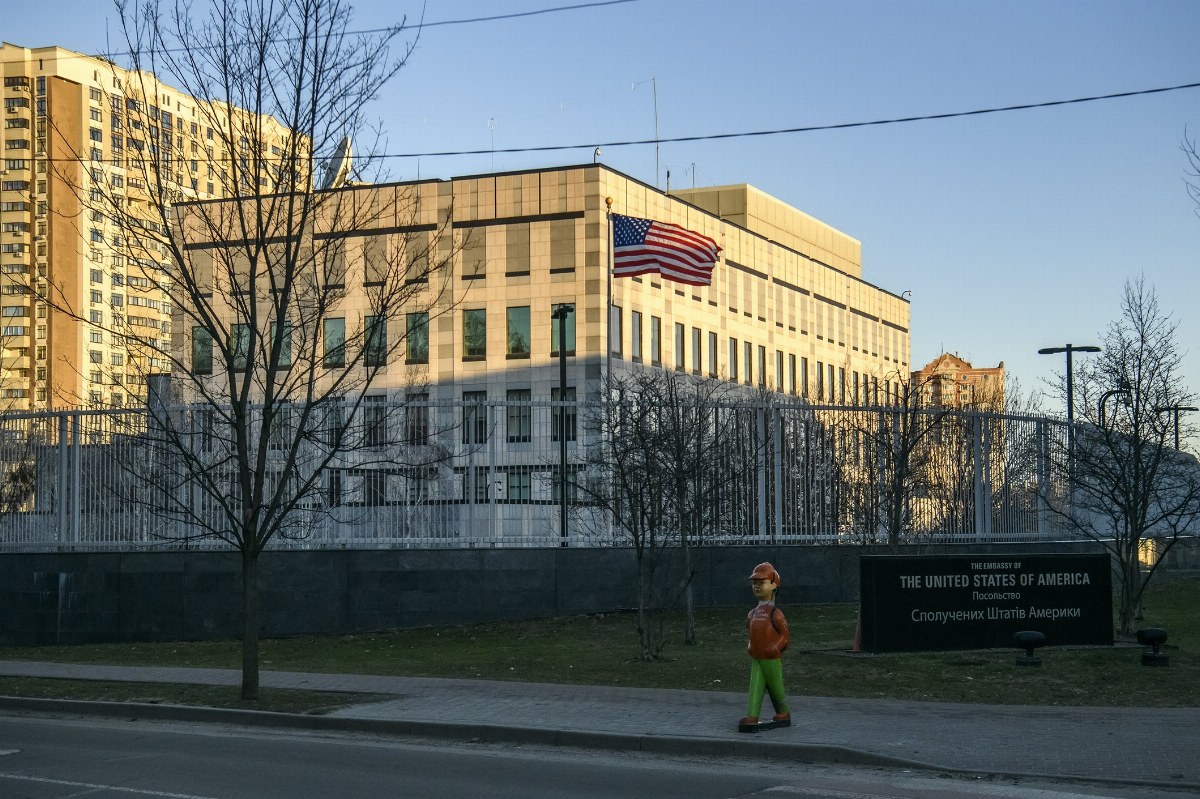
In recent days, Russia has issued increasingly aggressive warnings to foreign embassies in Kyiv, emphasizing that their presence poses a “mortal danger” amid a surge of strikes on the Ukrainian capital.
The departure of foreign diplomats would represent a significant victory for Russia from several perspectives.
U.S. Secretary of State Marco Rubio stated, “We decide if it is safe for our diplomats to stay in Ukraine,” following Russia’s weekend warnings.
On Saturday, the Russian Ministry, led by Lavrov, expressed concern that not everyone has heeded these warnings, with some individuals intentionally exposing themselves to deadly risks. Despite this, several foreign embassies continue to operate in Kyiv, and foreign officials are still visiting Ukraine.
Additionally, Kremlin spokesperson Dmitri Peskov reiterated that Russia has made every effort to alert foreign embassies in Kyiv about the risks associated with maintaining their operations in the Ukrainian capital.
Peskov quoted President Putin, stating that it is actually the Ukrainian side, the Kyiv regime, that has extended the list of bombing targets and aimed at Russian economic interests. He asserted that the actions of the Armed Forces are a response to these provocations, insisting that Ukraine must and will pay a price for its actions.
Rubio: “We Decide”
When asked about the U.S. stance on Moscow’s urging for foreign diplomats to leave Kyiv, Rubio responded: “We have an embassy there, and we will decide if it is safe for them to remain or not.”
He noted that Russia has been warning diplomats to leave for months, and the fact that Kyiv is under attack should come as no surprise to anyone.
“We assess the security level of each diplomatic mission globally every day, and if a threat arises that necessitates a change in our position, we will take the necessary actions. So far, we have not done that there,” he added.
EU: Russia Should Not Test the Vienna Convention Limits
A similar message was conveyed by the EU on Monday, through its ambassador to Ukraine, Katarina Mathernova.
“We remain in Kyiv, as do all other embassies from EU countries. We are in close contact. Thus, we are here. The EU advisory mission stays, as do EU embassies. We have 25 member states with embassies in Kyiv, and all remain here,” she stated.
Mathernova reminded that Moscow has made such threats several times before, interpreting them as a sign of frustration due to Russia’s failure to gain ground on the battlefield.
“They are trying to force us to reduce our support for Ukraine. But I believe we are even more determined to continue that support. The Vienna Conventions, which govern the activities of diplomatic missions globally, should not be tested by Russia,” the diplomat noted.
In addition to statements from the EU diplomatic service, numerous embassies, including those of Germany, Italy, Spain, Sweden, France, Estonia, and Poland, have publicly affirmed their positions.
“We remain in Kyiv,” the embassies stated in coordinated messages.
A Symbolic Victory
These declarations mark the latest rejections by the West of Russia’s sustained efforts to warn—and increasingly pressure—foreign governments to withdraw their diplomatic missions from Ukraine, according to the Kyiv Post.
However, for Moscow, the issue extends far beyond the safety of embassies.
An exodus of Western diplomats from the Ukrainian capital would provide a potent symbolic victory for the Kremlin.
Russia would effectively paint a picture of Ukraine’s allies abandoning Kyiv under Russian military pressure, four years after Moscow failed to capture the city.
Importance of Embassies in Ukraine
Embassies are not merely administrative offices. Their presence in a war-torn capital sends a definitive political signal, as noted by the cited Ukrainian publication.
Foreign diplomats engage with Ukrainian officials, coordinate military and economic assistance, host visiting delegations, and maintain direct communication between Kyiv and allied governments.
Moreover, their continued presence communicates a more fundamental message: foreign governments continue to recognize Kyiv as a functional capital, whose government still retains firm control.
This symbolism has been particularly significant since the early weeks of the large-scale Russian invasion.
Before Russian troops crossed the border in February 2022, the U.S. and several other countries temporarily withdrew their diplomats from Kyiv, following warnings from Western intelligence that Russian forces might quickly reach the capital.
Return of Foreign Diplomats in 2022 Marked Russian Failure
Russia then attempted to capture Kyiv but failed. As Ukrainian forces repelled Russian troops from the Kyiv region, Western officials began to return.
On May 18, 2022, the U.S. officially reopened its embassy in Kyiv and raised the American flag over the diplomatic mission once again. Antony Blinken, then U.S. Secretary of State, explicitly linked the reopening to Ukraine’s successful defense of the capital.
“The Ukrainian people, with our security assistance, have defended their homeland,” he stated as the embassy resumed operations.
The return of diplomats became one of the clearest visible signs of Russia’s defeat around Kyiv.
A mass departure at this time would carry an opposite symbolism, emphasizing Kyiv Post’s assertion that it would transform Kyiv into an uninhabitable place.
The latest diplomatic warnings from Russia coincide with an intensified campaign against the Ukrainian capital, with Moscow targeting transportation infrastructure, residential areas, and other sites while openly promising further large-scale attacks.
Four years after its failure to seize Kyiv, Moscow is attempting once again to isolate the capital through missiles, drones, and threats.
Image: © Vladyslav Musiienko | Dreamstime.com