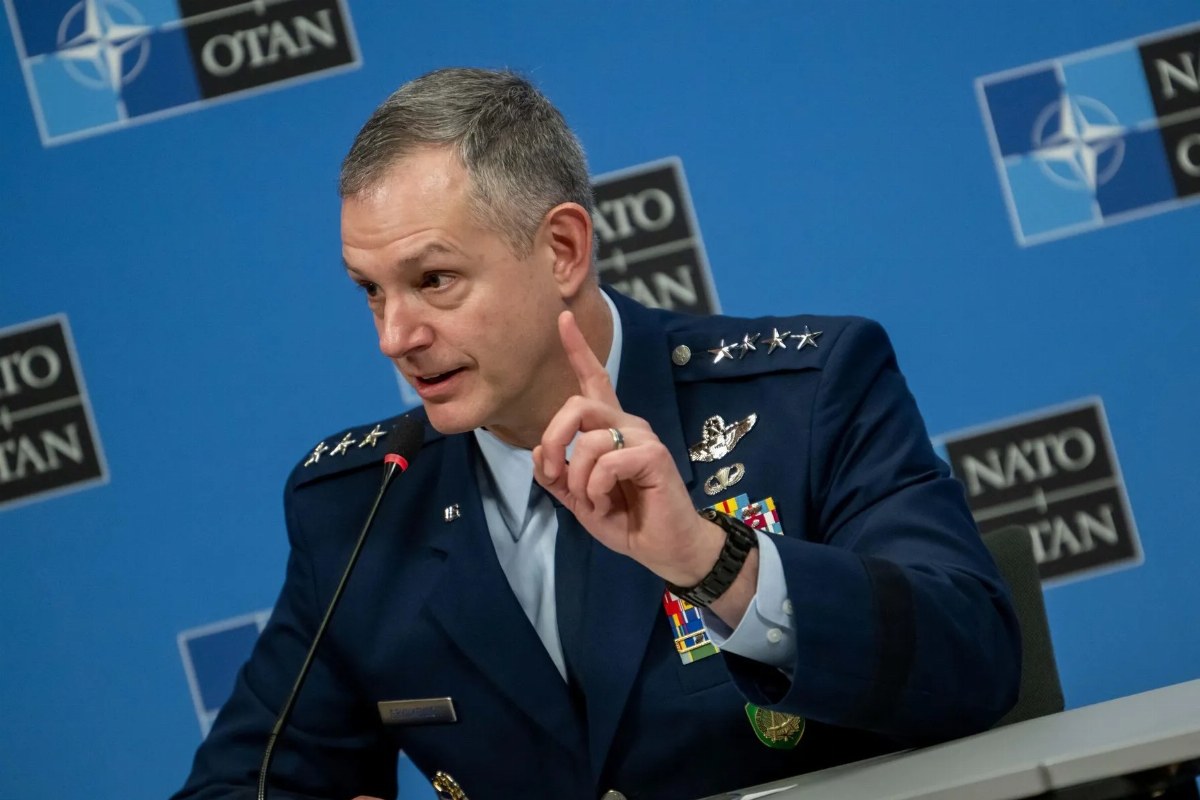
The Supreme Allied Commander Europe (SACEUR), General Alexus Grynkewich, emphasized on Monday that the most effective way for European nations to address Russian sabotage and destabilizing acts is to publicly declare Moscow’s involvement and strengthen their support for Ukraine, according to reports from Reuters and Euractiv.
In recent months, incidents of sabotage, cyberattacks, drone surveillance, and other so-called hybrid attacks attributed to Russia have surged across various European countries. These include a drone attack in Leipzig and a Russian strike on a Ukrainian train near the Polish border earlier this month.
“By making this attribution public, we will show those states supporting these actions that we understand what they are doing, thus increasing the cost they have to pay,” Grynkewich stated during a session with European Parliament members.
He added that these nations will realize their networks are ineffective and that they need to change their behavior, which in itself has a deterrent effect.
“State-sponsored sabotage is becoming increasingly brazen,” the general noted, as reported by News.ro.
Grynkewich highlighted that Russia’s activities in Europe aim to weaken the allies’ resolve to continue supporting Kyiv.
The commander noted that NATO’s initiatives, such as the “Eastern Sentry” mission launched on September 11, which involves resources from allies including Denmark, France, the UK, and Germany, have already had a tangible impact. “Russians have been much more cautious in avoiding crossing the border with drones into the Baltic states or Poland since we implemented the Eastern Sentry mission,” Grynkewich claimed.
Grynkewich’s Advice to NATO Capitals
The general’s advice to national capitals consists of three key components.
First, it is crucial for allies to share data and information regarding attacks to maintain a unified operational picture.
The second step involves attributing responsibility, which will make perpetrators aware that their networks are ineffective and that they must alter their behavior, thus providing a deterrent effect.
The third step is supporting Ukraine.
Following an incident last week where a Russian frigate launched two emergency signal rockets at a Danish helicopter monitoring the vessel in the Baltic Sea, Copenhagen responded by agreeing to send a military support package worth €240 million to Ukraine shortly afterward.
Grynkewich praised this action, emphasizing that strengthening the resolve to support Ukraine after a hybrid attack will demonstrate to the Russians that their strategy is failing.
“These are clear examples of attempts to instill fear and divide our united support for Ukraine,” Grynkewich remarked.