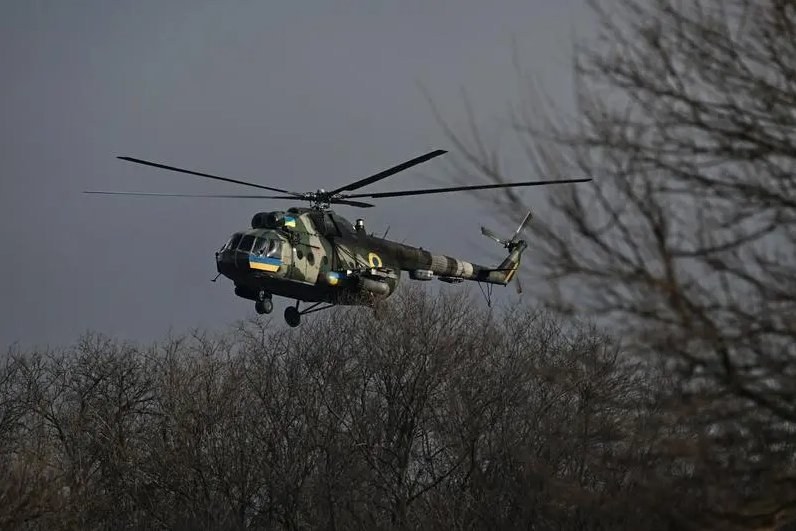
A Russian military helicopter has briefly violated Polish airspace, heightening concerns over increased military activities amid the ongoing conflict in Ukraine. The Polish Army Operational Command reported that the Mi-8 helicopter entered from the Russian exclave of Kaliningrad and spent approximately 42 seconds within Polish airspace, reaching a maximum depth of around 300 meters.
In response to the incident, Polish fighter jets were deployed, and ground forces were placed on high alert. The Command stated that the nature of the event suggests Russia is testing the readiness of Poland’s air defense.
Poland on High Alert
Poland remains in a heightened state of alert regarding any air incursions linked to Russia’s war in Ukraine. The Russian Embassy in Warsaw did not immediately respond to Reuters’ request for comment on the incident.
On Tuesday, Polish fighter jets intercepted a Russian reconnaissance plane off the coast of the Baltic Sea, according to Defense Minister Władysław Kosiniak-Kamysz. He tweeted that Russia regularly tests NATO’s eastern flank, noting the interception of an Il-20 aircraft approximately 40 kilometers from the Polish coast.
“These incidents are not isolated but part of a sustained pattern of pressure,” he added, emphasizing that Polish airspace is continually monitored and that the Polish Army remains vigilant.
This incident is the latest in a series of Russian military aircraft activities above the Baltic Sea in recent weeks. Polish and allied aircraft have repeatedly intercepted Russian planes flying without flight plans or active transponders.
Recently, a Russian-made Gerbera drone crashed on a beach along the Polish Baltic coast. Polish military prosecutors reported that the drone was carrying an explosive payload with a detonator.
Warnings Across Europe
In late August, Polish Prime Minister Donald Tusk warned that Russia might escalate its actions in Ukraine and provoke NATO. “As I have already warned, escalation from Russia is advancing,” Tusk stated, describing the next six months as critical and suggesting that provocations against NATO members should not be ruled out.
Tusk also indicated that Moscow might soon deploy drones or missiles to NATO countries supporting Ukraine. The head of Czech security services echoed these concerns, stating that Russia could undertake a “limited incursion, false flag provocations, or a massive influence campaign” in just a few months, not years.
Moscow has repeatedly claimed that the provision of arms, intelligence, and military advisors to Ukraine makes Western countries involved in the war and legitimate targets. However, it has so far refrained from actions that could provoke a coordinated NATO response, instead engaging in what Western agencies describe as a sabotage campaign against targets in countries that strongly support Ukraine, alongside isolated incidents that appear to test NATO’s limits.