
A financial company established by Moldovan oligarch Ilan Şor, aided by a Russian state bank linked to the defense industry, has funneled at least $6.9 billion into the international banking system. This operation utilized a vast network of shell companies and forged commercial documents to circumvent Western sanctions imposed on Russia, according to an investigation by the Financial Times (FT) that analyzed hundreds of thousands of internal documents from the company.
The company, A7, was launched in late 2024 in Russia and Kyrgyzstan with the support of Promsvyazbank (PSB), a Russian state bank closely associated with the defense sector, as reported by FT and cited by News.ro. The goal of this system is to enable Russian companies to make international payments despite sanctions and the exclusion of certain Russian banks from the SWIFT system following the invasion of Ukraine.
The Kremlin has promoted A7 as a key mechanism for Russian cross-border payments essential for imports.
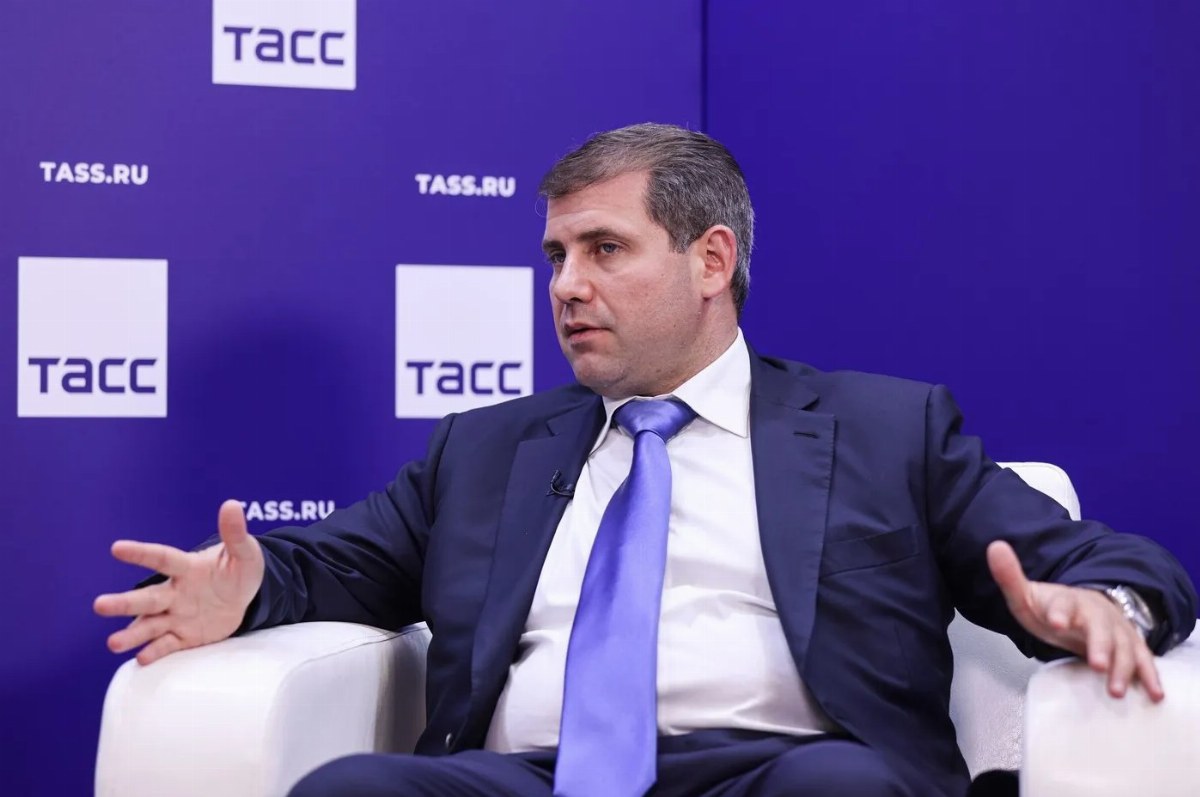
FT referenced a statement made by Ilan Şor to the Russian news agency TASS in July, where he boasted about the resilience of his system against sanctions: “We offer companies and countries freedom because our system is immune to sanctions.”
Understanding the Scheme
The FT investigation reveals that beneath the façade of an innovative financial system—incorporating cryptocurrencies and new payment mechanisms—lies a more traditional method: money laundering through shell companies and large-scale forgery of commercial documents.
FT journalist Chris Cook described the operation directly in a podcast for the publication: in reality, the mechanism was largely a “dated” method of money laundering.
In simplified terms, the scheme worked as follows: A7 created or utilized shell companies in countries with normal access to the international banking system. Money was funneled into these accounts, and the companies then executed the necessary foreign payments for their Russian clients. For instance, if a company in Russia needed to pay a supplier in China, the payment could appear in the banking system as coming from a company in the United Arab Emirates.
More than half of the flows identified by FT ultimately reached bank accounts in China.
Eliminating Any “Russian Trace”
When banks requested justification for the transactions, A7 employed what FT describes as a genuine “forgery factory.” A7 possessed thousands of company stamps, some forged and others copied from real company documents, and fabricated invoices and other documents to create an apparently legitimate commercial justification. Employees even altered the customs codes of sanctioned products and sought to erase any “Russian trace” from the documents, including Cyrillic letters.
The most notable example found by FT involved 500 night-vision devices valued at approximately $510,000, purchased in February 2025 for a Russian client. A7 prepared false documents stating that the goods were tempered glass. Employees debated whether to present them as footwear but concluded that wouldn’t fit the client’s invoice history and decided to stick with the glass description.
Some payments discovered by FT were for military equipment and purchases by Russian security services.
FT identified over $6.9 billion processed through the international banking system via entities linked to A7, but notes that the actual sum could be higher since documents contain an additional 17,500 payments for which FT could not determine the value.
Hundreds of Shell Companies
FT identified 100 A7 shell companies that were actively making payments, with documents mentioning at least another 100.
The network included at least 61 entities in the United Arab Emirates, 87 in Hong Kong, 16 in Kyrgyzstan, and 14 in Indonesia. At least three entities were located in the United Kingdom, and a firm from Hungary appeared to serve as a significant channel for facilitating payments into the EU.
Various components of the circuit involved some of the largest banks in the world. Accounts at Standard Chartered Hong Kong received around $1.1 billion from A7-linked entities; DBS was sent $273 million, Citi clients received $74 million, and clients of Deutsche Bank received approximately $18 million. Additionally, 17 A7 entities had accounts at First Abu Dhabi Bank, through which external payments exceeding $1.8 billion were made.
FT does not claim that the involved banks knowingly participated in the scheme. On the contrary, documents indicate that some initiated controls, requested explanations, and closed accounts.
Moreover, there is a vast dimension that does not fall within the $6.9 billion: documents contain promissory notes issued by A7 with a nominal value exceeding $20 billion, and FT also identified A7 accounts from which billions of dollars in Tether, a stablecoin linked to the dollar, were sold to Russian buyers.
A7 has become significant enough for the Kremlin that Vladimir Putin participated via videoconference in the inauguration of an A7 branch in Vladivostok, with the company claiming to manage nearly one-fifth of Russia’s foreign exchange transactions.
The United Kingdom imposed sanctions on Ilan Şor in 2022 for his involvement in a billion-dollar banking fraud in Moldova and subsequently sanctioned his company Evrazia for activities destabilizing Moldovan democracy. In 2025, London also sanctioned entities from the A7A5 cryptocurrency network linked to Şor’s A7 company.


