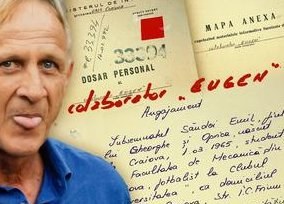
Emil Săndoi, now 61, is the subject of the R225432 network dossier held by the National Council for the Study of Security Archives (CNSAS), as reported by Gazeta. The former defender of Universitatea Craiova was recruited as a collaborator on October 24, 1985, at the age of 20, when he signed a contract with the communist secret service. The documents cover the period from August 1985 to August 1989. Săndoi claims he does not remember anything from that time.
In late October 1985, Craiova Maxima was undergoing a generational shift, with new players beginning to emerge in Mircea Rădulescu’s squad. Among them was Emil Săndoi, who had been part of the team since the 1983-1984 season. He missed the two-legged match against Dinamo Kiev in the Cup Winners’ Cup, but returned to the team later in November after a lengthy absence due to medical issues unrelated to football.
However, during the interval between the two matches against Blohin and his team, a discreet episode unfolded behind the scenes. According to the R225432 network dossier, Săndoi signed a collaboration agreement with the communist secret service, becoming the agent known as “Eugen.” Gazeta has reviewed the documents and presents the untold story of the former international from Bănie and ex-captain of the Oltenians.
How Emil Săndoi Became the Security Agent ‘Eugen’
What he wrote in the agreement signed with the communist secret services, the reasons and objectives of his recruitment, and the profile given to him by the Security before approaching him for collaboration are detailed in the dossier.
Săndoi was described as having a sincere attitude. He listed colleagues on the “Relationship Note” who could potentially be of interest to the Security. Unexpected coincidences were found between “Eugen” and the collaboration dossier of Gheorghe Popescu, also known as “Petrescu.” Furthermore, there were evaluations of his conduct with Securitate and whom he supplied informative notes.
Agreement Signed After U Craiova vs. Dinamo Kiev: ‘I Will Not Disclose the Secret of This Collaboration to Anyone’
The Agreement, which Săndoi signed on October 24, 1985, was established just a day after Universitatea drew with Kiev at the old “Central” stadium without him on the field.
“I, the undersigned Emil Săndoi (…), student at the Faculty of Mechanics in Craiova, football player at the Universitatea club (…), knowing that defending the state’s security is a duty of every citizen, undertake to sincerely, secretly, and organizedly support the security organs, bringing to their attention any negative aspects. I will not disclose the secret of this collaboration to anyone, and the materials provided will be signed under the name Eugen,” reads the Agreement.
This was done in front of Lt. Col. Guță Constantin, as noted at the bottom of the page in Săndoi’s file.
12 Names Listed on the ‘Relationship Note’: Colleagues from U Craiova and the National Youth Team
On the same day as the Agreement, agent “Eugen” already delivered a “Relationship Note” to the Security, listing 12 names of players in his entourage who he might be able to provide information about in the near future, depending on the Security’s interest.
The list included: 1. Adrian Popescu 2. Octavian Popescu 3. Vasile Mănăilă 4. Gheorghe Popescu 5. Pavel Badea 6. Marian Bîcu 7. Florin Cioroianu 8. Dumitru Stîngaciu (Steaua) 9. Alpar Meszaros (U Cluj Napoca) 10. Mihai Țîrlea (UTA Arad) 11. Bogdan Bănuță (FC Argeș) 12. Ovidiu Barba (FCM Brașov).
“And others,” Săndoi noted, referring to additional individuals he could report on. The first seven names were from his colleagues at U Craiova, while the others were players from the national youth team.
Monitored Through Sources: ‘He No Longer Has the Good Form He Had Before His Illness’
Săndoi first came onto the Security’s radar in the summer of 1985 when officers identified him as a potential source.
Through various informants close to the football player, they began collecting data about his profile and conducted home investigations, eventually deeming him suitable for recruitment based on the profile established through various channels.
For instance, on August 23, 1985, source “Ilie Costel” noted about Săndoi: “A year ago, he became ill, which caused him to lose the good form he had. He took the necessary break after his illness and followed the strict regimen imposed by doctors. He gradually resumed training and is currently in good preparation.”
Additionally, he was described as respectful, calm, and a non-smoker who did not consume alcohol, respecting older players and causing no issues for the coach.
“I know Emil Săndoi from the youth team. Until his illness, he was an exceptionally talented athlete who could have become a key player. He is disciplined, causes no problems for teammates, coaches, or staff. He shows no interest in acquiring foreign items or various things,” noted source “Folea,” September 19, 1985, in dossier R225432, page 9, CNSAS.
Investigated at Home: ‘There Are No Vices That Would Compromise Him’
Moreover, home investigations revealed no special data about Săndoi. In a report dated September 17, 1985, Lt. Col. Corneliu Ionescu from Security Dolj noted that he was characterized by neighbors as calm, respectful, and behaving appropriately. There were no indications of vices that could compromise him in family or society.
“He has not been observed receiving visits from foreign citizens or local individuals with inappropriate behavior. His father is a master teacher at a school in Craiova, and his mother is a teacher at a school for physically handicapped children in Craiova. They are also known as serious individuals,” the report stated.
Report on Personal Knowledge: How Săndoi Approached the Security
With the groundwork laid, the Security began the process to recruit the young defender from U Craiova.
On October 9, 1985, Lt. Col. Guță Constantin from the Dolj Inspectorate wrote a “Report on the Personal Knowledge of Săndoi Emil.” He was the officer who would ultimately recruit Săndoi.
The beginning of the document explains how the future agent “Eugen” came to the Security’s attention for potential recruitment: “Săndoi Emil was contacted during a trip abroad with the Universitatea Craiova football team when he was processed counter-informatively. Subsequently, he was maintained in contact, holding discussions with him at most of Universitatea’s home matches.”
“He is sociable, respectful, and has a correct attitude towards our organs,” stated the report.
‘Possesses Real Informative Potential’
Other excerpts from the mentioned report detailed that he had appropriate training and could engage in discussions on various topics, being an intelligent young man who had real information potential within the Universitatea team.
He was also a second-year student at the Faculty of Mechanics in Craiova, where he was known for his correct behavior. His conduct in dealings with the officer indicated that he presented a guarantee for sincere collaboration with security organs.
‘To Protect the Football Players of Universitatea Craiova’
Immediately, on October 10, 1985, the same Lt. Col. Guță Constantin drafted a “Proposal Report for Recruitment as a Collaborator for Săndoi Emil, a football player at Universitatea Craiova.” Approval was made by officer coordinator Lt. Col. Predoiaș Nicolae.
- “From the information we possess, it results that foreign organizations and individuals have repeatedly attempted to informally exploit the football players of Universitatea Craiova or to induce them to betray their country.”
- “To defend and protect the players of the Universitatea Craiova football team and to prevent negative acts, it is necessary to create an informational network with real possibilities among them.”
- “To achieve the proposed goal, I have studied and verified several individuals, resulting in the named SANDOI EMIL being suitable.”
- “After recruitment, the candidate will be directed mainly in the environment and places frequented by footballers, and depending on his relations, tasks will be outlined, and he will be instructed with specific tasks.”
These are among the explanations for why the Craiova defender was to be recruited. The operation was to take place at the Inspectorate headquarters, where he would be summoned under the pretext of continuing previous discussions.
“Since Săndoi Emil is known by several supporters of the Universitatea football team, after his recruitment, we will agree on a cover story to justify—if questioned—his presence at the headquarters of the Ministry of Internal Affairs,” the report noted.
‘He Proved to Be Sincere, and I Proposed Collaboration with the Security Organs’
The plan worked perfectly; Emil Săndoi officially became the agent “Eugen” on October 24, 1985. Four days later, Lt. Col. Guță Constantin reported to his superiors how the recruitment of the Universitatea football player proceeded.
“The undersigned behaved appropriately, proved to be sincere, and I proposed collaboration with the security organs. Agreeing to this, I took a written commitment from him, instructed him on the issues that interest us, the conduct he should adopt in the future, and the method of drafting materials, establishing the alias Eugen,” the officer wrote.
He concluded: “Given the reporting, I propose to approve the registration of the named SANDOI EMIL as a collaborator.”
From then on, “Eugen” would officially work under the cover of Security, including fulfilling specific tasks assigned by his new “superiors.”
Annex Folder with Six Informative Notes Attributed to ‘Eugen’: No Evidence of Abandonment Before the Revolution
The R225432 dossier contains a total of six informative notes attributed to “Eugen,” included in an attached folder dedicated to the operative activity maintained secretly by Săndoi.
These notes concern colleagues and span between March 1986 and August 1989.
At that time, Săndoi was still active at Bănie, where he continued until 1995, even becoming the team captain, winning the title in 1991 and the Romanian Cup twice (1991, 1993). He also ended his career at U Craiova (1998-1999) and was part of the Romanian squad that participated in the Italian World Cup of 1990, though he did not play any minutes in matches against Cameroon, USSR, Argentina, and Ireland.
How the Security Evaluated ‘Eugen’s’ Reports: ‘Operational Value, Helped Us Understand Athletes’
What did Emil Săndoi report to the Security after starting his undercover mission?
In general, he provided positive notes, apparently benign, but which the officers classified as having “operational value, exploited in the context of the matter of ‘Hostile Elements in the Field of Physical Education and Sport,’ which helped us better understand performance athletes and ensure their protection.”
This characterization was found in a “Analysis Note on the Activity Conducted by Collaborator Eugen,” dated December 15, 1986. It was also noted that “he demonstrated sincerity and attachment to the security organ.”
From the verifications carried out concerning the individual, it was not found that he had revealed the link with the security organ,” stated the report.
March 1986: Note About Craiova’s Masseuse
The first of the informative notes focused on Aurelian Țîcu, the masseur of Universitatea Craiova, which Săndoi reported on March 28, 1986:
– “He fulfills his duties properly as assigned by the team’s doctor. In his interactions with the athletes, he is reserved and behaves appropriately.”
– “During foreign trips, he maintains a correct attitude and does not leave the team.”
The officer’s commentary at the bottom of the page noted: “The collaborator is newly recruited, and on this occasion, he was instructed with concrete tasks regarding issues of interest to the security organ.”
In Focus: Mănăilă: ‘Closer Relations with O. Popescu and Dumitrașcu’
Regarding Vasile Mănăilă, a teammate in the defensive line from Bănie, Săndoi reported on November 23, 1986:
– “He is a starting player for the team, who trains diligently during practices.”
– “He has closer relations with O. Popescu and Dumitrașcu.”
– “During foreign trips, he did not leave the team and did not contact unofficial individuals.”
Report on Gică Popescu: ‘Does Not Contact Foreign Individuals’
A separate chapter focuses on Gică Popescu, regarding whom Săndoi wrote an informative note on October 3, 1986. At that point, “Baciul” was in his second season with Universitatea, firmly establishing himself in the first team and exuding the air of a future leader on the field and in the locker room.
– “I know him since he joined our team. He is a player concerned with achieving high athletic performance.”
– “In his relationships with other teammates, he is honest and correct.”
– “During foreign trips, he does not leave the group and does not contact foreign individuals.”
‘The Material is Exploited in Copy in the ‘Petrescu’ Dossier.’ Meaning Gică Popescu!
– “Gică Popescu (Gheorghe Popescu) is a member of the U Craiova team and the national junior team. He is under surveillance in this matter, designated 106/V.V.”
– “The source provided the material in the context of assigned tasks.”
– “The material is exploited in copy in the ‘Petrescu’ dossier.”
According to disclosures made in June 2009 by GSP and Adevărul, there is indeed a collaborator dossier for Gheorghe Popescu in the CNSAS archive (R225431, 32 pages), under the alias “Petrescu,” as stated in the footnote from Emil Săndoi’s dossier.
However, Popescu vehemently denied the authenticity of the documents, labeling the contents as “outrageous lies.”
Note from ‘Petrescu’ About ‘Eugen’, in Copy in Săndoi’s Dossier: ‘Among Teammates, He is Friends with Everyone’
According to those documents, Popescu was recruited in February 1986 and in 1988 accepted that his home in Craiova could be used for undercover meetings with officers from the secret services.
Under the alias “Petrescu,” there are five handwritten informative notes, plus three compiled by the liaison officer of the collaborator.
Among them was a note about Emil Săndoi, which is now found in copy in “Eugen’s” dossier revealed by GSP!
Its content, first published during the disclosures in 2009, reads:
“Regarding Săndoi Emil, I inform you that he is a starting player for the team. He trains rigorously at all practices and shows seriousness. In his private life, I know he enjoys music and movies. He is determined to become an engineer. Among his teammates, he is friends with everyone. During foreign tours, he does not separate from his fellow teammates.”
Signed “Petrescu,” plus an indication from the officer: “Processing the note on the original.” This indicates its utility and how the information would be used concerning the interests of the Security.
“If I had been a collaborator, I would have been blackmailable. Emil Săndoi is my friend. I am ashamed to face him, even if it was a laudatory matter regarding him. It’s horrible! I don’t know what a collaborator means!” said Gheorghe Popescu in June 2009 during a press conference.
Lt. Col. Constantin Guță: Key Role in the Recruitment of ‘Eugen’ and ‘Petrescu’. However, No Agreement Exists for Popescu!
A common thread between the dossiers of “Eugen” and “Petrescu” is Lt. Col. Constantin Guță.
According to information from the CNSAS archive, he is the officer who recruited Emil Săndoi and also drafted the “Proposal Report for the Recruitment of Gheorghe Popescu” on January 22, 1986, three months after capturing “Eugen”.
The motivation was similar to that of Săndoi: “To protect the components of the Universitatea Craiova team and to prevent negative acts, it is necessary to create an informational network with concrete possibilities among these athletes.”
However, a major difference arises from the existence of the “Commitment” document. While it appears in Săndoi’s file, there is no such “Commitment” for Gică Popescu, even though a report from the recruitment officer claims, “I took a written commitment from him” (“Report on the Progress of the Recruitment of Gheorghe Popescu,” February 20, 1986, dossier R225431).
“To achieve the proposed goal, I checked several individuals, resulting in the named Gheorghe Popescu being suitable. From his manner of manifestation and behavior, he presents the guarantee of a sincere collaboration with the security organs,” stated the report.
Gică Popescu Furious in 2009: ‘How Do You Imagine I Could Collaborate?’
Gică Popescu vocally contested being a collaborator of the Security, as indicated by his dossier at CNSAS.
In 2009, he invoked a conspiracy aimed at damaging his image before the 2010 FRF elections, in which he intended to run against Mircea Sandu. However, he ultimately withdrew his plan in January 2010, describing the decision as a protest against the last-minute postponement of the election, which left him with no time for campaigning and presenting his project.
In an interview with Gazeta during that period, the former captain of Barcelona emphasized: “I am left speechless! How do you imagine I could have collaborated with those people when I was the only player brave enough to say ‘NO’ to the Ceaușescu family at Steaua?! Anyone could have created seven million dossiers and notes. But I, with my own hand, have not written a comma about anyone. If it exists, it was written by someone else! I didn’t stoop to such things.”
However, CNSAS concluded in July 2009 that Gică Popescu was NOT a collaborator of the Security in the legal sense.
NOTE: For a person to be declared a collaborator of the Security IN THE LEGAL SENSE, two conditions must be cumulatively met: there must be a network dossier or informative notes that show the ADMINISTRATIVE quality of informant/collaborator/agent and the respective notes must contain information that has touched on aspects related to the violation of rights and fundamental freedoms of the targeted individual and there must be political consequences in the sense that the Security, based on the respective information, has undertaken actions against those who are the subjects of the notes.
Săndoi, Upset That Popescu Had the Armband: ‘He Expressed Disappointment at Not Being Named Captain’
On August 6, 1989, an informative report signed by Major Victor Velișcu indirectly brought Săndoi and Gică Popescu back into discussion regarding another locker room topic: who should wear the armband!
“In a meeting with source ‘Traian Ionescu’ (…) among other aspects discussed was the player E. Săndoi (…). He expressed disappointment at the beginning of the championship for not being named team captain. Following discussions with the coach and club management, Săndoi dropped this request,” noted the officer.
It also remarked: “Currently, he has a good friendship with Gh. Popescu, trains diligently, and wishes to become a starter for the national team.”
Popescu’s Revelation in 2025: ‘Coach Sorin Cârțu Appeared Crying at the Locker Room Door at Half-Time’
The note suggests that Emil Săndoi was unhappy that the captain’s armband had been given to Popescu, who was younger and had arrived at the team more recently.
Recently, in an interview with GSP, “Baciul” even recounted that Sorin Cârțu decided to name him captain after a devastating U Craiova – Dinamo 3-6 match on October 9, 1988, about ten months before Săndoi raised the issue internally, according to notes in his collaborator dossier.
Săndoi had been a starter in that defeat against the Reds and, according to Popescu, “the coach Sorin Cârțu appeared crying at the locker room door at half-time, didn’t even come inside, and said, ‘You should be ashamed of some of you! From this moment on, Popescu is the team captain!”
“With Gică Popescu, we formed the best central defender duo. We resonated because we grew up playing together. At that time, we played with a libero and a central defender marking. But I think we both established back then: ‘What is behind me – you take, what is behind you – I take.’ We complemented each other very well,” Emil Săndoi stated in 2025 during the show ‘The Spoken Football’/Marcel Pușcaș.
Benign Tone in Notes from Training Camps. Security’s Observation: ‘Constantin Oțet Will Be Subject to Complex Checks’
Returning to the informative notes attributed to “Eugen,” in addition to those concerning Gică Popescu, Mănăilă, and masseur Aurelian Țîcu, the agent also provided details to the Security from training camps or foreign trips.
They maintained a similar benign tone, but it contained information interpreted in their own way by the secret services and placed in a broader puzzle depending on the pursued plan.
– Regarding the youth national team’s trip to Norway (September 19, 1986): “The preparation happened in Bucharest, and no special problems arose. The same can be said about the trip to Norway.”
– About winter preparations for U Craiova in Bușteni (February 3, 1987): “There were no special problems; all players trained diligently. The team spirit is good, and the new coach Constantin Oțet was well received by all players.” Here, an officer’s footnote noted: “Constantin Oțet, the team’s coach, will be subject to complex checks, considering the trips he will undertake abroad with the team.”
And another one regarding U Craiova’s tournament in Turkey (August 26, 1989) was drafted by an officer after a meeting with “Eugen,” who was assigned to scan a staff member: “The entire delegation behaved appropriately (…). Regarding assistant coach F. Cioacă, it was reported that he behaved appropriately, being continuously concerned with achieving a good physical condition.”
‘The Source “Eugen” Called Me at Home and Apologized for Not Being Able to Attend the Scheduled Meeting’
In March and June 1986, two reports compiled by Captain Victor Velișcu revealed snippets regarding how Săndoi interacted with his liaison officers. More precisely, how “Eugen” understood to relate to communication with the Security based on the Agreement from October 1985.
On March 15, 1986, Velișcu noted that “the source ‘Eugen’ called me at home and apologized for not being able to attend the scheduled meeting on March 15, 1986, as he was called up to the national youth team, and would be traveling to Bucharest. He stated that there were no significant issues regarding the members of the U Craiova team and ‘he knows what he has to do at the lot.'”
On June 17, 1986, the same Velișcu drafted an informative report with some details about “Eugen”: “He asked to meet outside of the scheduled plans. (…) He told me that for a period of two months we would not be able to meet because he would leave town for shoulder treatment. He was instructed on how to behave during this period.”
Astonishing Post-Revolution Path of the Officer from the ‘Eugen’ and ‘Petrescu’ Dossiers
A note before continuing with Emil Săndoi’s secret string. It’s related to the remarkable career path of Victor Velișcu, one of the security officers who frequently appear in the files of Săndoi and Gică Popescu. He was the one receiving the informative notes attributed to “Eugen” and “Petrescu,” when the two delivered details about each other, without them knowing they were under the care of the same officer!
IMPORTANT: Active in Craiova in the I-Internal Information Directorate during the ‘80s, Victor Velișcu became the deputy head of SRI Cluj until late 1991, according to a report from curentul.info (August 2005). He disappeared after a conflict with Virgil Măgureanu, the head of SRI, suspected of illegally tapping into the funds for paying informants. From 1994 onward, he served as the deputy director of one of Sorin Ovidiu Vântu’s firms and was among the first shareholders at SOV Invest, the FNI scam that defrauded over 300,000 people. Reactivated in 1996 as head of the economic service UM 0215 (internal information/counter-information within the Ministry of Internal Affairs), he returned to reserve in 1997, was reactivated in 2001 as an advisor to the head of SRI, Radu Timofte, and became a one-star brigadier general, going to reserve again in 2005.
In an analysis note dated February 12, 1987, Victor Velișcu pointed out that he took “Eugen” into connection on February 15, 1986, claiming that the source “has real possibilities for informing the Universitatea Craiova football team, as well as for the youth of RSR.”
He warned: “However, complex verification is required, both through the use of sources within the issue and other compartments (services), along with periodic phone interception at home.”
Besides monitoring conversations, Săndoi would undergo episodes of surveillance, with the Security monitoring his connections with foreign students in Craiova (March 19, 1988).
Săndoi Emil is perhaps the most educated athlete of the Universitatea club, showing an exceptionally civilized behavior in all situations. (…) Due to unfulfillment in school, as a student, he was tempted to yield to transfer requests to other clubs, but ultimately remained in Craiova,” stated in a note-excerpt by source “Coco Dumitrescu,” August 7, 1985 (dossier R225432/page 19/CNSAS).
Emil Săndoi: ‘I Had No Connection with This Phenomenon!’
Contacted by GSP for comments on the information in his collaborator dossier at CNSAS, Emil Săndoi emphasized, “I don’t know what it’s about. Is there any declaration of mine in there? And if so, who can guarantee that it is written or signed by me? I do not remember anything about it!”
He added: “I have seen these things appear over the years, with Gică Popescu, with Cârțu, among those close to me. But what could I have said other than that we trained together, understood each other well, and were friends? I now think about what I might have written, right? Honestly, however, I had no connection with this phenomenon. And I do not give any importance to this subject. I have no idea about officer Guță, about the pseudonym ‘Eugen’!”