Many people believe that creating a film using artificial intelligence simply involves entering a few commands, clicking some buttons, and publishing the final product. While that perspective is understandable, the reality is far more complex.
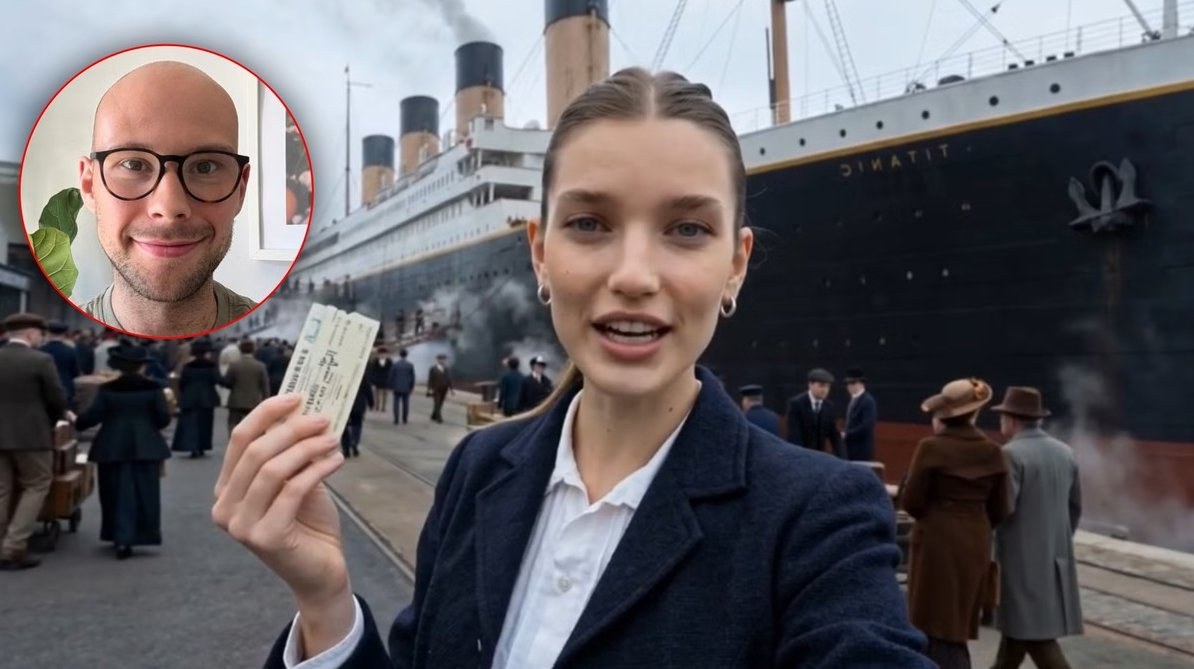
This article is based on an interview with 32-year-old Jonathan Laramy, the creator of the popular YouTube channel Chloe VS History, which features a fictional AI-generated character named Chloe traveling through key historical events. The following content has been edited for clarity and length.
A few years ago, I worked in customer service and spent my free time experimenting with artificial intelligence. I had no formal film education, production experience, or practical knowledge of professional video creation.
In June 2025, I left my customer service job to fully dedicate myself to AI. I had already built successful social media profiles focused on history and was fascinated by the potential of artificial intelligence. Thus, I decided to try something new by creating a historical AI channel on YouTube – Chloe VS History.
Today, my channel generates significantly higher income than my previous job, but reaching this level took considerable time.
Every Film Involves Multiple Stages of Work
The Chloe VS History channel follows the adventures of the AI-generated influencer Chloe, who transports herself to pivotal moments in history—from the maiden voyage of the Titanic to Pompeii on the day Mount Vesuvius erupted. Acting as a modern-day vlogger, she immerses viewers in historical events.
My workflow combines several AI-based tools. I use Claude for brainstorming ideas and building scripts. Images are generated using PAI 2 (software from Utopai Studios) alongside Nano Banana Pro and ChatGPT 2.0. I then create video clips with Seedance 2.0 and maintain Chloe’s voice consistency using an AI voice model.
Creating Chloe herself was one of the quicker parts of the entire process. I generated five to ten character versions before selecting the one that seemed most believable and likable. I spent much more time refining her personality and speech patterns to ensure she sounded like a real influencer rather than a character crafted by AI. It paid off—one of the most common questions I receive is whether Chloe truly exists.
Although my films are produced with the help of AI, they still require creative oversight. I do not uncritically accept what the program generates. Every scene needs to be reviewed, corrected, often regenerated, and edited until it looks appropriate—similar to producing a real film.
Historical content is particularly challenging since contemporary AI models often introduce anachronisms. In a film about ancient Rome, for instance, streetlights or sunglasses might inadvertently appear.
As a result, creating a single longer film can take several weeks. The process includes writing a script, generating images, assembling video material, preparing voiceovers, numerous revisions, and post-production work.
Production Costs for Each Film Can Be Substantial
The production of a longer film for my channel typically costs between £300 and £800 (approximately 1,500 to 4,000 PLN).
The final cost depends on the complexity of the topic and how many times scenes need to be regenerated before they appear satisfactory.
Unlike traditional YouTube creators who spend money on equipment or travel, a significant portion of my expenses comes from generating and regenerating materials through AI models.
Each revision incurs a cost. Practically speaking, it amounts to about $3 for a 15-second clip, but a single scene may require 10 to 15 additional attempts. As a result, costs can accumulate quickly.
And I bear these costs regardless of whether the film becomes a success.
Exploring Revenue Streams Across Multiple Platforms
Initially, I tried generating income through Instagram, TikTok, and YouTube. Only one platform proved successful.
Instagram yielded almost no revenue for me at the start, as the platform does not pay for views. TikTok also did not serve as a significant revenue source since I was not accepted into the Creator Rewards program. Even on YouTube, monetization required time.
For a long period, my project earned very little. It wasn’t until I began creating longer films that my business situation began to change.
Longer content also required a completely different approach. Capturing viewer attention for 15 to 20 minutes is a vastly different challenge than engaging them for just a few seconds while scrolling. The more viewers watched my videos to completion and engaged with them, the more often YouTube recommended them to other users.
This recommendation mechanism triggered a domino effect across my channel. The popularity of longer content also drew more attention to my short videos, which had previously not been promoted frequently by YouTube’s algorithm.
One thing I learned for sure: simply having access to AI tools does not distinguish successful creators from the rest.
Anyone can create an account, generate images or videos. The true challenge lies in understanding what people genuinely want to watch and then developing a process that consistently delivers such content.