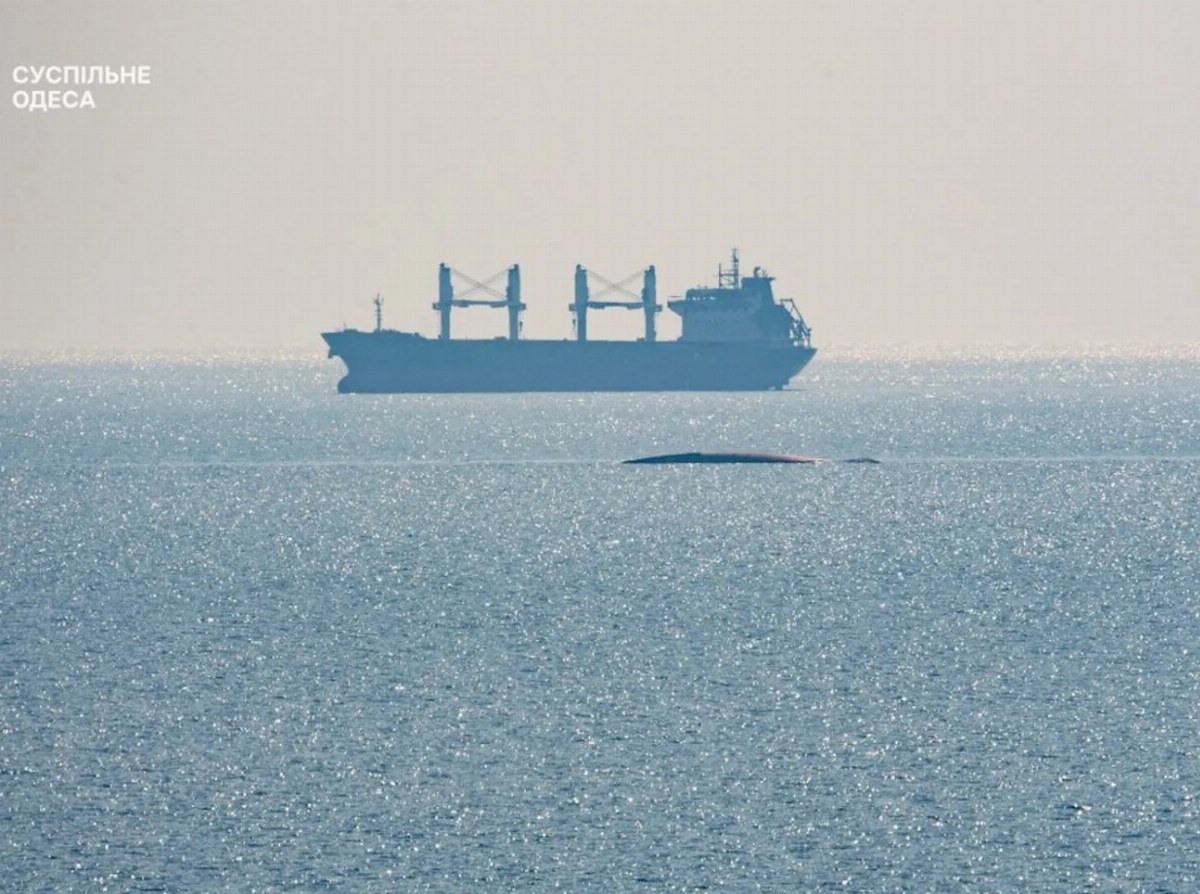
Since June 20, Russia has launched attacks on 28 vessels in the ports of Greater Odesa, leading to significant casualties among sailors. One notable incident involved the cargo ship Golden Leo, which sank off the coast after a missile strike.
Despite its inability to maintain a physical blockade of the ports following Ukrainian strikes that forced the Black Sea Fleet to relocate from occupied Crimea to Novorossiysk, Russia has intensified attacks on the Odesa region’s ports. Ukrainian President Volodymyr Zelensky remarked on July 4, just before Ukraine’s Navy Day, that the Russian military has effectively lost control over the Black Sea, crediting the Ukrainian naval forces and defense capabilities for this achievement. Nonetheless, a series of heavy assaults on the Odesa ports soon ensued, leaving Ukraine in a precarious situation where maritime routes, once secured, are now virtually closed to civilian vessels, drastically impacting trade through Odesa, Chornomorsk, and Pivdenny ports.
The blockade, which lasted until July 2022, resulted in a GDP loss of 6% for Ukraine, as noted by Forbes Ukraine. The current blockade, beginning during the critical grain collection campaign, poses similar threats.
Risks of Agribusiness Bankruptcy During late July, the All-Ukrainian Agrarian Council issued warnings about potential bankruptcies among agribusinesses, citing severe disruptions in maritime logistics that could lead to a surplus of agricultural products. Projections for the 2026-2027 marketing year indicate that Ukraine could produce about 81.4 million tons of major grains and oilseeds, creating an estimated total resource of approximately 85 million tons. However, with ports effectively shut down, Ukraine’s export capacity could plummet to just 1.7 million tons per month, leaving between 27.4 and 32.4 million tons of agricultural products excessively available in the domestic market.
In addition, the mining company Ferrexpo announced on August 6 that it would halt iron ore production due to a prior attack on a vessel scheduled to transport its goods, valued at $5-6 million.
With the ports of Greater Odesa accounting for 90% of Ukraine’s exports, the inability to transport grain, oil, or iron ore further strains the national currency by decreasing foreign exchange earnings. According to National Bank of Ukraine head Andriy Pyshny, the country could miss out on $2.5 billion in export revenue in the latter half of 2026 due to the current port crisis.
What Can Be Done?
Taras Vysotsky, Ukraine’s Minister of Agrarian Policy, emphasized the necessity of Odesa’s ports for maintaining food security. The government is exploring alternative export routes, including ports on the Danube, currently challenged by extreme drought, as well as utilizing rail and road transport. While procedures have begun, establishing these routes to a stable operational level may take time, with expectations to achieve adequate functionality by late summer, potentially covering 50-55% of the ports’ capacities.
In an August 4 interview with Forbes Ukraine, Deputy Minister for Restoration, Infrastructure, and Transport Andriy Kashuba stated that evaluations on port losses from Russian attacks are ongoing. While some facilities continue to operate, he confirmed that only limited vessel arrivals have occurred since July 22.
The timeline for resolving this crisis remains uncertain, although Kashuba noted that Ukraine is working with international partners to ensure the resilience of maritime exports. The government is also seeking diplomatic solutions but has not disclosed specifics, though earlier reports suggest Ukraine and the U.S. might propose measures to deter Russian aerial assaults.
Military analyst Rob Lee compared the situation to the challenges faced in the Strait of Hormuz, where civilian vessels avoid the area due to potential missile or drone strikes. He suggested that Ukrainian air force capabilities could pivot the dynamics, supported by advanced Swedish JAS-39 Gripen fighters expected to be delivered in early 2027.
Another consideration mentioned is deploying maritime drones to counter aerial threats. Reports indicate that the Ukrainian Ministry of Defense’s MAGURA V5 drones have successfully downed Russian aircraft, though scalability remains uncertain.
Time is of the essence for many agribusinesses, with the current financial buffer estimated at just one month, as highlighted by Valeriy Kulich, co-owner of a major agricultural company in Chernihiv. Ferrexpo has set a deadline for its operations by mid-September.
Ultimately, the complexity of the situation raises concerns; civil commercial companies exhibit significantly less tolerance for crew and vessel losses compared to military operations. Local prosecutor data indicate that, from June 20 to July 20 alone, 28 civilian vessels, primarily foreign, suffered attacks, resulting in 21 fatalities and 34 injuries.
Even if Russian missile and drone threats diminish, experts caution that this may not guarantee a return of shipping companies to trade routes.