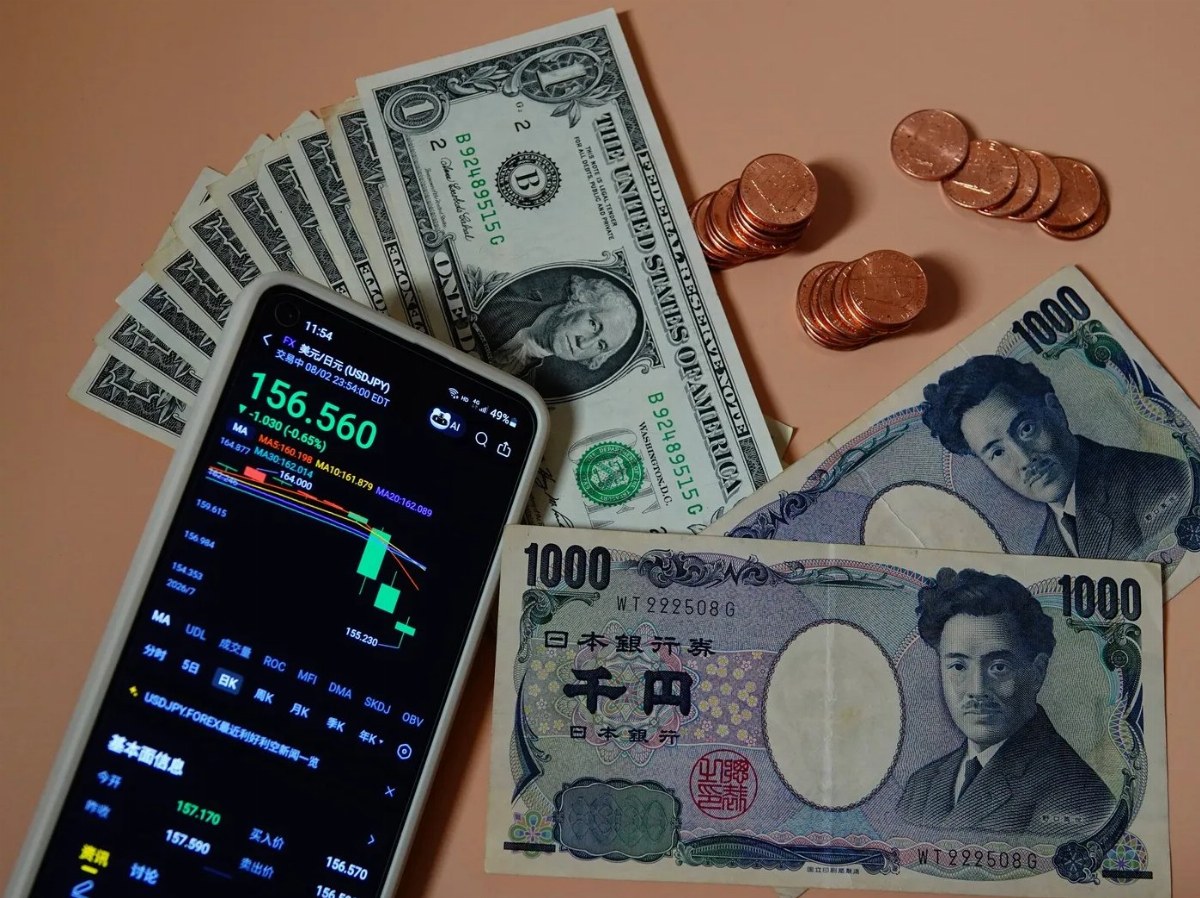
The United States and Japan announced on Monday their first joint intervention in the currency market in 28 years, aimed at bolstering the yen, which has recently fallen to its lowest value against the dollar in four decades. According to reports from AFP and Reuters, both countries are prepared to take further action if necessary.
This intervention highlights the commitment of both nations to prevent a massive sell-off of yen and Japanese government bonds from causing ripple effects globally, such as increasing pressure on US Treasury yields, which are already on the rise, analysts stated.
Recently, the Japanese yen dropped to approximately 164 yen per dollar, the lowest level since 1986, impacted by the interest rate differentials between Japan and the United States, as well as concerns regarding the fiscal policies of Japanese Prime Minister Sanae Takaichi.
While the scale of Friday’s operation was not disclosed, it marked the first coordinated effort involving the purchase of yen to stabilize the currency since 1998, according to Tokyo.
Financial Advantage for the US
This joint intervention is the first since a coordinated action in 2011 aimed at weakening the yen in response to the devastating earthquake in eastern Japan. Onboard Air Force One, US President Donald Trump confirmed the intervention, stating that the US would gain a “financial advantage” from this decision, while emphasizing it was primarily a “gesture of friendship.”
“We are very, very solid financially. You know, they have a depreciating yen and needed a little help. And we are always there for Japan,” Trump explained to the press.
In addition to assisting Japan as a strategic ally in Asia, the intervention would help the US address concerns related to the yen’s significant weakness, which undermines the gains made by Trump’s tariffs, analysts noted, according to Reuters.
Consideration of Future Joint Interventions
US Treasury Secretary Scott Bessent stated on X that the US would not hesitate to engage in further joint interventions to support the yen, echoing statements from Japanese Finance Minister Satsuki Katayama. She commented that this joint action “countered excessive volatility and chaotic fluctuations of the yen in recent months,” according to a press release cited by France Presse.
She also praised Washington’s “strong appreciation” for Japan’s vigorous efforts to revitalize and stimulate its economy. Bessent remarked that the US firmly supports decisive monetary and market measures taken by Tokyo to rectify the substantial undervaluation of the yen.
Weak Yen Benefits Large Corporations
On Friday, the yen strengthened by 0.6% against the dollar, reaching 155.23 yen per dollar, the highest level since early May. Analysts cited by the Financial Times estimated the Japanese intervention at $52.8 billion, while the economic daily Nikkei estimated it between $37.5 billion and $44 billion.
A very weak yen is advantageous for major exporters like Sony and Toyota but automatically raises the cost of Japan’s imports, particularly hydrocarbons priced in dollars, amid surging oil prices this year. This situation fuels persistent inflationary pressures across the archipelago.
Japan Battles Inflation and Yen Depreciation
On one hand, investors are worried about Japan’s rising public debt, swollen by the government’s stimulus measures under Prime Minister Sanae Takaichi. The prospect of a significant cut in food taxes could further strain public finances and the yen.
On the other hand, the Bank of Japan’s benchmark rate has been set at 1% since June, significantly lower than the Federal Reserve’s range of 3.50% to 3.75%. This colossal difference encourages “carry trade,” a mechanism involving borrowing in a currency with low central bank rates to invest in a currency with higher yields, in this case, at the yen’s expense.
However, if the Bank of Japan were to raise rates in the coming months, the Fed could do the same to combat soaring inflation, and “stronger employment figures could bolster these expectations,” said Kelvin Wong, an analyst at MarketPulse (Oanda).
“Historic episodes of joint interventions in the yen typically occur during market turning points,” but ultimately, “a shift in fundamentals is needed to witness a more sustained decline of the dollar against the yen,” warned Michael Wan, an analyst at MUFG Bank.
Japan is struggling to halt the relentless decline of the yen, which is driving up import prices and contributing to overall inflation, impacting household budgets and the popularity of Prime Minister Sanae Takaichi.
Some analysts doubt that Friday’s joint intervention could counteract the structural factors leading to the yen’s depreciation, such as rising fuel prices due to Middle Eastern conflicts and significant interest rate differentials between Japan and the US.